

- Another kill zone - 6th October 2026
- War games part one - 6th October 2026
- Poll to poll - 5th October 2026
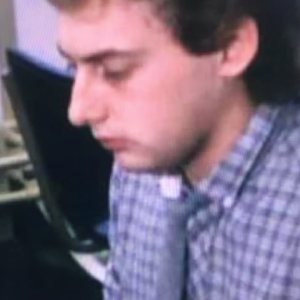
For our Editor, Welshman Phil Parry a free and independent media is essential for a functioning democracy, as well as to establish the facts of major events, and this is now highlighted by the difficulty in securing accurate information about the Iranian war, when the internet has been blocked, fake pictures are proliferating, and satellite images are disappearing…
What EXACTLY is going on?
We know that oil prices are going up (presenting a difficult future for motorists and others), but that’s about it.
For everything else we have to rely on questionable sources, or brave individuals inside Iran who are prepared to risk a long jail sentence or worse, by talking to journalists like me.
Analysing satellite imagery has provided a way forward, but this is becoming harder because access to pictures is being stopped by authorities.
On March 6 one researcher noted that images of Iran’s coastline that he had viewed the previous day were unavailable.
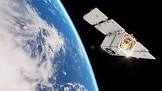
Planet Labs, which operates the world’s largest fleet of Earth-imaging satellites, had suddenly changed its policy.
After the war began it had imposed a four-day delay on publishing high-resolution images of the Middle East, but that changed to two weeks, a period covering the entire war to date, and included not just the Gulf states, but allied bases further afield, as well as all of Iran.

Planet has historically been more open with images of sensitive sites than others, but in changing its policy in response to the Iran war, it told customers that its aim was to “balance our commitment to transparency with our responsibility to limit the risk that our images are used to plan attacks that hurt allied and NATO forces or civilians”.
The danger then becomes that fake images might fill the vacuum, and offer a false narrative.
We have seen this in the past.
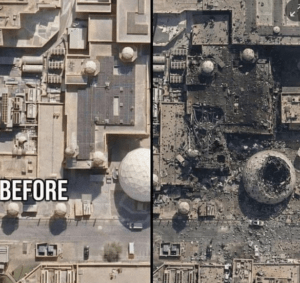
For example the Tehran Times published an image purporting to show a shattered radome (a dome that shields radar) at an American base in Bahrain. The image, though, was actually generated by Artificial Intelligence (AI).
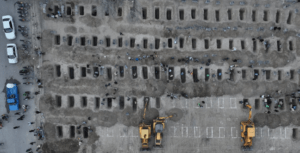
A picture allegedly showing the after-effects of the terrible bombing of an Iranian school (an event which DID actually happen), went viral, but was in fact made up.
But when American Tomahawk missiles landed on the girl’s school in Minab on February 28, analysis of ACCURATE satellite images released by Planet, alongside video footage, was crucial to helping journalists and others understand the precise buildings struck and the munitions that might have hit them. Yet that sort of investigation will now be far harder.
So scrutinising America, Israel and Iran’s conduct in the war is getting much more difficult.
As Iran has a history of lying, it all means we are left largely with information from the administration of Donald Trump, or details coming out of Israel, which of course is led by the controversial right winger Binyamin Netanyahu who has been accused of corruption.
Apparently underlining this problematic state of affairs, the United States Defense Secretary Pete Hegseth declared that Washington is “taking countermeasures” against the internet blackouts in Iran, in order to communicate directly with the Iranian people and “certain audiences”.
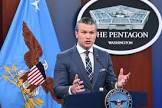
“As far as the internet, we’re watching the regime try to tighten its grip as much as possible”, he said.
“We’re obviously taking countermeasures, many of which we can’t talk about here, to ensure that messaging is delivered, not just to the Iranian people at large, but to the right audiences, certain audiences that need to hear certain things about what their fate might look like or what their choices are”.
But relying on the likes of Mr Hegseth for accurate details might be difficult for journalists.
Rather you than me.
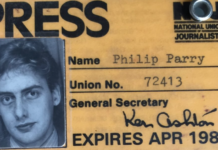
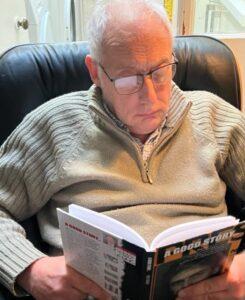
The memories of Phil’s astounding, decades long award-winning career in journalism (when investigations exposed huge wrong-doing, but abuse invariably followed) as he was gripped by the rare neurological disabling condition Hereditary Spastic Paraplegia (HSP), have been released in a major book ‘A Good Story’. Order it now.
Next week – why disturbing news about a purported top-level meeting between a right hand man of Donald Trump, and a Welshman accused of spying for China, once again highlights the central role of Wales in this extraordinary story.