








- Is coal king? - 31st August 2026
- Face the future - 28th August 2026
- Tastey - 28th August 2026

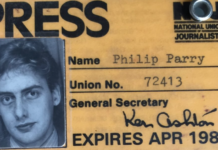
During 43 years in journalism (when he was trained to use simple language, avoiding jargon) our Editor, Welshman Phil Parry, has watched as one after another the deep mines closed. Now a renaissance in manufacturing could be on the cards as new UK Government funding goes to the steel works in Port Talbot, and the newish Prime Minister (PM) Andy Burnham extols the virtues of old style engineering industries. But is this the way forward in the modern world?
As The Eye’s Bank Holiday read today, Phil looks at the competing arguments.
It used to be a big story when even ONE closed – and now there are none at all.

I am talking, of course, about deep coal mines, and when I was a reporter on BBC Wales Today (WT) in the 1980s I have a vivid memory of an industrial news specialist being scolded by the programme producer, because she had missed a big story about the closure of a solitary colliery!
At the start of the decade (before Margaret Thatcher’s turn to the service economy really got going, under the tutelage of influential advisers like Sir Keith Joseph), there were 38 collieries in Wales spawning whole societies, and in interviews you would be in trouble if you missed out the north Welsh one (Point of Ayr) in naming all the pits.
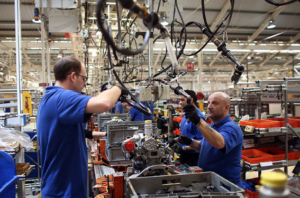
But now there are straws in the wind about a possible revival in manufacturing (or extractive) industries.
Is this wind, though, blowing in the right direction?
Let’s start with our Prime Minister (PM), Andy Burnham.
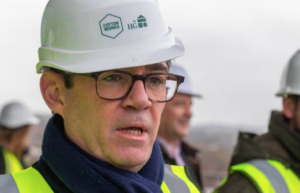
For industrial nostalgists like Mr Burnham, the decline of British manufacturing has been hard to watch. In 2025 manufacturing made up only eight per cent of the economy’s output, down from 17 per cent in 1990.
This is the lowest share in the G7 group of large rich countries (for example, Germany’s is 18 per cent).


Whereas manufacturing employed 25 per cent of the UK workforce in 1979, it now employs only seven per cent. In Wales the proportion was even higher, and the decline has made headlines, so the whole thing has been even MORE painful.
The job losses have had a terrible impact – the work was skilled and well-paid in areas with few other opportunities. “The Full Monty”, a 1997 film in which former steelworkers in Sheffield turn to stripping in order to make money, captures the anguish well. Politicians from across the spectrum want to wind back the clock.
Nigel Farage, the populist-right leader of Reform UK, has called for the UK to “produce all the stuff we need” domestically, and he is particularly exercised by steel, an industry that is as totemic as it is unprofitable. Meanwhile, from the other end, Mr Burnham has called for “reindustrialisation”.
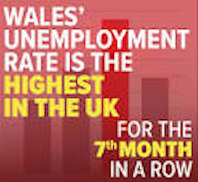 In Wales comments like these could have particular ramifications.
Huge publicity (rightly) has been given to the millions for Tata Steel’s plant at Port Talbot.
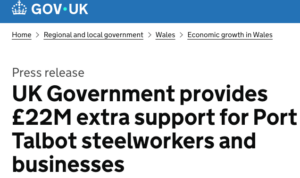
The UK Government has declared triumphantly: “Businesses and workers affected by changes at Tata Steel’s Port Talbot site will be able to access an extra £22 million in support from the UK Government”. A state-of-the-art Electric Arc Furnace (EAF) is being built to catch up with competitors.
On the other side of the argument, however (I take no position), are those who say that this is totally wasted money, because the days of metal-bashing are long-gone, and steel can be imported more cheaply from abroad.
 The steel industry has been declining for decades. Annual crude-steel output in the UK has fallen from almost 30 milion tonnes in the early 1970s to less than three million tonnes today, and direct employment has shrunk from around 320,000 to barely 30,000
It is very sad, the argument runs, that many may ultimately lose their jobs, but the future is with the ‘knowledge economy’, and the UK should play to its strengths in areas like education, or advertising. If there is to be any official encouragement of manufacturing, then it should be in sectors that are doing well already, like aerospace.
So nurturing good jobs is not easy – should it be in the service or manufacturing economy?

I just wish I had known this when I missed out Point of Ayr colliery in that interview!
The memories of Phil’s decades long award-winning career in journalism (which started when there were LOADS of pits in Wales!) as he was gripped by the rare neurological condition, Hereditary Spastic Paraplegia (HSP), have been released in a major book ‘A GOOD STORY’, (which includes details of stories which came out of the decline in manufacturingl). Order it now!.
Tomorrow – For him the importance of the kind of investigative journalism he undertakes has always been fundamental, and now this is underlined by news today coming out of the Ukraine war, where a small media site has calculated that the total number of troops from a supposed ally of Vladimir Putin is NOTHING like as high as has been described.