
- Dark speak easy part two - 9th March 2026
- Cyber bullying - 6th March 2026
- Fight club - 5th March 2026

Unfortunately as our Editor, Welshman Phil Parry has written many times a free and independent media is essential for a functioning democracy, although this does not exist in many states around the world, and new research is today showing a link between the muzzling of the media, and political corruption.
It keeps people on their toes, and if you don’t have it watch out!
A free and independent media (like The Eye) is absolutely central for democratic control, and now there is research which shows a slow, but developing, connection between the corruption of politicians, and a crackdown on the press.
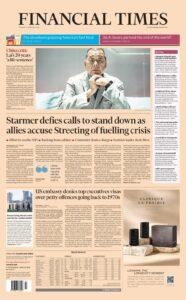 This worrying news comes as we are shown another outrageous example of this practice by regimes – the jailing for 20 years by China of the 78 year old media tycoon Jimmy Lai.
His son has (understandably) called his imprisonment, essentially a “death sentence”.
Mr Lai’s sentence was the harshest to be given under Hong Kong’s (HK) controversial National Security Law (NSL).
He was one of the loudest critics of China, often using his pro-democracy paper, Apple Daily, as a tool of protest. He has always denied the charges against him.
Foreign Secretary Yvette Cooper has said the UK Government will “rapidly engage further” with Beijing.
“I again call on the Hong Kong authorities to end this appalling ordeal and release him on humanitarian grounds, so that he may be reunited with his family”. She added: “We stand with the people of Hong Kong”.

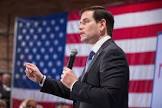
US Secretary of State Marco Rubio called the sentence “an unjust and tragic conclusion to this case”, and urged authorities to grant Mr Lai “humanitarian parole”.
He declared that the punishment “shows the world that Beijing will go to extraordinary lengths to silence those who advocate fundamental freedoms in Hong Kong”.
Sadly this jailing of someone in the media falls into a familiar pattern, with journalists sometimes imprisoned, or even physically attacked, all over the world, and now the causal link has been established with political corruption.
The Economist analysed data from about 180 countries over the past 80 years collected by v-Dem, a Swedish research project.
There was a ‘feedback loop’ between muzzling the media and unleashing corruption, which seems to go something like this:
Politicians who want to rob the public have an incentive to gag the press, so the tighter they gag it, the easier it grows to steal.
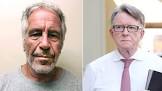
The more guilty secrets politicians accumulate, the greater their incentive to stifle future critical reporting (we have seen this only recently with the Epstein affair).
This means that if press freedom decays from ‘as good as Canada‘ to ‘as bad as Indonesia‘, that is a good predictor that graft will rise from ‘as clean as Ireland‘ to ‘as grubby as Latvia‘.
The process is gradual, metastasising over several years, so voters may not notice until after the next election, and is worse under populist governments, which typically demonise their critics and seek to crush institutions that limit their authority.
The techniques of curbing critical journalism usually stop short of jailing (Mr Lai’s appalling case is relatively rare) or killing reporters.
Rather, they tend to fall into three main categories: rhetorical, legal and economic.
The rhetorical trick is to pretend that critical journalists pose a threat to the nation. Autocratic regimes have long done this; now many elected leaders do, too.
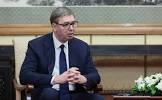
Serbia’s Aleksandar Vucic describes uncomplimentary coverage as “pure terrorism”.
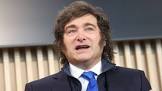
Argentina’s Javier Milei pushes the catchphrase “We don’t hate journalists enough”.
Supporters of India’s ruling party the BJP refer to critical reporters as “presstitutes”.
But ‘presstitutes’ are NEEDED, otherwise politicians will become even more corrupt, so we have an important role in holding them to account!
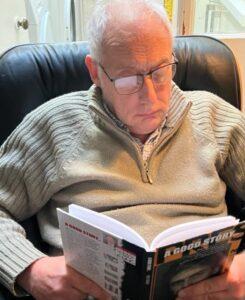
The memories of Phil’s astounding, decades long award-winning career in journalism (when investigations exposed huge wrong-doing, but abuse invariably followed) as he was gripped by the rare neurological disabling condition Hereditary Spastic Paraplegia (HSP), have been released in a major book ‘A Good Story’. Order it now.
‘Dark speak easy part three’ comes soon, where he highlights how a new book has put centre stage evidence of the latest media crackdown in another part of the world.
Tomorrow – why shock news that police probing allegations of Chinese spying have raided the home of a prominent Labour figure’s former aide, only serves to highlight how Wales is at the heart of this extraordinary story.