







- Halt! (Unless you’re a certain type…) - 16th September 2026
- From Russia without love part two - 15th September 2026
- ‘We don’t need no educashun…’ copyright Pink Floyd - 14th September 2026
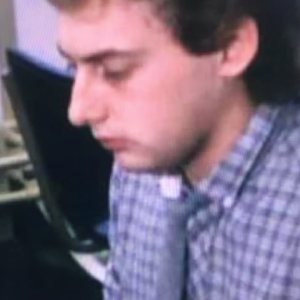
During 23 years with BBC Cymru Wales (BBC CW), and 42 years in journalism (when he was trained to use clear and simple language, avoiding jargon), our Editor, Welshman Phil Parry, would often highlight illegally or questionably taken property, as well as their return, and now this is put centre stage by the announcement that 100s of artefacts, including the Benin Bronzes will have ownership moved to Nigeria after they were stolen by the British in 1897.
It’s taken over 120 years but finally it has happened.
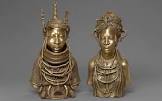
Ownership of many pieces stolen by the British military from Africa in the late 19th Century and housed at the University of Cambridge (UoC) has been officially transferred to Nigeria.
The objects, known as the Benin Bronzes, were taken by force during the occupation of Benin City in 1897, and are enjoyed by visitors for their beauty at the university’s museum.
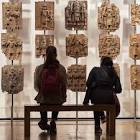
Yet this whole area of who actually OWNS controversial museum pieces is a minefield, and perhaps the most controversial part of it is the Elgin Marbles housed (at the moment) in the British Museum (BM).
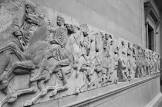
There is a longstanding disagreement between the UK and Greece about the ownership of these marble sculptures brought to Britain in the 1800s.
The items in question are also called the Parthenon Sculptures, and are named after Lord Elgin who had them removed.
They are widely believed to be one of the most important collections of classical art in existence.
But now that ownership of the Benin Bronzes is being relocated, who knows?!
After all the whole vexed issue of ‘cultural appropriation’ is a hot topic now, and legal changes could make repatriation of precious objects far easier.


In 2022, pro-restitution commentators were relieved to see changes proposed to charity laws in England and Wales, namely introducing Sections 15 and 16, that would give national institutions leeway to dispose of objects on moral grounds
In 2025 the Institute of Art and Law (IAL) declared: “It has long been the view in the UK that national museums are restricted by law from repatriating collection objects. But will legislation passed three years ago, the Charities Act 2022, point the way ahead?
“National museums like the British Museum are generally prohibited by their governing Acts from ‘disposing’ of objects from their collections, including for the purposes of repatriation. For the most part, these statutes allow for disposals for duplicates and, in certain situations, objects considered unfit or unsuitable for retention, or objects rendered useless due to damage, deterioration or infestation. These museums have also been given the power to dispose of human remains(under 1,000 years of age) and art lost or stolen during the Holocaust in Europe by separate pieces of legislation, passed in 2004 and 2009 respectively.

“Three years ago, we learned that two provisions of the Charities Act 2022 could have a bearing on these national museums in relation to repatriation, as well as affecting non-nationals. The Act is relevant because museums, including nationals, are often constituted as charitable trusts and are therefore subject to the various tenets of charity law. The legislation included two provisions, sections 15 and 16, which amend the Charities Act 2011 to create broader powers for making ‘ex gratia’ transfers of charity property by charity trustees, i.e. transfers based on a moral obligation. However, three years on, the Secretary of State has still not exercised their power to bring these provisions into force (as set out at s. 41 of the Act). So despite the Charities Act 2022 having been passed by Parliament, these particular parts of it have never been ‘commenced’, meaning they currently have no effect.”
Critics, though, might say: “It’s all very well, but where do you stop?”. This is not a simple issue, and in the case for example of the Elgin Marbles, it is almost certainly the case that they would have been destroyed (there was an explosion at the original position in the years afterwards), unless they had been taken, whereas now they are enjoyed by millions.

Then there is the challenge of whether pieces that are of cultural importance to Wales, should be brought back to where they came from and not housed in England.
If you are not a Welsh nationalist perhaps you think this is nonsense.
Plaid Cymru’s (Plaid’s) Westminster leader, Liz Saville Roberts, though, takes a different view and believes that Welsh artefacts in the BM should be returned to Wales.
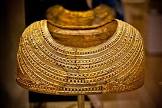
We are talking here particularly about the Mold Gold Cape and the Moel Hebog Shield.
However no shield will protect anyone from criticism whatever is done.
The case of the Benin Bronzes may have been clear to officials at the UoC, but there are lots more which AREN’T!

The memories of Phil’s, remarkable decades long award-winning career in journalism (during which it seemed clear who owned what) as he was gripped by the rare and incurable neurological disabling condition Hereditary Spastic Paraplegia (HSP), have been released in a major book ‘A GOOD STORY’ .Order the book now!
Next week- Information technology (IT) experts have expressed to The Eye grave concerns about Russia appearing now to target more NATO allies’ infrastructure, and it also shows how they have tried to attack this website too.