









- Halt! (Unless you’re a certain type…) - 16th September 2026
- From Russia without love part two - 15th September 2026
- ‘We don’t need no educashun…’ copyright Pink Floyd - 14th September 2026

In a 23 year career with the BBC, and 42 years in journalism (when he was trained to use clear and simple language, avoiding jargon), for our Editor, Welshman Phil Parry, covering sad details of marriage failures was a mainstay of his reporting – with a rise in break ups seen after holiday periods, because families would be cooped up together during them – and new evidence today of divorce rates now highlights this.
Out of bad sometimes comes good.
The awful news of relationship breakdowns, can, I’m afraid, be very attractive to media reporters, so for them it represents good copy.
Almost every day we hear about celebrity marriage failures, and now it appears that among the population at large the figures showing those collapses have returned to pre-pandemic levels – not just in the UK but around the world.

Here it is believed that approximately 42 per cent of marriages will end in divorce, with the highest Welsh rates being in Neath Port Talbot (NPT), Blaenau Gwent (BG), and Denbighshire (D).
These extraordinary levels were put centre stage by research from the law firm Reiss Edwards Family Law, which identified that in the first two areas more than one in six people who have been married are now divorced, or have had their civil partnerships dissolved.
Denbighshire (D) has a divorce rate of 16.66 per cent, only SLIGHTLY lower than Neath Port Talbot (NPT) or Blaenau Gwent (BG), and after these ‘top’ places comes Conwy (C), where 16.49 per cent of once-married people are now divorced.

Divorce is one of the biggest social transformations of the past century.
In 1971 the divorce rate per thousand married people was just 5.9 per cent, but by 2003 this figure had climbed to 14 per cent.
In the UK nearly a quarter of children now live with single parents – though far more couples live together and have offspring than in days gone by.
The trend for opposite-sex divorce has declined a little recently, but same-sex divorces reached a record high in 2023 at 1,891, amid an overall rise in same-sex marriages.


In 2023 there were 76,164 divorces granted under the Divorce, Dissolution and Separation Act (DDSA).
This is a BIG increase on 2022, when there was a percentage of just 9.2 for divorces and 10.3 per cent for dissolutions.
When I started in journalism in 1983 on the South Wales Echo (SWE) (then the biggest paper produced in Wales), a staple task was to ring up the Marriage Guidance Council (as it was before it changed the name to ‘Relate’) after a holiday season, to find out how many couples had contacted them asking for help.
Most long-term couples were married then, rather than simply living together, but during a holiday period they would be at home, realise they didn’t actually like the other person, so they would seek help in sorting it out or file for divorce.
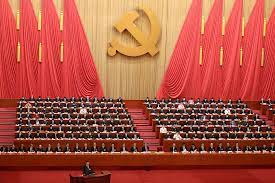
Examining the situation in China is instructive, because as much as the authorities try to manage the situation (as they always do), they simply CANNOT!
With the population shrinking and birth rates plunging, the government was keen to keep people in wedlock.
Even so in 2003 it abolished a requirement for employers to write a letter as part of divorce proceedings, but this caused divorces to surge, so the Chinese authorities intervened again and in 2021 a 30-day cooling-off period was introduced before a divorce could be finalised.
The numbers did drop briefly, but have since rebounded to the previous levels and beyond.

In 2025 divorces by mutual agreement reached their highest in five years, with more than 2.7 million registered, an increase of 28 per cent on 2021.
Data for court cases have yet to be released, but women are clearly leading the charge, because some 70 per cent of plaintiffs who are defying agencies are female.
Plainly the Chinese authorities think this is a BAD thing, but perhaps to others it is not, and simply reflects a yearning for equality among women
Growing numbers are blogging about their experiences, including Yolanda Yu, from the eastern city of Hefei.

She describes how, after her drunk husband beat her, their conservative parents advised against divorce, so she stuck it out and switched from tutoring to e-commerce, in order to double her salary and shoulder more of the couple’s financial burden.
But her husband didn’t change, and Ms Yu says that this is typical of men: “They can’t change their ingrained male chauvinism, believing women should serve them”.
It is not only their own marriages that women are questioning – growing numbers are shunning the institution altogether.

In 2024 marriages fell to the lowest number since 1980, despite everything that Chinese officialdom tries to do.
Ji Yingchun of Shanghai University (SU) says the government’s “easy entry and strict exit” approach to marriages is unlikely to boost their numbers: “Until greater gender equality is achieved, some people may increasingly choose to reconsider marriage”, she declares.
In recent years, a hit Chinese TV show about celebrity couples on the cusp of divorce has prompted discussions across the huge country.
Divorced middle-aged women such as a comedian known as “Director Fang” and Su Min, a road-tripping livestreamer whose life was made into a film, have been celebrated for leaving unhappy homes.
Maybe a divorce rate which is rising simply reflects the fact that one side of the partnership (possibly the woman) is refusing now to stay in a relationship which is unhappy (even violent?).

For journalists anyway, it makes good copy!
The memories of Phil’s astonishing, decades long award-winning career in journalism (when at the beginning he invariably had to ring up the Welsh counselling service for details of the divorce rate), as he was gripped by the rare neurological disabling condition Hereditary Spastic Paraplegia (HSP), have been released in a major book ‘A Good Story’. Order it now.
Soon – ‘China crisis again’, where Phil examines a shocking cover up of a terrible event in China, when a commenter declared: “I’ve searched the whole internet and I haven’t seen anything at all”.
Tomorrow – during decades in journalism Phi has presented many political programmes, so knows better than most how there are innumerable mistakes on election nights (one of which is now approaching), which are kept largely secret, and only sometimes reported.