





- A tartan death wish… - 17th March 2026
- Hitting more turbulence - 17th March 2026
- Dark speak easy part three - 16th March 2026

Today’s final Scottish Parliament (SP) vote on assisted dying could put pressure on politicians in Cardiff and London, where the legislation is now on the point of collapse after it was subjected to more amendments than almost any other, although public opinion seems to favour a change in the law.
The outcome of the Assisted Dying for Terminally Ill Adults (Scotland) Bill, is seen as too close to call, yet if it passes, Scotland could become the first nation in the UK to legalise assisted dying, falling into line with other countries or states around the world where it is lawful.

In February Wales’ politicians paved the way for assisted dying services on the NHS after a key vote took place in the Welsh Parliament/Senedd Cymru (WP/SC), although the country’s First Minister Eluned Morgan and Health Secretary Jeremy Miles were among those who voted agains.
Others which have legalised the practice include Jersey and the Isle of Man – both have passed laws allowing it.

In Jersey those eligible are people with terminal illnesses causing unbearable suffering where they are expected to die within six months, or 12 months for those with neurodegenerative conditions such as Parkinson’s as well as Motor Neurone Disease (MND), and this follows the Isle of Man.
Both Crown dependencies have set residency requirements for eligibility – 12 months for Jersey and five years for the Isle of Man.
Lorna Pirozzolo, from Jersey, who suffers from terminal breast cancer, has said like a huge number of others, that the reform is “badly needed”.

“Like so many terminally ill people I’ve spoken with, I’m not scared of dying, but I am terrified of suffering as I go.
“Today brings enormous relief, not just for me, but for future generations of islanders who deserve compassion, choice and dignity at the end of life.“
Humanists UK Chief Executive Officer (CEO) Andrew Copson said it was a “momentous vote of confidence for compassion, dignity, and choice at the end of life”.


Yet even here there was political opposition, and this may be being reflected in the House of Lords (H0L), although not perhaps in Scotland.
Jersey politician, Deputy Sir Philip Bailhache voted against the law and said he was “disappointed” by the result
“Life is a precious thing and I don’t think really that it’s for people to remove life in the way in which the assisted dying law is now going to authorise”, he declared.
Yet Sir Phillip is in a minority, and another case in point of what is happening in other areas of the globe, are the events now in the United States of America (USA).
New York (NY) is joining 12 other states (plus Washington, DC) where assisted dying is legal, and it seems to be part of a wave.

Last year Delaware as well as Illinois approved assisted-dying laws, and by the end of 2026 more than 30 per cent of Americans will live in states where doctors can prescribe a fatal medication to terminally ill patients.
Canada and the Netherlands even allow it in cases where patients are suffering from incurable pain, but are not terminally ill.
American states tend to follow the model of Oregon, which was the first to legalise assisted dying in 1994.
In the UK however it is different – apart, possibly from today, in Scotland.
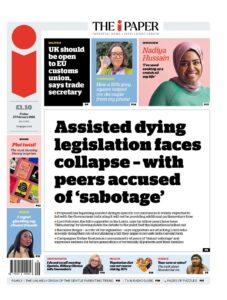 It was more than a year ago that MPs first gave their backing to a proposed law which would introduce assisted dying in England and Wales, after an historic House of Commons (HoC) vote which was given a huge amount of publicity.
But after being stuck in the HoLfor months, where it was scrutinised line by line, it may now fail altogether.
A number of high-profile figures have supported a change in the law, including Dame Esther Rantzen.
Dame Esther is living with stage four lung cancer, first diagnosed in January 2023.
Her daughter reported in March 2025 that life-preserving drugs are no longer working, and she has joined the Dignitas assisted dying clinic in Switzerland.
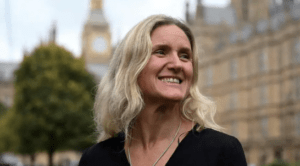
The assisted dying bill was introduced to Parliament by the Labour MP Kim Leadbeater back in October 2024, as a private member’s bill because it was put forward by a backbench MP rather than the UK Government.
MPs then spent many days debating the draft legislation in the HoC, and first voted in favour of the principle of the bill the following month by a majority of 55.


A committee of MPs from both sides of the debate then spent months considering more than 500 changes.
Further debate and votes on amendments followed in the HoC before MPs voted by a majority of 23 in June for the bill to progress to the HoL.
Before its likely failure, the ermine-clad ones proposed more than 1,000 amendments, which experts believe is a record number for a bill supported by a backbench MP.

But people appear to want action, and other countries are just going ahead with legalising assisted dying anyway.
Popular support for help terminating life with appropriate safeguards, has historically remained at a very high level
In March 2024, the largest ever poll on assisted dying by Opinium Research (OR) found a majority supported a change in the law in every constituency in the UK.
● Three-quarters of respondents (75 per cent) said that they would support making it lawful for dying adults to access assisted dying in the UK, with only around one in eight people (14 per cent) stating that they would oppose such a move.
● More than half (52 per cent) would personally consider travelling to Switzerland for an assisted death if they were terminally ill, but less than three in 10 (28 per cent) would be able to afford.

How embarrassing this all is.
The people want it, other countries are legislating for it, but a bill for assisted dying at homewhich has suffered more changes than almost any other, may fail completely.
The Scots, however, could be leading the way in the UK now…
 Tomorrow – how during that career