





- Spending energy - 12th March 2026
- Hidden in plain sight - 12th March 2026
- ‘M’lud I wish to delay proceedings…’ - 11th March 2026

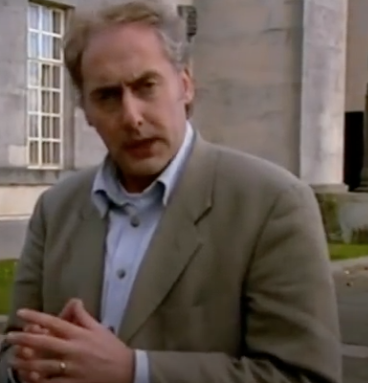
During 23 years with the BBC, and in a 42 year journalistic career (when he was trained to use clear and simple language, avoiding jargon), our Editor, Welshman Phil Parry, became used to constant change, but now there is more evidence of a major alteration which could affect almost everyone.
These are unnerving times.
I like to think I am good at adapting to change (I have had a lot of practice!), but sometimes it is difficult.
For example, when I started in journalism all copy was physical and written on a typewriter. You would have to prepare several versions, and drop one of them in the News Editor’s wire basket on his desk.
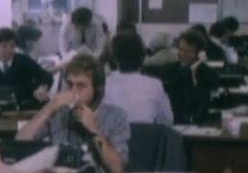
Now, of course, everything is on a computer, and the copy is sent over digitally to an online ‘basket’, where the story (after sometimes being checked) can be put into the paper or website.
But today there is change to rules underway which will affect almost everyone – when we have only just got used to the last lot!
They appear to be rowing back on commitments that were made with Electric Vehicles (EVs).
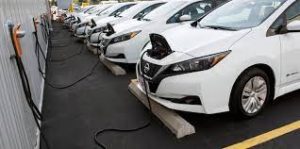
Admittedly there are problems with the system now.
The whole business of charging up your EV or Hybrid car is enormously confusing – it has to be the right company, and done in the correct way. Faster charging points are available, and for universal adaptation, but you pay through the nose for the privilege. If you have an electric-only vehicle you need to plan your journey around where suitable charging points are available!

It’s a bit like the Wild West at the moment, and as a result the take-up rate for EVs has been slow.
Customers are confused (who can blame them!), and the sluggish purchases of EVs has scared off car and policy-makers, but rather than sort out this mess, they are easing the rules completely.
It’s a classic case of throwing the baby out with the bath water!
On December 16 the EU dropped an earlier ban on the sale of petrol cars from 2035.
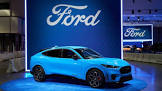
The day before, Ford had announced it would write down the value of its assets by $19.5 billion as it rethinks its EV strategy.
Instead of an outright ban, the policy now is for the estimated emissions from new cars having to be cut by 90 per cent from 2021 levels by 2035.
The remainder will have to be compensated for by measures including the greater use of European ‘green’ steel.
Although the EU insists its new strategy “maintains a strong market signal for zero-emission vehicles”, sales of petrol and hybrid cars will continue as a result of the new approach; according to Transport & Environment, a Brussels based think-tank, so a quarter of the cars sold in 2035 could include some form of fossil-fuel power following the changes.
The new measures, which still have to be ratified by the EU’s parliament and member states, also include changes to interim targets and new rules for commercial vehicles.

Over in America, where of course Ford are based, the transition has now stalled altogether. President Donald Trump’s preference for gas-guzzlers has led to a rolling back of incentives and other measures that supported EVs, so Ford has realigned plans in response.
Most notably, officials at the huge company are ending sales of the all-electric version of the F-150 pickup, to replace it with a model using a small petrol engine that recharges the battery when needed.
Policy-makers (not least in Wales) may need to adjust their highfalutin language, when we have only just heard the last utterances.

In March 2022 Ken Skates the then Minister for Economy, Transport and North Wales declared: “A ban on the sales of new petrol and diesel only cars and vans will be introduced in 2030. This places greater emphasis on the urgency of the challenge for a transport revolution for Wales. It supports our aspiration to end Wales’ contribution to climate change by 2050, and to improve the quality of the air that we breathe”.
It’s the poor consumer that will suffer.
Rather than fixing the ridiculous situation where you have to go scouting round for the right charging company, there are now new rules to master!
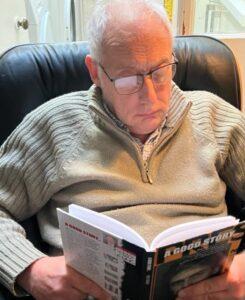
The memories of Phil’s astounding, decades long award-winning career in journalism (during which constant change has been for the better but is now for the worse), as he was gripped by the rare neurological disabling condition Hereditary Spastic Paraplegia (HSP), have been released in a major book ‘A Good Story’. Order it now
Tomorrow – why disturbing news that BBC executives are planning to spend millions on taxis, puts centre stage how the giant corporation has also hit the headlines for all the wrong reasons following numerous scandals, but they REFUSE to answer The Eye’s questions about them.