







- Spending energy - 12th March 2026
- Hidden in plain sight - 12th March 2026
- ‘M’lud I wish to delay proceedings…’ - 11th March 2026

During 42 years in journalism (when he was trained to use simple language, avoiding jargon) for our Editor, Welshman Phil Parry, it has always been fascinating to watch as policy-makers fail to keep up with public opinion, and this is now put centre stage by the long delayed assisted dying bill in the UK, as more and more evidence emerges today of other countries and American states legalising the practice.
Sometimes you wonder what our elected representatives are actually doing!
Although not pure ‘representatives’, they are still paid by us in order (in theory) to voice and act on our views in legal bodies.

But often, it seems, the tide of public opinion is running faster than (or even against) their actions.
This can be seen, unfortunately, in the unbelievable delay over an assisted dying bill in the UK (when a change in the law is hugely popular, and other states are putting their own versions on the statute book while its passage here is bogged down).
All the systems in other countries have an array of safeguards (like our own proposed legislation), but these policy-makers have been MUCH quicker in changing the law to align with popular feeling, so that what is legal and what is not reflects public opinion.
A case in point is what is happening now in the United States of America (USA).

New York (NY) is joining 12 other states (plus Washington, DC) where assisted dying is legal, and it seems to be part of a wave.
Last year Delaware as well as Illinois approved assisted-dying laws, and by the end of 2026 more than 30 per cent of Americans will live in states where doctors can prescribe a fatal medication to terminally ill patients.

 Lawmakers are rapidly catching up with public opinion there, with slightly more than half of Americans believing that assisted suicide is morally acceptable.
This share grows to two-thirds if the patient is in severe pain, has no chance of recovery and is asking for help to die.
Canada and the Netherlands even allow it in cases where patients are suffering from incurable pain, but are not terminally ill.

American states tend to follow the model of Oregon, which was the first to legalise assisted dying in 1994.
In the UK however it is different.
It was more than a year ago that MPs first gave their backing to a proposed law which would introduce assisted dying in England and Wales, after an historic House of Commons (HoC) vote which was given a huge amount of publicity.
 But it’s still stuck in the House of Lords (HoL) being scrutinised, and the proposed legislation has had more amendments than almost any other.
A number of high-profile figures have supported a change in the law, including Dame Esther Rantzen.
Dame Esther is living with stage four lung cancer, first diagnosed in January 2023.
Her daughter reported in March 2025 that life-preserving drugs are no longer working, and she has joined the Dignitas assisted dying clinic in Switzerland.
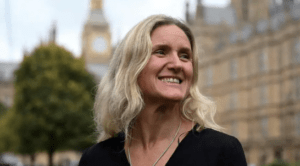
The assisted dying bill was introduced to Parliament by the Labour MP Kim Leadbeater back in October 2024, as a private member’s bill because it was put forward by a backbench MP rather than the UK Government.
MPs then spent many days debating the draft legislation in the HoC, and first voted in favour of the principle of the bill the following month by a majority of 55.


A committee of MPs from both sides of the debate then spent months considering more than 500 changes.
Further debate and votes on amendments followed in the HoC before MPs voted by a majority of 23 in June for the bill to progress to the House of Lords (HoL), where peers are now carrying out a line-by-line scrutiny and planning their own changes.
The ermine-clad ones have proposed more than 1,000 amendments, which experts believe is a record number for a bill supported by a backbench MP.

But people appear to want action more quickly than this, and other countries are just going ahead with legalising assisted dying anyway.
Popular support for help with termination of life with appropriate safeguards has historically remained at a very high level
In March 2024, the largest ever poll on assisted dying by Opinium Research (OR) found a majority supported a change in the law in every constituency in the country.
●Three-quarters of respondents (75 per cent) said that they would support making it lawful for dying adults to access assisted dying in the UK, with only around one in eight people (14 per cent) stating that they would oppose such a move.
●More than half (52 per cent) would personally consider travelling to Switzerland for an assisted death if they were terminally ill, but less than three in 10 (28 per cent) would be able to afford.

How embarrassing this all is.
The people want it, other countries are legislating for it, but a bill for assisted dying in the UK is stuck in the mud…

Tomorrow – how huge criticism of the BBC’s coverage of the BAFTAs, once again shines the spotlight on their REFUSAL to answer The Eye’s questions about the enormous number of scandals to have engulfed the giant corporation.