










- History man - 3rd March 2026
- British Broadcasting Complaint (BBC) - 3rd March 2026
- Rocket man - 2nd March 2026

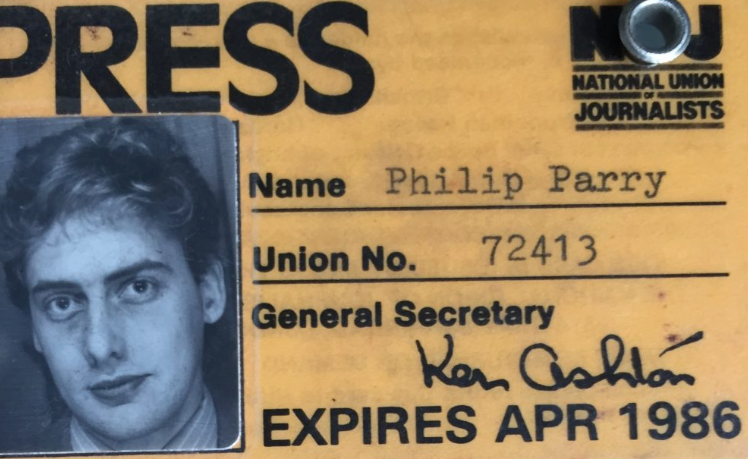
During 23 years with the BBC, and in a 42 year journalistic career (when he was trained to use clear and simple language, avoiding jargon), for our Editor, Welshman Phil Parry, the unemployment rate has always been a key story, and is likely to remain so in 2026 (not least in Wales), but will jobs be created or destroyed by new technology – notably Artificial Intelligence (AI)?

Will jobs go, will they be created, or will both things happen?
These critical questions will be on the lips of many economists as they view the landscape in 2026, and see the apparently inexorable rise of Artificial Intelligence (AI).
There is little doubt that the Welsh Government (WG) acknowledges the importance of AI, although there are major questions over what they are actually doing about it.
In the forward two months ago to the WG’s ‘plan’ for AI, the Welsh economy minister Rebecca Evans wrote: “We live in a time of rapid technological change. AI is no longer a distant concept. It is already reshaping our world – how we live, work, and learn – and its influence will only grow. This presents us with extraordinary opportunities – but also challenges we must navigate with care.

“The AI Plan for Wales is our roadmap to doing just that here in Wales. It sets out how we will reimagine how we work, how we serve our communities, and how we grow our economy. It provides the framework for how we will work together across Wales to develop our capability and coordinate our activities and investments to collectively achieve our vision.

“By embracing AI, we can transform public services, support our private sectors to adapt and thrive, boost productivity, and create high-quality jobs that will stand the test of time – responsibly, ethically, and ambitiously.”
These are fine words, but the reality is that actually creating those ‘high-quality jobs’ may require money, and for the private sector to step up.
It is certainly true that AI is ‘reshaping our world’, but is it always in a good way?


Let me give you an example.
A few days ago my i-tunes player ‘selected’ songs I might like (many of which in fact I didn’t), and this meant that I had to push another button to skip forwards.
I found this creepy, and I would question whether it is actually progress.
On the other hand those doomsayers who claim that lots of jobs will disappear with AI are probably wrong.
 At least they may not be wrong, but NEW ones will be created to replace them.
There has always been a long historical tradition of technology destroying jobs, while it has made fresh versions.
In the short term this is extremely traumatic (and I don’t for a moment downplay the difficulty for people), but in the long run it could be beneficial.

Look for example, at data annotators in AI.
No longer are they merely low-paid gig workers tediously tagging images.
As AI has advanced, experts in subjects such as finance, law and medicine have increasingly been enlisted to help train models.
Mercor, a startup that has built a platform to hire boffins to help build bots, was recently valued at $10 billion. Brendan Foody, its Chief Executive Officer (CEO), says they earn $90 an hour on average.


Once bots are trained, teams of so-called forward-deployed engineers (FDEs) are required to embed them into organisations.
Palantir, a software giant that pioneered the concept, imbues them with derring-do.
Two engineers dropped into a military base near Kandahar, handed minimal-but-clear marching orders from Palo Alto: “Go there and win“, starts a typical blogpost.
Garry Tan, the boss of YCombinator, a startup factory, said recently that its young companies had 63 job postings, up from four last year.

As AI agents proliferate, their makers need to understand the human-facing domains in which their products operate.
A company that builds a customer-service agent, for instance, needs to have a feel for why a frustrated customer dials zero just to yell at a human.
Himanshu Palsule, CEO of Cornerstone OnDemand, a skills-development company, uses Waymo, a fast-growing robotaxi firm, as an example of how the job of a developer is evolving.
Waymo’s cars drive themselves, but what if they break down, locking their passengers inside?

Then comes the need for what he calls “the guy—or gal—in the sky”, a remote human troubleshooter who needs to understand not just the technology, but also how to handle frazzled passengers.
Software engineers, Mr Palsule declares, used to be sought after for their coding abilities, not their bedside manner. No longer.
Writing code can now be done by an algorithm. “Your personality is where your premium is”.
So worries over jobs with new technology may be overblown, we will always need humans, and new posts could be created.

Perhaps there should be a job for selecting music people actually like!
The memories of Phil’s astounding, decades long award-winning career in journalism (which has always been affected by technological change), as he was gripped by the rare neurological disabling condition Hereditary Spastic Paraplegia (HSP), have been released in a major book ‘A Good Story’. Order it now.
Tomorrow – he looks on aghast as newspaper circulations continue to slide (the paper Phil started on now sells just 2,700 copies a day!), even as cover prices rise inexorably, with more increases planned this year.