





- Legal eagle - 19th February 2026
- Round Robin - 19th February 2026
- Dark speak easy part one - 18th February 2026

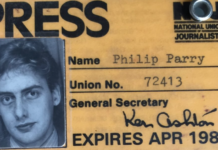
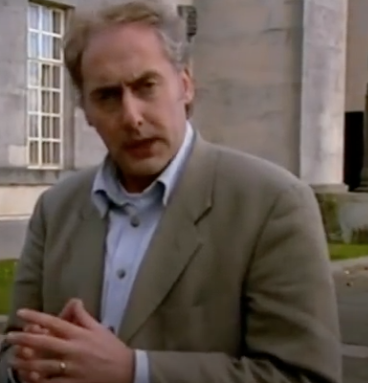
During 23 years with the BBC, and in a 42 year journalistic career (when he was trained to use clear and simple language, avoiding jargon), for our Editor, Welshman Phil Parry, it has always been massively important to use correct English – and this is now emphasised by a new book about the alphabet.
I try very hard on The Eye.
As I have been trained to do, I read every story back several times to check it (it is also run past a lawyer), but often I find mistakes in the use of language that need to be changed.
They glare at me, and I think anybody reading it must believe I am a complete fool, so the alterations have to be made straight away – even if it is only putting in a ‘comma’!

Of course the reality is that nobody really cares, because they have far more important things to do like making a cup of tea.
For a journalist, however, it is incredibly important, and I worry terribly if there has been a mistake (however small) in the language.
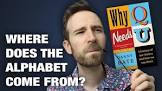
All of this has been put centre stage for me by a book which has just been published called “Why Q needs U”.
If you didn’t know already, in English ‘Q’ always has a ‘U’ after it, just as (and this is a particular bug bear of mine) there is no ‘OF’ after ‘COMPRISED’ because it is contained in the word (Estate Agents please take note!).
Everyone gets the ‘comprised’ issue wrong, and I even heard it recently on University Challenge (which made my blood boil!).
This shows that alphabet (and I am talking about ENGLISH here NOT Welsh) is easy to take for granted, as well as to use inaccurately (no split infinitives!).


Children memorise it before they know why it matters.
Then it’s off to reading, and learning the sounds of the letters and how they combine.
After that, many people will never again wonder: why is the alphabet in that particular order?
Why, for instance, do C and G have both ‘hard’ and ‘soft’ versions?
Why is H called ‘aitch’, lacking the very sound it represents in its name?
Even fewer will know enough to ask why a former slave invented G.
Who made J out of I?
Why is K the comeback hero of the alphabet?
But all these questions are answered in the book by Danny Bate, a linguist.
So, it seems, I am not alone in finding these issues FASCINATING, meaning that it is vital to get their use right…
It is important for linguists like Mr Bate, as well as for journalists like me!
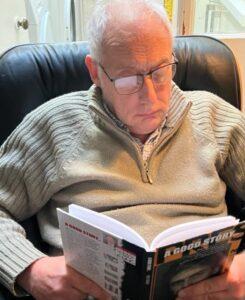
Details of Phil’s, astonishing decades-long journalistic career (when you always had to use words correctly), as he was gripped by the rare neurological condition Hereditary Spastic Paraplegia (HSP), have been released in another important book ‘A GOOD STORY’. Order it now
‘Why Q Needs U’ by Danny Bate, is published by Blink Publishing; £14.99.
Tomorrow – how a story on a tax-payer supported Welsh nationalist website prompted vile and potentially illegal abuse online, including that the person in question should be killed.