



- Halt! (Unless you’re a certain type…) - 16th September 2026
- From Russia without love part two - 15th September 2026
- ‘We don’t need no educashun…’ copyright Pink Floyd - 14th September 2026
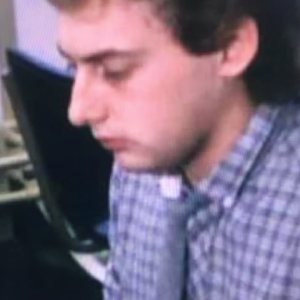
During 23 years with the BBC, and in a 42 year career (when he was trained to use clear and simple language, avoiding jargon), for our Editor, Welshman Phil Parry, confronting people, as well as analysing where cash has been hidden, has always been a mainstay of his journalism, and now this is underlined by deep disquiet about key UK Government measures, along with the latest crime figures.
They invariably talk a good game, but the reality is rather different.
I’m talking here about UK Government politicians (although I could talk about any of them really!) when they pledged to crack down on the use of tax havens to bank ill-gotten gains, but a debate a few weeks ago showed that it is pretty much business as usual, and some participants condemned the inaction in this field.
There’s also the question of the latest figures showing that the police solve almost no crimes. Why isn’t anything done about that?
We’ll start, though, with the issue of hiding away the proceeds of crime, so the taxman and others can’t examine its origins.

Everyone calls them ‘tax havens’ (like the Cayman Islands and the British Virgin Islands), but to UK Government ministers they are known as “overseas territories”.
Treasury minister Stephen Doughty (who has served as MP for Cardiff South and Penarth since 2012, and presumably will have been very busy assisting Rachel Reeves recently), declined a suggestion from Tory Andrew Mitchell for a public register of companies there, that he and Labour stalwart Margaret Hodge had proposed in 2018.
The unease in the Westminster Hall debate was palpable, and Mr Doughty admitted: “The elected leaders in the overseas territories and their governments will have heard clearly the strength of cross-party feeling”.
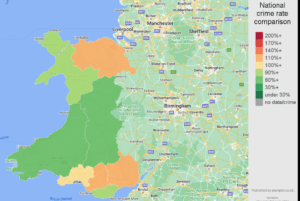 Obviously something concrete, rather than just hand-wringing, needs to be done in this area, but the whole criminal justice system should be looked at, because the statistics on crime generally are shocking, and Wales, unfortunately, seems to be leading the way.
Let’s examine, for example, the figures for illegal violence, because they make up almost 40 per cent of all crime.
The annual rate in Wales is 38.4 crimes per 1000 people, when for England and Wales it is 34.5 per cent. Compared to the UK crime rate, Wales is at 108 per cent as of October 2025. The total number of violent crime is 117,000, and this figure has increased by 1.6 per cent year-on-year in the period of October 2024 – September 2025.
 Last month The Police Foundation declared: “There is a pressing imperative for ambitious police reform, which can only be delivered by the co-ordinated efforts of government, policing and its enabling partners”.
However it is also worrying that as crime has fallen (to do with advances in technology, and home security), the percentage where the case was closed satisfactorily, remains alarmingly high.
As the number of crimes plummeted in England and Wales over the last two decades, so too has the proportion that were solved. In 2015 around one in six recorded crimes resulted in a charge or a summons. Last year it was only around one in 20.

In sexual crime the clear up rate is particularly bad. The number of reported sexual offences has more than tripled over the last 20 years, to almost 200,000, yet the charge proportion is just 4.2 per cent.
 After a Crime and Policing Bill was introduced to the House of Commons (HoC) earlier this year, the UK Government proclaimed: “Trust in the police has been undermined by failures in vetting and the appalling misconduct of some officers”.
In one scandalous recent instance where a young woman was wrongly strip searched, the Chief Constable (CC) of Greater Manchester Police (GMP) Stephen Watson described the actions of his officers towards ‘Maria’ as “an inexplicable and undefendable exercise of police power”.
This damning comment when the young woman in question received a criminal conviction, was highlighted by an inquiry into the terrible issue, and comes as appalling details emerged about the use of the strip search by another police force which has also been highly controversial.
At a school in Hackney, East London, a strip search was “disproportionate, inappropriate and unnecessary” and made the girl, known as Child Q, feel degraded and humiliated, a panel concluded at the end of a four-week misconduct hearing, with two police officers being dismissed from the Metropolitan Police (Met).
Child Q’s mother said in a statement at the time: “Professionals wrongly treated my daughter as an adult and as a criminal and she is a changed person as a result.
“Was it because of her skin? (she was black) Her hair? Why her? After waiting more than four years I have come every day to the gross misconduct hearing for answers and, although I am relieved that two of the officers were fired, I believe that the Metropolitan Police still has a huge amount of work to do if they are to win back the confidence of Black Londoners”.
 The background is disturbing because the faults of the police generally have featured in The Times, with its main leader saying: “…Women across the country are being failed by forces when they report domestic violence, including sexual crimes, by serving officers…”.
Across England and Wales the public’s confidence in the police is at an all time low. A YouGov poll found that only 49 per cent of Britons thought the police were “doing a good job”, down from 77 per cent four years before. In his assessment of policing, Andy Cooke, His Majesty’s Chief Inspector of Constabulary (HMCIC), described this as one of policing’s “biggest crises in living memory”. He could not remember, he said, “when the relationship between the police and the public was more strained than it is now”.
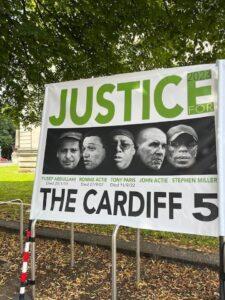
All of this puts centre stage what has taken place in Wales’ largest police organisation (South Wales Police [SWP]), amid mounting concern that the small country has FOUR forces. SWP was responsible for a string of miscarriage of justice cases in the 1980s, ’90s, as well as 2000s, and now there is a growing campaign to highlight what happened. They include: The Cardiff Three (Five), The Cardiff Newsagent Three, The Darvell Brothers, Jonathan Jones (The Tooze Murders), as well as Annette Hewins. Protest action is planned by The Cardiff Five support group over the coming weeks to draw attention to these cases.
However this shameful list does NOT have on it all those innocent people, who were convicted of less important crimes than murder, yet who now have a record which will affect them for the rest of their lives, and there is a powerful argument for getting rid of SWP completely.
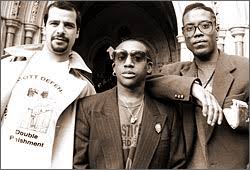
Tony Paris, Yusef Abdullahi, and Stephen Miller were wrongly found guilty in 1990 of the murder of Lynette White, and spent more than two years serving prison sentences having endured the same time on remand, while cousins John and Ronnie Actie were acquitted after being in custody since their arrests.
False eyewitness statements, coerced confessions, and more were used in the police ‘investigation’. However on appeal in 1992 the taped interviews with Mr Miller, who had a mental age of 11, were deemed an example of inappropriate interrogation for reference in future cases, such was their intimidating and coercive nature. It exposes the failings by SWP investigating officers, and bolsters demands for a judicial inquiry.
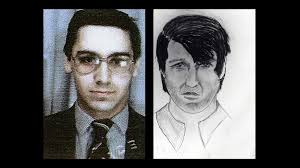
Three BLACK men had been convicted of the murder (although FIVE, including the Acties, were put on trial), when one WHITE man (Jeffrey Gafoor) was finally caught years later through DNA analysis. He confessed to carrying out the terrible murder, and even apologised, through his barrister, to the others who had been incorrectly jailed.
The five innocent men, were arrested in December 1988 after detectives had been on the case for 10 months, and were pursuing a suspect seen nearby (who looked EXACTLY like Gafoor), minutes following the murder. But when SWP changed the investigating team, and pressure mounted to make an arrest, attention turned to locals. Despite no forensic evidence connecting the five to Ms White’s murder they were taken in.
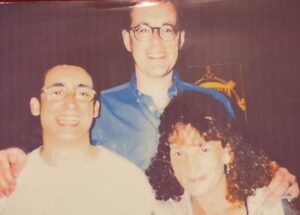
At around the same time as this dreadful case there was another one (The Cardiff Newsagent Three), and a Media Conference (MC) was organised by Mike O’Brien to emphasise what he and others endured. He spent 11 years in jail after being jailed wrongly in 1988 for the killing of Cardiff newsagent, Phillip Saunders. Mr O’Brien talked movingly about how his health had been badly affected. He told The Eye: “My health has been ruined, and there has been long-lasting damage. My miscarriage of justice case has caused a huge family rift”. Another who spoke emotionally at the MC of what had happened to him, was John Actie.
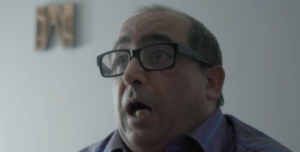
Even before these awful details emerged, Sky documentaries were broadcast, called ‘Murder in the Valleys’ (MITV), looking into the horrific Clydach murders in 1999, when four people (Mandy Power her elderly disabled mother Doris, and two young children) were brutally beaten to death. They were nominated for two awards at the BAFTA Cymru ceremony, including one for best Factual Series.
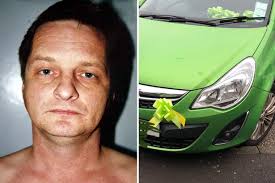
This, too, has shone the spotlight on past events, as well as by recent reports of police actions, despite the fact it is not (in theory) a miscarriage of justice case, although the man convicted of them (David ‘Dai’ Morris) died in jail still protesting his innocence.
A website his sister Debra Morris (now Thomas) helped set up, along with her niece, questions Morris’ guilt and has almost 31,000 members. On it she published a reply from Channel 5 to her complaint about another programme, but above the letter she wrote: “What research did they do????”.
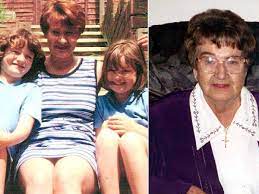
The successful prosecution case against him was that he had gone to Ms Power’s looking for sex, high on drink and drugs, been spurned and beat the entire family to death, leaving his chain there in the process. Yet the evidence suggested Doris had been killed first, NOT her daughter, when presumably it would have been the person doing the spurning who would have died FIRST!
Mr O’Brien appears on MITV saying that he believes the conviction of Mr Morris IS in fact another miscarriage of justice. He told the MITV documentary-makers: “When I was released from prison I remember…saying ‘I’m going to be South Wales Police’s worst nightmare for what they did to me’, and I meant every word of it”.

In a formal interview for MITV (they wouldn’t do one with ME!), Assistant Chief Constable (ACC) of SWP, David Thorne, made a startling admission, about the mistakes that were made by the police in the earlier miscarriages of justice. During filming for the programme Mr Thorne appeared on, a forensic review found traces of DNA on a sock which it is believed was used to hold the murder weapon, that were “more likely than not” to have come from Mr Morris, and SWP trumpeted the finding.
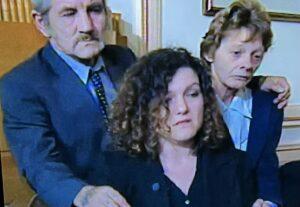
They effectively said: ‘We know we got it wrong in the past, but this time is different. Trust us’. Yet a long-running campaign has been launched to establish his innocence, and after the first trial when Morris was convicted, his sister Debra gave a tearful press conference with her parents when she stressed her belief that he was NOT guilty. She said: “He just didn’t do these things…they’ve got the wrong man”.
ACC Thorne, though, insisted on MITV, that Morris was the RIGHT man, but acknowledged that mistakes had been made in previous police inquiries. He proclaimed: “It’s safe to say we got it wrong (in the past). We absolutely got it wrong. (There were) HUGE errors in the way investigations were conducted (but) we HAVEN’T found that in this case. This is not a miscarriage of justice”.
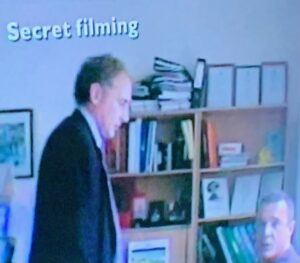
However I had made a BBC Panorama television programme about the shocking Clydach Murders a few years after they had been committed, and he was the first to question the police actions during THIS investigation too. As he said in the opening of the programme: “One police force in Britain has a disturbing record of locking up the wrong people in murder cases”.
During MITV, the Senior Investigating Officer (SIO) at the time, Detective Superintendent (DS) (Retd.) of SWPMartyn Lloyd–Evans (who used the word ‘sublime’ when he meant ‘subdued’!), is questioned about the apparent mistake of not releasing to the public a witnesses E-Fit constructed soon after the murders, which, it said, had a 90 per cent likeness. He replies that because the man seen was carrying a bag, and it was believed the killer did not have one, it was not put out.

Mr Evans said: “I didn’t think it was relevant”, but the E-Fit matched almost exactly the face of the first senior police officer on the scene, Inspector (at the time) Stuart Lewis, who (against all procedure) had only stayed there a matter of minutes, or that of his identical twin brother (another police officer, Sergeant [also at the time] Stephen Lewis, whose wife was having a gay affair with one of the victims). Inspector Stuart Lewis, had changed his shift to be on that night, yet at crucial hours during the murders his whereabouts were unknown. He was driving a red Peugeot diesel, and a car similar to this was spotted near the murder scene. So to say the E-Fit was ‘not relevant’, appeared bizarre in the extreme, to critics of the police.
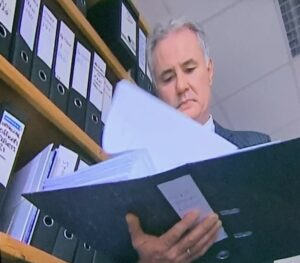
Yet Mr Evans’ record was considered so exemplary he was later chosen to examine cold cases in the Major Crime Review unit. In 2009, he said: “What we do is use today’s technology on yesterday’s cases which means that offenders who may think that they are safe 20 years after a crime has been committed aren’t any more and could receive a knock on the door any day”.
In the MITV films Mr Evans’ boss as the then head of SWP CID, Wynne Phillips, also said something incredible: “We can’t manufacture evidence”. But events before the murders, showed that SWP have done EXACTLY that.

To take just one of those cases (in which I was intimately involved, because I had made ANOTHER programme questioning THAT conviction [The Cardiff Newsagent Three]), the police MANUFACTURED (as Mr Phillips said they DIDN’T do) an overheard ‘confession’ between two of the young men they had arrested, when an admission was effectively made to the murder of the newsagent, and they presented before the court ‘EVIDENCE’ that the group had run from the scene, but one of the three had bad legs and couldn’t run at all.
Sad to say this story may run and run – if the UK Government continues to dither over cracking down on tax havens, and the crime numbers carry on being appalling…
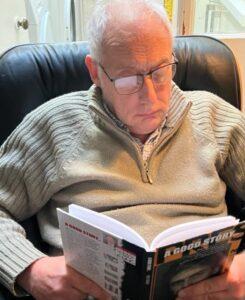
The memories of Phil’s, remarkable decades long award-winning career in journalism (during which the mistakes of the police were often brought out) as he was gripped by the rare and incurable neurological disabling condition Hereditary Spastic Paraplegia (HSP), have been released in a major book ‘A GOOD STORY’ (including The Cardiff Newsagent Three case). Order the book now!
It would make a great Christmas present – Nadolig Llawen!
‘Crime pays but shouldn’t, part three’ comes tomorrow where fresh on the heels of an extraordinary alleged heist in France, we have news of ANOTHER daring raid at a museum much closer to home when hugely valuable items were taken – across the Bristol Channel.