









- School’s out - 7th October 2026
- Another kill zone - 6th October 2026
- War games part one - 6th October 2026

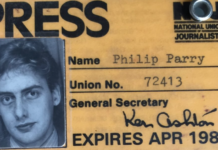
During 23 years with BBC Cymru Wales (BBC CW), and 42 years in journalism (when he was trained to use clear and simple language, avoiding jargon), our Editor, Welshman Phil Parry, would often be confronted by bizarre episodes, and this is today put centre stage by news that one-time allies Saudi Arabia and the United Arab Emirates are mired in an extraordinary spat, while another country they have in the past both embargoed, is now trying to mediate between them!
Sometimes situations are so ridiculous you could burst out laughing

I remember showing a conman his own birth certificate once, but he looked at it and proclaimed: “That’s not me”.
We BOTH knew that wasn’t true!
On another occasion, when I challenged someone about not being a possible murder suspect, I had to hare up the stairs where I knew the meeting was to take place, so I could sit in the seat by the window, and he would then have to use the chair opposite, with the light on him, otherwise my shot in secret filming would be ruined.
 Even at the time I thought this was so ridiculous it should be in a sit-com!
As well as coming across humorous situations such as these, you understood that in journalism, when securing important information, you would sometimes have to deal with people whose views you personally found repugnant (racism excepted), so it is important to recognise that on occasions opposites attract.
However nothing is so ridiculous as an event taking place at the moment on the world stage, in which the principle of opponents becoming allies (or vice-versa) has been pushed to an astonishing extreme.
Let me explain.
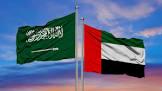
Saudi Arabia (Saudi) and the United Arab Emirates (UAE) have shifted from being close partners to becoming fierce rivals, driven by opposing goals in Yemen and across the region. A prolonged ‘cold war’ dynamic is now likely, involving a proxy competition between them, and even limited risks of direct conflict.
At first they had co-operated in Yemen; beginning in 2015 there was a Saudi-led coalition to defeat the Iran-aligned Houthis, but it fractured massively as Riyadh and Abu Dhabi chased incompatible objectives.
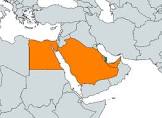
On one hand, Saudi has always supported the internationally recognised Yemeni government, which aims to preserve Yemen’s territorial unity and security within its own borders.
On the other hand, the UAE shifted to back the Southern Transitional Council (STC), a separatist movement which seeks autonomy and control over strategic ports as well as trade routes.
These tensions deepened because Saudi had already had concerns that fighters backed by the UAE were working to weaken the anti-Houthis forces and divide up Yemen.
Top officials now barely speak, and state-backed propagandists have been unleashed to attack each other. The feud has reshaped the war in Yemen and complicated cross-border business.

Unbelievably Qatar is now trying to mediate between them, yet BOTH have shown extreme hostility to this small country in the past!
In 2017 a group of Gulf countries (including Saudi and the UAE) imposed a strict embargo on the tiny emirate over its support for Islamists.
So countries which were once allies are now at odds with each other, while another state the two are deeply opposed to, is trying to broker peace between them!
You couldn’t make this up…
But truth is often stranger than fiction, as I know only too well!
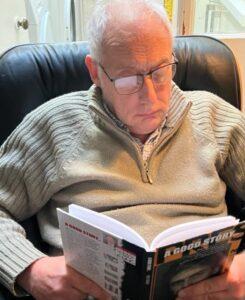
The memories of Phil’s, remarkable decades long award-winning career in journalism (during which odd but factual events often happened), as he was gripped by the rare and incurable neurological disabling condition Hereditary Spastic Paraplegia (HSP), have been released in a major book ‘A GOOD STORY’. Order the book now!
Tomorrow – how during that career he has always known that economic factors are central, and new evidence today of an incredible upsurge in Artificial Intelligence (AI) has underlined this.