





- Another kill zone - 6th October 2026
- War games part one - 6th October 2026
- Poll to poll - 5th October 2026

During 23 years with the BBC, and 42 years in journalism (when he was trained to use clear and simple language, avoiding jargon), watching the behaviour of leaders has always been paramount for our Editor, Welshman Phil Parry, but today there is increasing criticism that Andy Burnham will not submit himself to a General Election (GE), while another has ruled out elections ALTOGETHER!
Democracy MATTERS.
Andy Burnham now has huge influence over all our lives as Prime Minister (PM), and has assumed this role because it was entirely constitutional (some would say justifiable), because he was elected leader of Labour – however he has NOT submitted himself to the will of the people through the ballot box at a General Election (GE), and a growing phalanx of onlookers don’t like this.
 On the face of it the number of democracies around the world is growing, but these are often just a fig leaf for an autocratic regime, and one ruler has thrown this aside totally, dispensing with elections COMPLETELY!
A few years ago the rated top three full democracies were all scandinavian – Norway, Finland and Sweden, while Eritrea was at 176, with North Korea just above it.
It is obvious from this that some countries which CLAIM they are democratic, are actually nothing of the kind.
One country in particular, has gone further and junked the cover of elections altogether.
In Nicaragua (156 on the list of democracies before), Daniel Ortega declared bluntly on July 19: “There will never be elections here again”.

 Obviously what has occurred in the UK is nothing like this, but even so there is cause for concern.
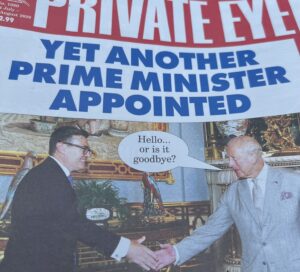
His becoming PM is highly unusual, because like Gordon Brown many years before him, Mr Burnham was long seen as the hot favourite, so he has secured the top job without another candidate standing against him.
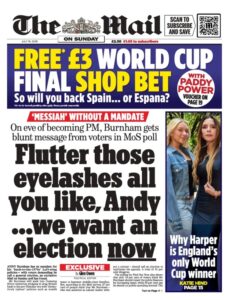
It is also unique for it to happen only two years into a parliament, where the incumbent has swept to power with a thumping majority of 411 MPs, and critics fear that this bizarre event could further undermine voter disillusionment, with it making unfortunate headlines in UK newspapers, such as “Who voted for Burnham?..” in The Times, and “…we want an election now (emphasised)“ in the Mail on Sunday (MoS).
The process that we have seen MANY times, began with Sir Keir Starmer meeting King Charles to offer his resignation formally as PM, with the King meeting Mr Burnham soon afterwards.
Mr Burnham was then asked to form a government.
All of this has been particularly discombobulating because it means there are now MORE names for me to learn, and it is only relatively recently that we had an election to the Welsh Parliament/Senedd Cymru (WP/SC), when the new First Minister of Wales (FMW) Plaid Cymru’s (Plaid) Rhun ap Iorwerth brought in HIS supporters as WELSH ministers, when I had only just learnt the names of the LAST lot!
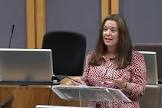
For example, there was the obscure Julie James who was made Welsh Counsel General in 2024, alongside being appointed Minister for Delivery.
The then FMW Eluned Morgan (ANOTHER name which will soon be forgotten!) also nominated the unknown Vikki Howells as Minister for Further and Higher Education..
The poor voter may be getting tired of this incredible merry-go-round, and election fatigue could set in.
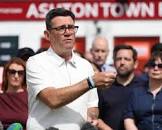
Mr Burnham’s victory at Makerfield over the UK Reform candidate convinced many Labour MPs he was the right candidate to replace Sir Keir, even as worries grew in the real world about electoral turnout.
In 1945 the turnout figure was 83.9 percent, but at the 2024 one it was about 60 percent, the lowest since 2001, when it was 59.4 percent.
This 2024 figure came even after the drama of Brexit, and the extraordinary spectacle of witnessing ministers, as well as PMs come and go.
Other senior Labour figures (such as centrist one-time UK health secretary Wes Streeting), abandoned their own leadership ambitions and got behind Mr Burnham, along with the overwhelming majority of the party’s MPs.
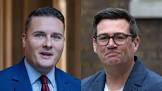
Mr Burnham has also made plenty of promises in relation to spending, but could be unable to implement many of them, because the UK is in such deep financial trouble, and this, too, may endorse the view among voters that there is little point in trudging to the polling booth, as nothing changes.
Mean wages have grown by just one per cent in real terms since 2024, and by a paltry 4.5 per cent since April 2008 (a third as quickly as American wages).
More trouble could lie ahead too, if Artificial Intelligence (AI) displaces the legions of white-collar knowledge workers who make up the UK economy’s backbone.
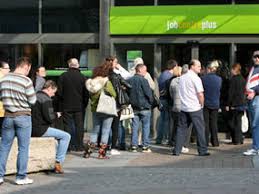
Low growth is also bad for the ailing public finances.
Public spending has risen from 39 per cent of Gross Domestic Product (GDP) in 2019-20 to 45 per cent today.
An ageing population and rising defence commitments could push it higher still, with tax revenues (37 per cent of GDP) struggling to cover Mr Burnham’s largesse.
Nor will greater borrowing help, because debt interest this year will cost £109 billion (more than the education budget), and bond investors charge the UK higher interest rates than any other big rich country, so they jump at the slightest hint of profligacy.
Since warning last year that we are too “in hock” to the bond markets, Mr Burnham has toned things down a little – suggesting that he supported the UK Government’s current fiscal rules and would have a plan to get debt down.

By their nature, the rules (self-imposed limits on borrowing and debt), are a straitjacket worn by successive administrations to reassure those in the £2.9 trillion market for UK government debt that Britain is a safe bet.
He may now think those words unwise, because he needs the money and has to borrow it – but he is unlikely to seek a GE mandate any time soon, although at least it’s not as bad as another world leader proclaiming: “There will never be elections here again”.
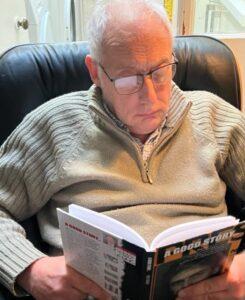
The memories of Phil’s extraordinary decades long award-winning career in journalism (when the turnover of senior political leaders was nothing like as great as today in the beginning), during which he was gripped by the rare neurological disabling condition Hereditary Spastic Paraplegia (HSP), have been released in a major book ‘A Good Story’. Order it now.
Next week – the retention and growing success of Audit Wales (AW), have highlighted increasing criticism of a controversial decision by the Conservative-led coalition UK Government years ago, to scrap the accountancy watchdog for English councils.