




- Comeback kid - 26th October 2026
- Food, glorious food… - 26th October 2026
- I predict a riot - 23rd October 2026
During 23 years with the BBC, and in a 43 year journalistic career (when he was trained to use clear and simple language, avoiding jargon), for our Editor, Welshman Phil Parry, highlighting new evidence has always been crucial, and today fresh information is emerging from a review of mental health care of children, which has found that there has been a significant rise in distress among youngsters, and that different models of care are having to be tested in Wales to support them.
Sadly it appears that even after past scandals, there is still a lot of work to do in supporting young people who have mental health difficulties.
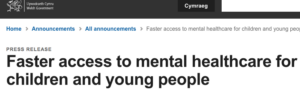 Earlier this year the Welsh Government (WG) declared: “…pilots are testing different models of care to provide safe, young person-centred spaces when young people need support”.
A recent review of the situation across the UK has laid bare the issue, with the head of an independent review into mental health, proclaiming that Attention Deficit Hyperactivity Disorder (ADHD) as well as autism were very real issues, and accusations that the young are a snowflake generation are WRONG.
Professor Peter Fonagy stated that the most common conditions are anxiety, depression, self-harm and eating disorders.
He said it was “harder to be young” now given the economic and employment uncertainty young people face, coupled with the challenges presented by social media.

His review was ordered by Wes Streeting, after the then-health secretary claimed that young people were over-diagnosed and “written off”.
This is all set against a disturbing backdrop.
Pithily Mark Rowland, Chief Executive Officer (CEO) at the Mental Health Foundation (MHF), has described the situation very well when he said about a recent budget speech: “In a context of rising mental health needs…missing were clear commitments to increased funding for mental health prevention and support, which remain critical to tackling the UK’s mental health crisis”.
This “…mental health crisis” is general, but affects young people too, because parents and elders who are looked up to are hit by it.
 In Wales the situation could be particularly difficult, as the country has been struck extremely hard by de-industrialisation, and the jobless rate is higher than the UK average.
Both of these factors have an enormous impact on mental health.

It is clear that worrying about where your next pay cheque might come from, has a terrible effect mentally.
Historically cash support for mental health has not been brilliant in Wales, and a report about it recently stressed this factor, especially in relation to younger people.
An alarming document published by the Healthcare Inspectorate Wales (HIW), and Estyn emphasised this dreadful situation.
 Their findings revealed that many children and young people struggle to access the help they need, outlining:
- Ineffective support: Some children and young people were missing out on timely and effective support.
- Gaps in specialist care: Despite shorter waiting times for initialChild and Adolescent Mental Health Services (CAMHS) assessments, follow-up care remained a major challenge for all children and young people. This was particularly the case for those with complex needs, including neurodiverse young people, who were often left without care when needed.
- Disparity in service access: There were disparities with the eligibility criteria and thresholds for accessing CAMHS, leaving many families and professionals frustrated by poor communication and lack of clarity around how these decisions are made. Those who spoke Welsh were not easily able to converse in their language of choice for mental health care and support.
- Rise in crisis support: New initiatives like Sanctuary Spaces and Crisis Hubs were providing alternatives to emergency room care for children and young people in crisis, but high demand meant many were still only accessing support there when they reached breaking point.
- Funding issues etc: Significant funding concerns have emerged, there are poor communication between services, and coordinated care is lacking. The report calls for stronger partnerships between health and local authorities to ensure that children and young people get the right care at the right time.

The Chief Inspector of Care Inspectorate Wales (CICW), Gillian Baranski proclaimed: “Mental health support for our children and young people is not just a statistic; it’s a call to action. It’s deeply concerning that over half of Wales’s children and young people don’t know where to turn for help…”.
Quite apart from the failures in mental health support for younger people in Wales, the help for adults with mild to severe psychiatric needs has been little better.

One mental health charity stated on its website: “It is with a deep regret that we announce that Time to Change Wales, our national anti-stigma programme will come to an end on the 31 March 2025. This is due to not being able to secure continuation funding beyond this current phase. Since its inception in 2012, this programme has been instrumental in raising awareness, supporting individuals, and advocating for change in the way mental health is perceived and discussed across systems and society”.
Families of patients at Tawel Fan Mental Health Unit in Ysbyty Clwyd were told that their loved ones had been filmed crawling across floors (by a UK newspaper) before the building was demolished, and a report into the scandal in 2015 said that there had been “institutional abuse”.
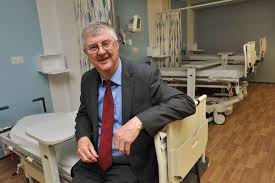
The former First Minister of Wales (FMW), Mark Drakeford, was the Welsh Government (WG) Minister for Health and Social Services at the time of the scandal, so he is in the firing line.
After the revelations he apologised and said there would be an “urgent meeting”, which has always seemed to me the least that should have been done in the circumstances!
If ever the description ‘Cinderella service’ is apposite, it is in relation to mental health care – and regrettably new research today underlines this, with a review of support for young people emphasising that ‘anxiety, depression, self-harm and eating disorders’ are on the increase.
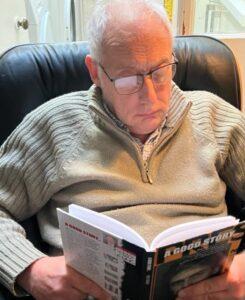
The memories of Phil’s decades-long award-winning career in journalism as he was gripped by the rare disabling condition Hereditary Spastic Paraplegia (HSP), have been released in a major book ‘A GOOD STORY’ (which includes details of his own battles with mental health issues). Order it now!
Next week – huge warnings today from senior politicians, and intelligence officials about Russia’s hybrid ‘war’, put centre stage once more how The Eye too has been targeted.