










- Comeback kid - 26th October 2026
- Food, glorious food… - 26th October 2026
- I predict a riot - 23rd October 2026

At the start of 23 years with the BBC, and a 43 year journalistic career (when he was trained to use clear and simple language, avoiding jargon), for our Editor, Welshman Phil Parry, stories were either written on typewriters or early forms of computer, but now comes more evidence of the apparently inexorable rise of new technology, so this is unlikely to be the case ever again, as huge rows erupt today about Artificial Intelligence (AI), and the enormous data centres the firms employ, as well as the massive energy supplies needed for them.
A day doesn’t pass without a story about controversies related to Artificial Intelligence (AI).

There are enormous worries now (not least from some of the companies themselves), that this technology will be misused, while families in several countries oppose the vast data centres they will use, but others welcome them!
For his part Donald Trump is a big SUPPORTER (make of that what you will!), and only last month said there was no need for more regulation.
Last month he said that the US already has guardrails in place, and played down concerns expressed by industry leaders about people being harmed.
Anthropic researcher Jacob Coxon warned that he had resigned, in part because the “people building AI earnestly believe that it could kill us all by the end of the decade”.

In his essay, Mr Amodei outlined a three-step framework which he said was intended to slow the pace of AI development and create more time to manage its risks.


Then there is the issue of the gigantic data centres behind them, which many people do not like, but that, again, Mr Trump supports, declaring that they make people and states wealthy, and calling them the “oil of the next 20, 25 years”.
 Even so, it seems, that many countries are tiptoeing towards iAI.
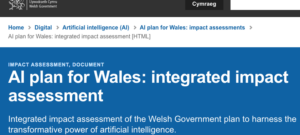
The Welsh Government (WG) even has a ‘plan’ for it, which declares: “The AI Plan for Wales (is) Embracing digital and data innovation (which) can lead to greater economic opportunities and a more prosperous and resilient society. Equipping people with the digital and data skills they need and designing services around the user will also improve social cohesion, create a more healthy and equal society with well-connected communities and contribute to a thriving Welsh language”.

Australia is more full on and is positively welcoming data centres, so it has set about building data centres in earnest. Investors have plans to pour some $156 billion into computing clusters there – eclipsed only by America at $1.8 trillion and China at $295 billion.
The reasons for this are, as with Australia’s mineral riches, mostly the result of good fortune. But its government wants to make sure that this boom lasts. This month senior Australian officials stopped off in San Francisco to woo American AI labs.
Chastened by a growing public backlash over data centre investment in America, and feeling competitive pressure to expand their computing power, AI bosses are looking elsewhere, so Australia might fit the bill.

On September 16 it was reported that Anthropic had signed a deal to lease a 2.16 gigawatt facility in Australia’s North-East, on a par with the largest in the world.
The country has had its issues with AI, however.
An urgent review was launched after an OpenAI agent “infiltrated” part of Australia’s healthcare scheme Medicare, and the Deputy Prime Minister (DPM) Richard Marles, who is also defence minister, said: “It is utterly unacceptable”.

So the jury’s out about whether AI is good or bad, but one thing is certain; it makes life extremely difficult for people like me!
The memories of Phil’s decades-long award-winning career in journalism as he was gripped by the rare disabling condition Hereditary Spastic Paraplegia (HSP), have been released in a major book ‘A GOOD STORY’ (which was NOT written by AI!). Order it now!
Soon on The Eye – ‘More Artificial Information (AI) part two’, where Phil looks at how many speeches from our politicians, are actually created by AI!
Tomorrow – why major warnings today from senior politicians, and intelligence officials about Russia’s hybrid ‘war’, put centre stage once more The Eye too being targeted, as well as how the resignation of Tennessee’s Department of Correction commissioner, Frank Strada, after the failed execution of death row prisoner Christa Pike, offers us another opportunity to re-publish our story about this extraordinary case.