








- Halt! (Unless you’re a certain type…) - 16th September 2026
- From Russia without love part two - 15th September 2026
- ‘We don’t need no educashun…’ copyright Pink Floyd - 14th September 2026
Campaigners want cleaner waterways in Wales after a landmark legal case to protect the rivers Wye, Lugg and Usk – the biggest ever claim of its kind, but which opponents say is “based on a misunderstanding”.
Supporters of the clean-up say that they are backed by thousands of people across the rivers catchment areas.
Almost 4,000 individuals signed up to the lawsuit against major poultry producers and a water company, over allegations of “extensive and widespread pollution”.
They have argued that the state of the rivers in recent years has severely affected local businesses, property values and people’s enjoyment of the area, so they are seeking “substantial damages”.
But the firms being sued all denied the claims.
Celine O’Donovan, from the law firm Leigh Day, has said the case was the largest brought in the UK over environmental pollution in the country on three counts – the number of claimants, the geographical scale of the damage and the total damages claimed.
Those who have joined the group legal claim all either live or work alongside the rivers, or use them regularly for leisure activities like swimming and canoeing, so want the court to order a clean-up of the rivers as well as compensation.
 A combination of chicken manure and sewage spills are blamed for harming water quality and suffocating fish and other wildlife.
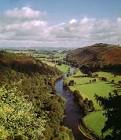
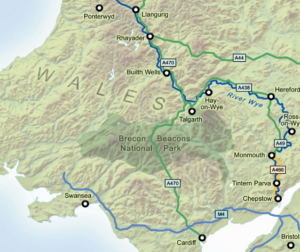
The Wye in particular has become symbolic of widespread concerns over the worsening state of the UK’s waterways in recent years, and it passes through the Welsh border town of Monmouth below Ross-on-Wye, among many other places in Wales).
It flows for 155 miles from its source in the Cambrian Mountains of Mid Wales along the border with England to the Severn Estuary.
The River Lugg is a major tributary of the Wye, flowing predominately through Herefordshire.

The River Usk runs through the Bannau Brycheiniog National Park, also known as the Brecon Beacons, as well as the Blaenavon Industrial Landscape World Heritage Site, before reaching the Bristol Channel at Newport.
All three rivers are protected because of their importance to rare wildlife, including otters, freshwater pearl mussels and the Atlantic salmon.
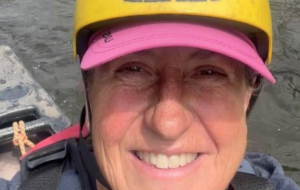
Wildlife filmmaker Justine Evans is acting as the lead claimant and said she had noticed a “stark decline” in the Wye’s condition in recent years.
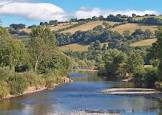
“It’s horrible to think what has happened to the wildlife it is home to”, she declared.
Former Olympic swimmer Roland Lee moved to live near the Wye in order to have access to open water for swimming.
“But now I’d actually go as far as to warn people against going in”, he said.
The claimants allege pollution has been caused by run-off from farmland containing high concentrations of phosphorus, nitrogen and bacteria from the spreading of poultry manure and sewage bio solids used as fertiliser.

They also blame discharge of sewage directly into rivers.
Anneliese Day KC, representing the claimants, stated in written submissions for a preliminary hearing in April: “As a result of pollution for which the defendants are responsible through their agricultural/sewage-related activities, the health of the River Wye, the River Usk and their tributaries has declined”.
But one of the defendants in this extraordinary case said that it shared concerns over the condition of the Wye, yet announced: “…we believe that this legal claim is based on a misunderstanding, as no manure is stored or spread on poultry-only farms that supply (us). Where poultry manure is used as fertiliser, it is for other produce in other agricultural sectors”.

Geraint Webb KC, acting for another argued in written submissions that there is an “evident paradox” in pursuing the claim, given that his client operates as a not-for-profit company.
Charles Gibson KC, representing further ones, said the group’s claim that fertiliser has caused pollution is “entirely inferential and is an oversimplification”.
In written submissions, he said of the accusers: “Their claim is fundamentally misconceived in law and in fact, lacking in any proper scientific basis, and misunderstands how poultry farms in fact operate”.
There is plainly no misunderstanding about the concerns of campaigners on river quality in Wales, in the biggest ever case of its kind.
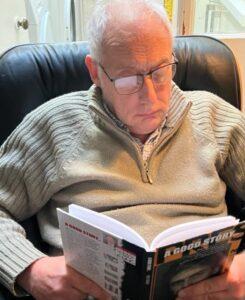
Truths like these by our Editor, Welshman Phil Parry, who was gripped by the rare neurological condition Hereditary Spastic Paraplegia (HSP), have been released in a major book ‘A GOOD STORY’. Order it now!
Tomorrow – how for him choosing exact and easily-understood words has always been paramount, with the spotlight being thrown on this fundamental issue by a new book about the importance of punctuation, while another recent one uses terms known mainly in academic or student circles.