



- Another kill zone - 6th October 2026
- War games part one - 6th October 2026
- Poll to poll - 5th October 2026
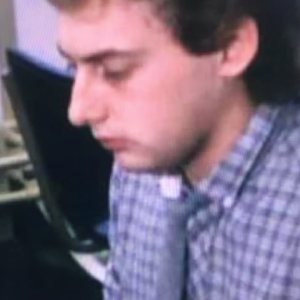
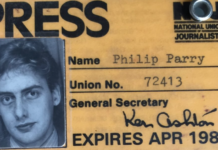
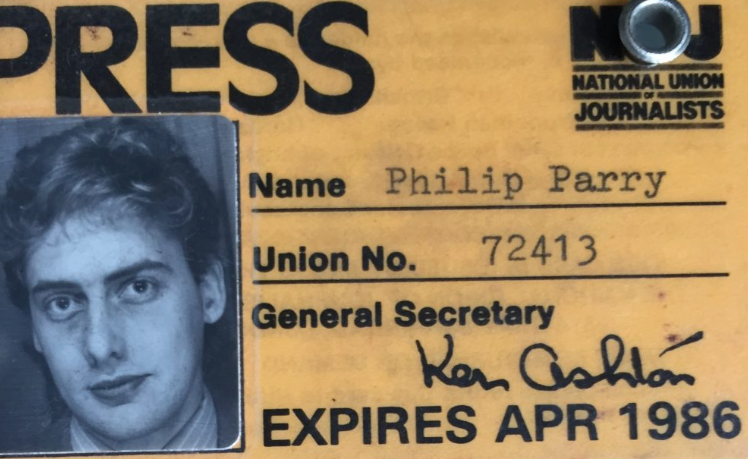
For a journalist like our Editor, Welshman Phil Parry, it becomes all the more important to check sources, because in the past photographs of figures with dubious individuals could be relied on as evidence of a connection, but now they cannot be because the picture might have been generated by a robot, and today the problem appears to be getting worse, with talk of Artificial Intelligence (AI) even achieving a level of consciousness.
I have been a journalist since 1983 and the job has always been hard, but now it is becoming harder.
A picture or a secretly-recorded video (and I have done my fair share of those over the years!), used to be proof positive of nefarious activities, but today they aren’t, because they could have been generated by Artificial Intelligence (AI).

In one unnerving recent example, a ‘lecture’ supposedly given by the famous historian and philosopher Yuval Noah Harari was so good, that it even took in his own sister, and initially Mr Harari himself, until it was realised it was completely made up.
There is even research underway now that AI may become so powerful, that it could reach a level of CONSCIOUSNESS, which would upend decades of work into what consciousness and awareness actually ARE.
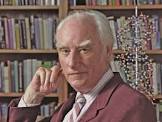
The search for artificial consciousness is a descendant of the work to explain it in humans. In the early 1990s Francis Crick, co-discoverer of the structure of DNA, and Christof Koch, then a neuroscientist at the California Institute of Technology (CIT), began a scientific search for the “neural correlates” of consciousness in humans. That is, processes and parts of the brain that were active when someone was conscious.
Improvements in brain-scanning techniques in the intervening years have allowed neuroscientists to fill in pieces of the jigsaw.
For instance they know that the ‘thalamocortical system’ is strongly associated with consciousness; among other things it conveys sensory information from the thalamus to the cerebral cortex.

Meanwhile they see nothing like those associations with consciousness in the cerebellum, which has a lot more brain cells.
Parts of the prefrontal and parietal cortices and structures in the brainstem contribute to and modulate awareness.
Almost four decades of searching has led to more than 200 approaches to explaining consciousness.
In 1995 Ned Block, then working as a philosopher at the Massachusetts Institute of Technology (MIT), made an influential, if contested, contribution to the field by positing TWO types of consciousness.
There was ‘Phenomenal Consciousness’ – the feeling of an experience (like the blueness of a blue sky, the bitter tang of an espresso or the sharp screech of nails across a blackboard, and ‘Access Consciousness’ – such as what happens when information from the experience is made available to other parts of the brain for reflection, evaluation or making decisions.
Perhaps now we should add a third category – ‘AI Consciousness’, or even a fourth one ‘Journalist Confusion‘, when he or she is presented with a picture that may not be real!
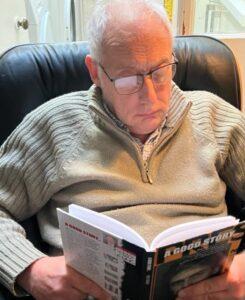
The memories of Phil’s decades-long award-winning career in journalism as he was gripped by the rare disabling condition Hereditary Spastic Paraplegia (HSP), have been released in a major book ‘A GOOD STORY’ (which was NOT written by AI!). Order it now!
Tomorrow – after writing about the importance of monitoring basic foodstuffs’ popularity in identifying audiences changing tastes on issues, he looks at how ordinary people push certain cheap independent FILMS to become box office hits which make millions, whereas other huge state-backed intended blockbusters, are often expensive flops!