









- Another kill zone - 6th October 2026
- War games part one - 6th October 2026
- Poll to poll - 5th October 2026

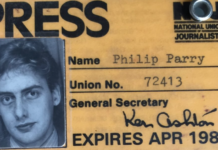
During 23 years with BBC Cymru Wales (BBC CW), and 43 years in journalism (when he was trained to use clear and simple language, avoiding jargon), polling figures have always been central because they show how popular or otherwise is a controversial policy or party, and they could be a major factor today as the popularity of the still newish nationalist Welsh Government (WG) drops or rises as it meets the huge challenges facing Wales, as well as in elections now around the world.
The methods are now so sophisticated (when in the past they weren’t), that we are offered a glimpse into the mind of Mrs Jones in Rhyl.
I am talking, of course, about polling numbers.
These get a bad press (and terrible mistakes have been made previously), but they are invariably incredibly accurate today.
For example, a poll of polls just before the last election to the Welsh Parliament/Senedd Cymru (WP/SC) on May 7 almost exactly mirrored the final result, when, obviously, the nationalist party Plaid Cymru (Plaid) won, with its leader Rhun ap Iorwerth becoming First Minister of Wales (FMW).

However campaigning is relatively straight-forward, whereas actually governing is very difficult, and it will be interesting, now, to see how Plaid faces the problems which are bound to arise in the months and years ahead (on things like the state of the health service), with the party’s popularity reflected in the opinion polls.
The companies behind them have refined their methods hugely since the debacle of the 1992 exit poll which showed Neil Kinnock holding power.

Today they are massively scientific, with the two main characteristics of surveys being that they have a) respondents chosen by the research company, and b) that sufficient information is collected about these people to ensure that the data in the published results match the profile of the group being surveyed.
For instance, if the population being sampled contains 52 per cent who are women and 30 per cent who are over 55, then a typical opinion poll will ensure that its published data contains these proportions of women and older respondents.
The choice of respondents is done using two main methods. The first is ‘random’ sampling, the second ‘quota sampling‘.

With random sampling, a polling company either uses a list of randomly-drawn phone numbers or email addresses (for telephone or some Internet polls); or holds face-to-face visits using randomly-drawn addresses, as well as names pulled from a list such as an electoral register (for some surveys). The polling company then contacts people on those telephone numbers or at those addresses, and asks them to take part in the survey.


‘Quota sampling’ involves setting quotas (such as age or gender), and then seeking out different people in each location who, together, match those characteristics. ‘Quota sampling’ is often used in face-to-face surveys.
In addition, some Internet polls employ quota samples to select representative samples from a database of people who have already provided such information about themselves.
Well-conducted random and quota samples provide a broad approximation to the public, but there are all kinds of reasons why they might contain slightly too many of some groups of people, and slightly too few of others.

What normally happens is that polling firms also ask respondents not only about their views, but about themselves too, and this information is then used to compare the sample with, for example, census statistics about the population.
The raw numbers from the poll are then adjusted slightly, up or down, to match the profile of the population being surveyed.
So if, for example, a poll finds that, when its survey-work is complete, that it has 100 members of a particular demographic group, but should have 110 of them (in a poll of, say, 1,000 or 2,000), then it will ‘weight’ the answers of that group so that each of those 100 respondents counts as 1.1 people.
This way, the published percentages should reflect the population as a whole.

It’s not just in Wales that they are used as a guide to voting intentions – they are employed all over the world (although I can’t vouch for their accuracy as here).
Look, for example, at the elections in the giant country of Brazil next month, where the incumbent Luiz Inácio Lula da Silva (known as ‘Lula’) of the Workers’ Party/Labor Party (PT) is expected to win, according to the opinion polls,
Centre-right parties dominate Congress there, but their refusal to back Flávio Bolsonaro may well be down to a calculation that Lula will be re-elected, and this appears to have been influenced by the surveys, as his approval rating is high (between 43 and 48 per cent).

Yet polls show, too. that voters remain concerned about several issues – the level of crime in particular.
In an Ipsos poll published in June, 47 per cent of Brazilians cited violence as the country’s main problem, up seven points from last year.
Even so those same surveys show that Lula may be on course to victory, and that Flávio (I use the first name here to distinguish him from his jailed father), has lost ground (although making it up a bit more recently), among women particularly,
A public spat with Flávio’s stepmother, who is adored by Brazil’s powerful evangelical Christians, has hurt massively.

After the tiff, a close ally of the Bolsonaro family told a podcaster: “Statistically speaking, women tend to vote very badly, especially single women”. Among women, Lula now leads Flávio by 18 percentage points.
Then there is the perception of Mark Carney, where opinion polls appeared to show strong approval of his standing up to the bullying of Donald Trump, whereas now his apparent caving in to him has not gone down well with voters.

This can be shown with the reaction today to funding arrangements for a new bridge called Gordie Howe, which has just been opened, linking Canada and the United States of America (USA).
Canada agreed to pay for the construction of the bridge in 2012 on the condition that it would take ALL tolling revenue until its costs were recovered, but after Mr Trump demanded and received a new deal, Mr Carney claimed repeatedly that Canada’s costs would still be paid first.

A crowing tweet from Howard Lutnick, the US Commerce Secretary, made it clear, though, that was not true at all.
In fact, for the first 15 years of the bridge’s operation the USA Government will take HALF of net revenues, after operating costs but before debt repayment, in a concession that will cost Canada some C$300 million.
The share of Canadians who say they now feel confident that Mr Carney can land a good deal with Mr Trump, fell by eight percentage points between April and July, according to research published on July 26 by the pollster, Angus Reid.
So ignore those polls at your peril – because Mrs Jones in Rhyl (or Señora Jones in Sao Paolo!) knows a thing or two…

Phil’s memories of his extraordinary award-winning career in journalism (including political, as well as polling stories like these) as he was gripped by the incurable disabling condition Hereditary Spastic Paraplegia (HSP), have been released in a major book ‘A GOOD STORY’. Order it now!
Tomorrow – for him a free media holding important people to account has always been fundamental, although (as he has written many times) it is under threat everywhere, and this has been shown now in Kazakhstan where sham elections have just taken place, with journalists trying to cover the campaign arrested.