







- Value judgement part two - 1st October 2026
- Rocket man - 30th September 2026
- Crime pays unfortunately, part two - 30th September 2026
During 43 years in journalism, (when he was trained to use clear and simple language, avoiding jargon), for our Editor Welshman Phil Parry, monitoring trends has always been paramount – and today a key one is the rise of the right, as well as anti-immigration feeling.
This is shown in spades around the globe now, with the authorities in one state warning ‘foreign traders’, they had 90 days to ensure they hold correct status documentation (prompting a flood out of the country by the people concerned), in the face of a body of statistics revealing that migrants bring enormous economic and cultural BENEFITS,
It seems to be becoming worse.
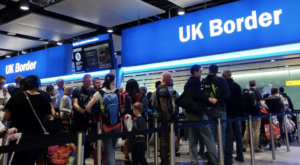
I use that word advisedly, because the figures are pretty clear – international incomers bring benefits, both in jobs and culture.
However we hear all the time that migrants don’t fit in, do not share our values, and take the jobs that native people could do.
It appears that migrants may take a few people’s jobs at a lower level, like picking cabbages in a frozen Norfolk field (would you want to do that anyway?!), but above that employment is CREATED.
In Wales the issue of overseas migration is even more pertinent, because the numbers are TINY!
But apparently ignoring those statistics the latest outrages actually come in Africa.
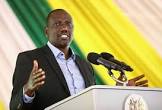
In Kenya on September 2, William Ruto, the President, said foreigners running small businesses should close them “from next week”.

Mr Ruto said he remained keen on foreign investment to create jobs for KENYANS, but would not tolerate foreign “hawkers” undercutting local traders.
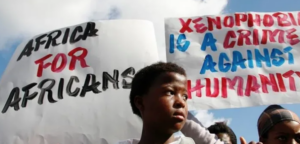
These shocking comments were followed by a spate of xenophobic attacks and demonstrations in Nairobi. Migrants from Burundi bore the brunt of the violence.
Videos circulating on social media showed people being beaten in the street, and hundreds of undocumented migrants flocking to the Burundian embassy, as they scrambled to register for emergency travel documents to go home.
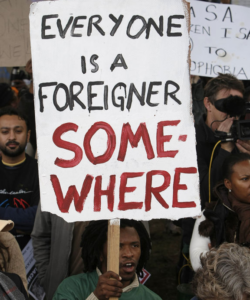
In the wake of the attacks (and international criticism), the Kenyan government softened its stance a little on September 8, announcing that foreign traders would be given 90 days to ensure they held legal status.
But Kenya is not the only country where appalling acts have taken place.
There are troubling signs of similar xenophobia against Sudanese refugees in Egypt, Eritreans in Uganda, Congolese in Angola and Guineans in Senegal. Last year Tanzania banned foreigners from owning or operating businesses in 15 sectors, from tour guiding to artisanal mining.
There have also been violent xenophobic attacks aimed at immigrants in South Africa (SA). These gruesome events started in Durban, spreading to Johannesburg and other cities, prompting memories of similar attacks in 2008 that left about 60 foreigners in SA dead. Earlier, shops belonging to a section of foreigners were razed to the ground in Soweto.

This may all be playing to the gallery to get votes, because figures show that migrants generally (not all) work hard, pay taxes, as well as create businesses, and SURELY the policy makers can’t be unaware of these facts!
Some take jobs the native population would not want to do anyway, or work in unfashionable businesses, like the caring profession, and without THEM the system would completely collapse.
In Wales the thorny issue of migration has particular resonance because the numbers are so small.
The research department of the Welsh Parliament/Senedd Cymru (WP/SC) declares: “In Wales, the most recent data shows that in the year to mid-2024, international migration to Wales fell by almost a quarter compared with the year to mid 2023, to 22,680…Of all the nations and regions of the UK, only one (the North East of England at 6.8%) had a lower proportion of its population born abroad than Wales (6.9%)”.
If there is a research department in the Kenyan government, it seems clear that it’s not doing its job, because the statistics behind their policies simply don’t stack up!
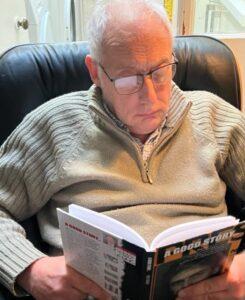
Truths like these by our Editor, Welshman Phi Parry, who was gripped by the rare neurological condition Hereditary Spastic Paraplegia (HSP), have been released in a major book ‘A GOOD STORY’. Order it now!