









- Writing on the wall? Part one - 8th October 2026
- Lights to green… - 7th October 2026
- School’s out - 7th October 2026
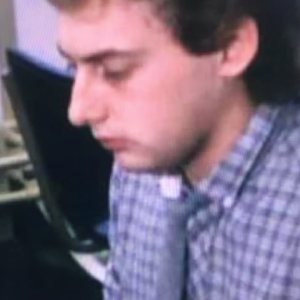
Regrettably during 43 years in journalism, (when he was trained to use clear and simple language, avoiding jargon), for our Editor Welshman Phil Parry, crime stories (particularly violent assaults) in CITIES have often dominated, but now it appears terrible attacks in RURAL areas in parts of Wales may be increasing, as gangs cross ‘county lines’ to trade in drugs.
It’s not just urban areas now.
The latest figures show that violent crime particularly, is on the increase in Wales, and (although the statistics are difficult to break down) this may be due to a rise in rural regions.
 As of July, the annual crime rate in Wales stood at 39.1 crimes per 1000 people., and those levels were at 109 per cent of the UK rate.
Violent crime made up 39.2 per cent of all crimes reported in Wales totalling 119,000, which represented an increase of 0.3 per cent year-over-year.
It could be that this rise (slight at the moment, but perhaps at the start of a worrying trend), is to do with drug supply from cities and towns in mainly England.

Customers may be sought in areas where you might not think there is a problem (such as rural regions of Wales), across ‘county lines’, and a knife is carried to protect dealers from attacks by other gangs.
In 2020 a Home Office (HO) review appeared to endorse this, finding that the levelling-off of urban drug use was driving gangs towards new markets around rural towns.

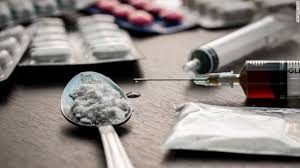
According to annual threat assessments, the number of ‘county lines’ known to the authorities has increased from 720 in 2017 to more than 6,500 today.
The dealers have also expanded their product ranges – so that while the original county lines gangs dealt mainly in crack and heroin, they now also traffic in cannabis, powdered cocaine, ketamine and prescription drugs.
Rural violence is proving difficult to confront because such areas remain the most profitable route to growth for drug-dealing groups.

Increased competition in rural areas has created a market based on customer service (above all that means speedy deliveries), and in many UK towns it is now possible to have drugs delivered within an hour (think Amazon Prime for amphetamines!), so supply chains have had to adapt.
“The classic county-lines model of sending your boys down on the train has gone”, explains Simon Harding, a Criminologist. “It’s much easier to set up a local hub and deal from there”.
The result is that drugs gangs are increasingly indigenous to rural areas, dealing from local properties and recruiting local children.
The share of lines originating in ‘task-force areas’ (covering the traditional hotspots) fell from 70 per cent to 50 per cent from 2022 to 2025.
However police forces (and pressure is mounting to have ONE in Wales) do not have a good record in adapting to change, or in catching criminals generally, and they have been plagued by enormous scandals.

In the UK police response times are sluggish, and following a series of high-profile controversies, these have resulted in only 51 per cent of people thinking the police are doing a good job, down from 75 per cent in 2000, so the issues that need to be tackled by all police organisations (including that of rural crime, and drugs), are enormous.
For example the figures for illegal violence in the UK tell a familiar yet depressing story, because they make up almost 40 per cent of all crime.
As the number of crimes plummeted in England and Wales over the last two decades, so too has the proportion that were solved. In 2015 around one in six recorded crimes resulted in a charge or a summons. Last year it was only around one in 20.

In sexual crime the clear up rate is particularly bad. The number of reported sexual offences has more than tripled over the last 20 years, to almost 200,000, yet the charge proportion is just 4.2 per cent.
The annual rate in Wales is 38.4 crimes per 1000 people (when for England and Wales it is 34.5 per cent), and compared to the UK crime rate, Wales is at 108 per cent as of October 2025. The total number of violent crime is 117,000, and this figure has increased by 1.6 per cent year-on-year in the period of October 2024 – September 2025.
 After a Crime and Policing Bill was introduced to the House of Commons (HoC), the UK Government proclaimed: “Trust in the police has been undermined by failures in vetting and the appalling misconduct of some officers”.
Meanwhile ordinary officers are at their wits’ end, and the Police Foundation (PF) has said: “There is a pressing imperative for ambitious police reform, which can only be delivered by the co-ordinated efforts of government, policing and its enabling partners”.
The warning from the PF has been underlined by scandalous recent events. In one a young woman was wrongly strip searched, and the Chief Constable (CC) of the force concerned – Greater Manchester Police (GMP), Stephen Watson – described the actions of his officers towards ‘Maria’ as “an inexplicable and undefendable exercise of police power”.

This damning comment when the young woman in question received a criminal conviction, was highlighted by an inquiry into the terrible issue, and comes as shocking details emerged about the use of the strip search by another police force which has also been highly controversial.
At a school in Hackney, East London, a strip search was “disproportionate, inappropriate and unnecessary” and made the girl, known as Child Q, feel degraded and humiliated, a panel concluded at the end of a four-week misconduct hearing, with two police officers being dismissed from the Metropolitan Police (Met).

Child Q’s mother said in a statement at the time: “Professionals wrongly treated my daughter as an adult and as a criminal and she is a changed person as a result.
“Was it because of her skin? (she was black) Her hair? Why her? After waiting more than four years I have come every day to the gross misconduct hearing for answers and, although I am relieved that two of the officers were fired, I believe that the Metropolitan Police still has a huge amount of work to do if they are to win back the confidence of Black Londoners”.

The context is disturbing because the faults of the police generally have featured in The Times, with its main leader saying: “…Women across the country are being failed by forces when they report domestic violence, including sexual crimes, by serving officers…”.
Across England and Wales the public’s confidence in the police is at an all time low. A YouGov poll found that only 49 per cent of Britons thought the police were “doing a good job”, down from 77 per cent four years before. In his assessment of policing, Andy Cooke, His Majesty’s Chief Inspector of Constabulary (HMCIC), described this as one of policing’s “biggest crises in living memory”. He could not remember, he said, “when the relationship between the police and the public was more strained than it is now”.

All of this highlights what has taken place at South Wales Police (SWP) amid mounting concern that the small country has FOUR forces. SWP was responsible for a string of miscarriage of justice cases in the 1980s, ’90s, as well as 2000s, and now there is a growing campaign to highlight what happened. They include: The Cardiff Three (Five), The Cardiff Newsagent Three, The Darvell Brothers, Jonathan Jones (The Tooze Murders), as well as Annette Hewins. Protest action is planned by The Cardiff Five support group over the coming weeks to draw attention to these cases.
However this shameful list does NOT have on it all those innocent people, who were convicted of less important crimes than murder, yet who now have a record which will affect them for the rest of their lives, and there is a powerful argument for getting rid of SWP completely.

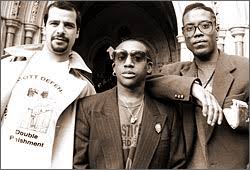
Tony Paris, Yusef Abdullahi, and Stephen Miller were wrongly found guilty in 1990 of the murder of Lynette White, and spent more than two years serving prison sentences having endured the same time on remand, while cousins John and Ronnie Actie were acquitted after being in custody since their arrests.
False eyewitness statements, coerced confessions, and more were used in the police ‘investigation’. However on appeal in 1992 the taped interviews with Mr Miller, who had a mental age of 11, were deemed an example of inappropriate interrogation for reference in future cases, such was their intimidating and coercive nature. It exposes the failings by SWP investigating officers, and bolsters demands for a judicial inquiry.
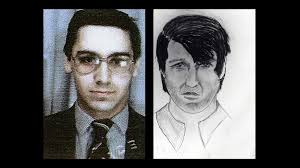
Three BLACK men had been convicted of the murder (although FIVE, including the Acties, were put on trial), when one WHITE man (Jeffrey Gafoor) was finally caught years later through DNA analysis.
He confessed to carrying out the terrible murder, and even apologised, through his barrister, to the others who had been incorrectly jailed.
This appalling case might seem a long way from the issues of drugs and rural crime, but if this can’t be solved correctly, what chance is there of the police adapting to the violence of ‘county lines’ drugs gangs?
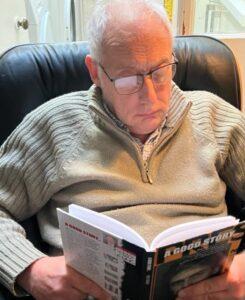
The memories of Phil’s astonishing career in journalism (when crime stories often dominated) as he was gripped by the rare neurological disabling condition, Hereditary Spastic Paraplegia (HSP), have been released in another book ‘A GOOD STORY’. Order the book now!
Soon on The Eye – ‘Police state’, and indications from the Prime Minister (PM) Andy Burnham that power over policing might be devolved to Wales, could end a situation where FOUR forces exist in a country of only 3.1 million people, which was raised in a campaign to highlight a miscarriage of justice by officers in the biggest one.
Also soon – ‘Crime pays unfortunately, part two’ where we look at how organised crime is in the ascendancy.

Tomorrow – as Phil has written many times a free and independent media is essential in a society, although this does not exist in many states around the world, and this is now put centre stage by another food scandal emerging in China, where a cancer-causing chemical was used to wash cabbages.