









- Old and new… - 21st October 2026
- Black European - 21st October 2026
- More poll to poll - 20th October 2026

New evidence is emerging that one of the most significant migrant populations in the UK is European (although black), with Somalis among the most prominent – which could be especially relevant to Wales because among its largest communities is in its capital, Cardiff.
The Migration Observatory, a think-tank at Oxford University (OU), estimates that some 800,000 ethnic-minority people in the UK hold EU passports.
Most hail from ‘old’ European countries such as France, Italy and the Netherlands rather than the ‘new’ countries that joined the union after 2003, such as Lithuania and Poland.

One of the most significant is a group whose background is Somalian, although others are bigger.
Numbering almost 80,000, Portuguese Asians are the biggest group.
Many come from the Indian state of Goa, which was Portuguese until 1961; people with deep roots in the state can obtain Portuguese passports.
Nevertheless, the Somalia community in Britain is extremely important.

There has been the civil war migration of the 1980s and 90s, when families and refugees fled the civil war in Somalia, shifting the community demographics to include more women and children.

It is not just Cardiff either which is seeing Somalian heritage Europeans moving to the UK – other cities such as Leicester are as well.
Abdikayf Farah, who runs a Somali education charity, spent a dozen years in Denmark before moving to Leicester partly for its relaxed multiculturalism.
There are also cultural changes (some would say benefits), particularly in food. For example there is ‘pindakaas’ – a form of peanut butter.
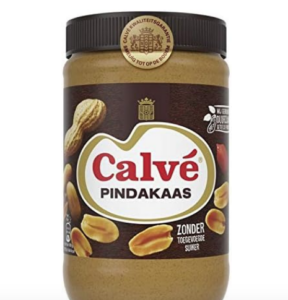 Some Somalis in Leicester prefer the Dutch product, and jars of imported pindakaas can be bought in corner shops around the St Matthew’s housing estate, near the city centre.
So can Dutch oatmeal, Dutch vanilla sugar and condiments such as kruiden ketchup and romige fritessaus.
We see much the same in the old docks area of Cardiff, where Somali-influenced dishes are easy to come by.
Education is another draw.
Mr Farah says that the Somalis who migrated from the EU are especially ambitious for their children.
Those children are faring pretty well too.

Last year 53 percent of Asian pupils and 41 per cent of black African pupils in Leicester’s schools (such as those of Somalian heritage), got at least a grade 5 in their English and Maths GCSE exams.
The figure for white Britons was 24 per cent.
Immigrants’ children perform better than average in the Pisa tests run by the OECD, making the UK unusual among European countries.
But there’s nothing unusual in seeing a Somali heritage family in the south of Cardiff – and the figures show ever more of them can be classed as ‘European’ across Britain…
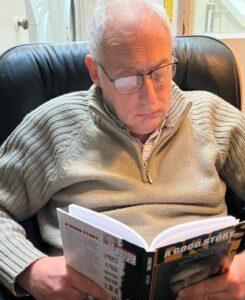
ng material!
Truths like these by our Editor, Welshman Phi Parry, who was gripped by the rare neurological condition Hereditary Spastic Paraplegia (HSP), have been released in a major book ‘A GOOD STORY’. Order it now!