








- War games part two - 20th October 2026
- Poll to poll - 19th October 2026
- More Artificial Information (AI) part two - 19th October 2026

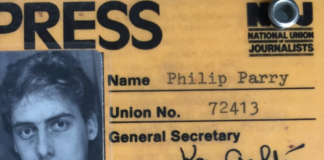
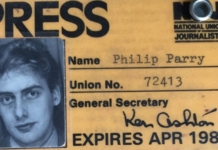
During 23 years with the BBC, and a 43 year journalistic career (when he was trained to use clear and simple language, avoiding jargon), for our Editor, Welshman Phil Parry, major events have always dominated – but perhaps none more so than the threat of nuclear war. Now, though, there is disturbing evidence that big powers may be becoming less concerned about nuclear annihilation.
I remember it like it was yesterday.
Just before I went to university in 1980 I have a clear memory of thinking to myself: “Please, just give me these three years, before nuclear weapons annihilate me”.
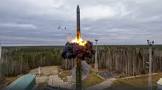
It is very hard to convey to younger people how we lived under constant threat in those days.
Nuclear-armed Western countries (such as the United States of America [USA] and the UK] were at daggers drawn with a hugely-powerful alternative system (Communiam, governing the Soviet Union [SU] and its satellite states).
BOTH held massive stock piles of nuclear weapons, meaning the world could be destroyed many times over at the flick of a switch.
Obviously it could not be ruled out that there might well also be a terrible mistake, and missiles would be launched in error.
This was the time of Mutually Assured Destruction, the absurd doctrine that peace was kept by those in power knowing everybody would be doomed if a missile strike was launched, which had the appropriate acronym of ‘MAD’.
There was a shared dread of nuclear annihilation then, which led American and Soviet leaders to pause and seek better ways to manage arsenals whose power defied decency and reason.

Sometimes the terror felt by superpower rivals averted imminent disaster, as when John F. Kennedy and Nikita Khrushchev overruled their hardline counsellors to end the Cuban missile crisis of 1962.
On other occasions the salutary effects of fear took longer to show themselves, and a film called “The Brink of War”, shows just this issue. It has just been released to mark the 40th anniversary of a crucial meeting between Ronald Reagan and Mikhail Gorbachev, in Reykjavik.
It was held in a cramped, reputedly haunted seaside house, and the summit was intense as well as claustrophobic.

Diplomats who took part recalled that two officers, one American and one Russian, who stood outside the leaders’ meeting room, held the ‘footballs’ which controlled 60,000 nuclear warheads between them.
The summit, in October 1986, was seen as a failure at the time, later, however, Mr Reagan’s Secretary of State (SoS), George Shultz, credited it with laying the groundwork for subsequent treaties that scrapped whole categories of nuclear weapons.

Mr Gorbachev called Reykjavik the place where the cold war’s ending was set in motion.
A big breakthrough involved a mutual admission by the American and Soviet leaders that they feared and despised nuclear weapons and (shocking their more hawkish advisers) that they aspired to eliminate them all, perhaps as soon as within 10 years.
Today the world has a new problem: its strongest countries are insufficiently horrified by their own nuclear firepower. the USA, China and Russia are all bent on enlarging or modernising their nuclear arsenals.
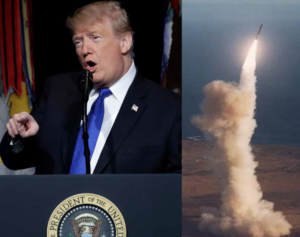
As a result, they are either reluctant to join arms-control talks or have allowed previously agreed pacts to lapse, and Donald Trump treats nuclear risks with a startling lack of seriousness.
The threat of nuclear war SEEMS to our policy makers to have receded, but that would be a mistake.
Just ONE nuclear weapon will kill thousands of people, and there are still loads of them – despite the treaties (which are lapsing anyway).
That young man in 1980 might be relieved that he got through the three years at university, but he would still be worried that decades later the risk is still there…
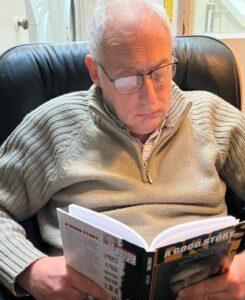
Truths like these by Phil, who was gripped by the rare neurological condition Hereditary Spastic Paraplegia (HSP), have been released in a major book ‘A GOOD STORY’. Order it now!
Tomorrow – new evidence is emerging that one of the most significant migrant populations in the UK is European (although black), with Somalis among the most prominent – which could be especially relevant to Wales because among its largest communities is in its capital, Cardiff.