





- Polls apart - 4th March 2026
- Repeating on you… - 4th March 2026
- History man - 3rd March 2026

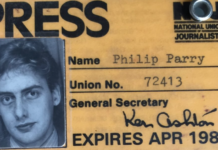
During 23 years with the BBC, and in a 42 year journalistic career (when he was trained to use clear and simple language, avoiding jargon), our Editor, Welshman Phil Parry, looks on aghast as newspaper circulations continue to slide (the paper he started on now sells just 2,700 copies a day!), even as cover prices rise inexorably, with more increases planned this year.
All Welsh newspapers are doing badly, but one in particular (where I started as a journalist in 1983) is doing especially badly – the South Wales Echo (SWE).
It was at the time the biggest-selling paper produced in Wales (which was entirely right as it covered Cardiff as well as the major valleys, and sold almost 100,000 a day), but it long ago lost that crown.
In the first half of last year the average circulation of the SWE was down to only 2,735 copies.
All newspapers in Wales have dropped massively as they struggle to compete with the internet (they have put all their eggs in the ‘website basket’), but while the drop for them has been massive, it is less marked than with the SWE.
Therefore even if you compare like-with-like the SWE is doing more poorly than its rivals, so why is this?
And newspapers, I would suggest, hold a vital role in a functioning democracy, because they keep opinion-formers on their toes and hold people to account.
What must be particularly galling for readers is that they pay through the nose for this privilege – the cost of buying the SWE on Wednesday January 14 was a staggering £2.80.
There is little competition among daily newspaper ownership in Wales either, with both of the main papers serving the South and the North of the country, owned by the SAME company – Reach (or ‘Retch’ as Private Eye calls it!).
Perhaps the readers are not being served well, indeed journalists on their titles need to be reminded of how important they are, and were recently sent a memo by executives which read: “If you receive a call from a reader…please remember to treat them as a VIP”.

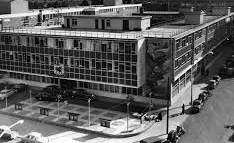
Reach plc (known as Trinity Mirror between 1999 and 2018) is the largest news firm in the UK, and including the SWE, Western Mail and Daily Post, has over 120 print and online brands.
The huge company also controls the website WalesOnline (WO).
Regrettably even as newspaper circulation drops like a stone, we can look forward to more price rises this year, on the back of enormous recent increases (and not just in local papers either!).
In 2024 (remember more price increases may follow at titles this year) were at the Telegraph titles, and the Saturday edition of The Times as well as The Sunday Times, which all went up by 50p in the year.

There was the FT Weekend, as well as The Sunday Times and the Saturday edition of The Daily Telegraph, both of which went from costing £4 to £4.50.
In percentage terms, the Daily Star’s cover price rose the most in 2024: by 22.2 per cent from 90p to £1.10.
In January 2025 it was reported that all UK cover prices had gone up by 12 per cent over the previous year, with a mind-blowing rise of 135.8 per cent over the decade!

For comparison, Consumer Price Inflation (CPI) in the UK was at 3.5 per cent in that year, with the cost of food and non-alcoholic beverages up only two per cent, while inflation was no higher than four per cent throughout 2024.
All those newspapers (as well as the ones in Wales) have website versions, so that might be seen as the future.
But even here there is a ‘paywall’ for some of the information.

Once again it is the poor old reader that suffers – best to stick to The Eye which is free!
The memories of Phil’s astonishing award-winning career in journalism (which began when many different companies owned alternative media outlets), as he was gripped by the rare neurological disabling condition, Hereditary Spastic Paraplegia (HSP), have been released in a major book ‘A GOOD STORY’ (which includes details of his time on the Daily Mail). Order the book now!
Tomorrow – during that career, polling figures have always loomed large because they show how popular or otherwise is a controversial policy, and today’s Greenland saga is a prime example of this.