




- Halt! (Unless you’re a certain type…) - 16th September 2026
- From Russia without love part two - 15th September 2026
- ‘We don’t need no educashun…’ copyright Pink Floyd - 14th September 2026

For our Editor, Welshman Phil Parry, the importance of the kind of investigative journalism he undertakes has always been fundamental, and now this is underlined by news today coming out of the Ukraine war, where a small media site has calculated that the total number of troops from a supposed ally of Vladimir Putin is NOTHING like as high as has been described.
Sometimes you have to rely on journalistic sources for facts, because you certainly won’t get the truth from ‘official’ outlets!
An example of this iron law is now coming out of Ukraine, where Vladimir Putin launched his invasion (dubbed a ‘special military operation’) in February 2022.
Chechnya has supposedly sent a vast number of troops to help Mr Putin, but work from the independent news source Mediazona paints a rather different picture.
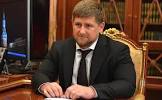
The republic’s strongman leader Ramzan Kadyrov (a big supporter of Mr Putin), talks a good game, but in reality is, perhaps, not helping him as much as he says he is, and investigative journalism has been instrumental in exposing this.
Mr Kadyrov’s speeches are full of belligerence towards the West and pledges of loyalty to Mr Putin.
“We are ready to advance in any direction specified by the Supreme Commander-in-Chief… [our] special forces are literally burning with the desire to carry out highly complex orders,” Mr Kadyrov said on July 18.

Earlier he had claimed that Chechnya had sent over 70,880 fighters to the war, NINE per cent of the republic’s male population, which would be the highest percentage of any Russian region.
But according to Mediazona which keeps records of invading soldiers killed in action – the number of Chechen dead stood at just 539 as of July 10, and that is just 0.2 per cent of total losses by invasion forces, though Chechnya accounts for 1.1 per cent of Russia and other’s population.

“Whatever interests Moscow has in Ukraine, we are a world apart from them”, declares a well-known Chechen with close ties to the leadership.
Though Mr Kadyrov boasts of his role as Mr Putin’s foot-soldier, “the chief understands the situation perfectly well” and has no desire to sacrifice his people for the sake of the “Russian World”.
Most Russians are tired of the war, but Chechens have special reason to dislike it. Locals older than 35 have memories of the bombings and Bucha-style ‘cleansing operations’ (atrocities) that Russian forces inflicted on Chechnya long before they perpetrated them in the current war in Ukraine.
This is not the first time that Mediazona has highlighted the truth either.
It was founded by two members of ‘Pussy Riot’, a punk band which staged protest concerts, and has also been trying to count the actual number of Russian casualties. In 2012, three members of the band were all convicted of “hooliganism motivated by religious hatred” and each sentenced to two years’ imprisonment.
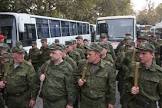
Mediazona has found an ingenious way to work out how many Russians have been conscripted, by analysing open-source data on the unusually high number of marriages since mobilisation began. (Draftees are allowed to register their marriage on the same day as they are enlisted, and often do, since they don’t know when, or if, they will see their partners again).
Last year Mediazona estimated that half a million people were drafted in the first round of conscription—far more than the 300,000 the Kremlin said would be.
Mediazona is one of the few independent news sites left in Russia, when many others have had to escape to other countries.


At least 500 journalists have been forced to flee Russia since its invasion of Ukraine, according to Proekt Media, and are reporting the truth about the war from OUTSIDE the country.
They call this “offshore journalism”, and the journalists are scattered across Europe, in cities such as Riga, Tbilisi, Vilnius, Berlin and Amsterdam, where they manage to reach a large audience, with most of them under the age of 40. “Our job today is to survive and not let our readers suffocate”, said Ivan Kolpakov, the editor-in-chief of Meduza, a news website.
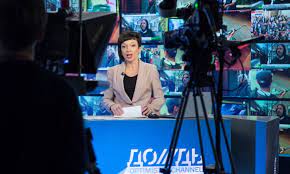
Meduza has reported on the massacre of Ukrainian civilians in Bucha, and the extraordinary number of convicts that joined the mercenary group Wagner.
tv Rain, Russia’s best known independent television channel, went dark eight days after the war started.
Echo of Moscow, a radio station with five million listeners, became silent on the same day, and soon after that, Novaya Gazeta, the most outspoken critical newspaper in Russia, stopped printing.

Alexei Venediktov, the editor of Echo, and Dmitry Muratov, the Nobel prize-winning editor of Novaya Gazeta, stayed in Russia while some of their former colleagues set up operations offshore.
tv Rain is back on air, now based in Latvia and broadcasting via YouTube to 20 million viewers a month (although it has been ordered to shut its terrestrial output by the media regulator), most of them inside Russia.
Echo is in Berlin, streaming news and talk-shows live via a new smartphone app, which the Kremlin tried but failed to block.
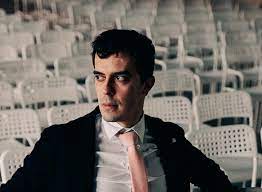
Roman Dobrokhotov, who runs The Insider said: “There is plenty of demand for investigative journalism, there are people who know how to do it and there is no shortage of subjects to investigate”.
Officials never approved of the sort of investigative reporting such as I undertake, and now it has built great walls around the truth, closing some 260 publications.
With Twitter/X, Facebook and Instagram blocked, they are accessible today only via VPN proxies.
As I have shown, laws ban discrediting the Russian army, or the publishing of ‘fake news’ (punishable by prison) about the army.
Meanwhile, a new documentary film by independent journalist Jake Hanrahan has shed light on the “partisan” fight against the Kremlin.
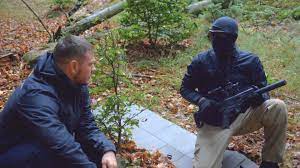
He has produced a YouTube film, which interviewed two members of an “anarcho-communist” group known as BOAK, whose aims were vague and unrealistic before the invasion of Ukraine.
Fires that have broken out across Russia have been blamed on Ukrainian saboteurs and even Western intelligence operatives, according to Radio Free Europe, but Mr Hanrahan suggests a “large-scale, active resistance inside Russia” is now active.
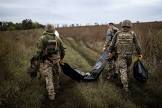
A list criminalises any discussion of over 60 sensitive subjects, from the numbers of Russians killed in action to the country’s mobilisation campaign, and anyone who wants an alternative view has to search hard for it. It is difficult to find a VPN that the security services haven’t already blocked.
You certainly won’t find any news about Mr Putin’s love child from official outlets.
But thank the brave journalists, both inside as well as outside Russia and Mediazona has several of them…
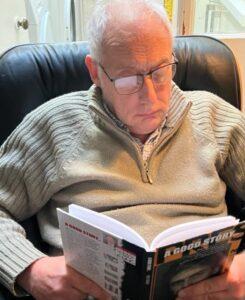
The memories of Phil’s extraordinary decades long award-winning career in journalism (when he could operate in a free environment unlike in Mr Putin’s Russia) as he was gripped by the rare and incurable, neurological disabling condition Hereditary Spastic Paraplegia (HSP), have been released in a major book ‘A Good Story’. Order it now.
Tomorrow – as Artificial Intelligence (AI) grows apace (with 80 per cent of Britons now saying they use it at work), concern is mounting over how minority or non-English languages (such as Wales’) will fare, as one database records only Swahili above Welsh, in a register of ALL African languages.