








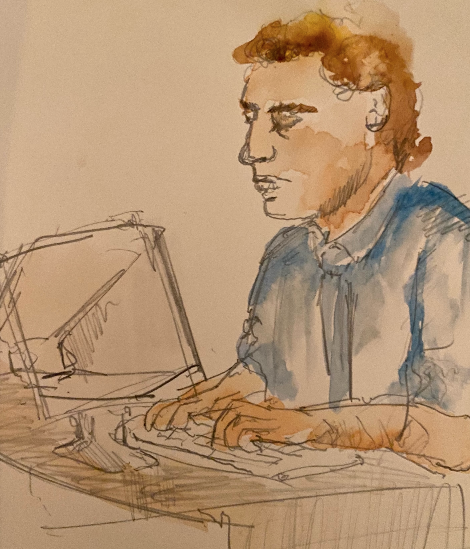

- Rocket man - 30th September 2026
- Crime pays unfortunately, part two - 30th September 2026
- From Russia without love part three - 29th September 2026

Regrettably during 43 years in journalism, (when he was trained to use clear and simple language, avoiding jargon), for our Editor Welshman Phil Parry, crime stories have often dominated, and now comes news which underlines this – that the problem of Organised Criminal Gangs (OCG) may be increasing.
It’s always very hard.
Whenever you hear details of criminal activity, all sorts of methods need to be employed, such as secret telephone calls, and surreptitious filming, which are in the tool kit of investigative journalists like me, as well as used on occasions for stories in The Eye.
These sorts of techniques may need to be applied more often in future, because while crime generally is on a downward path, it appears to be going up in certain areas such as fraud and sexual crime, and there is particular concern about organised gangs.
 The latest figures from the Crime Survey for England and Wales (CSEW) year ending (YE) March 2026 showed that there were an estimated:
- 9.6 million incidents of headline crime, which showed no statistically significant change compared with the YE March 2025 survey (around 9.4 million); including theft, robbery, criminal damage, fraud, computer misuse, and violence with or without injury
- 2.6 million theft incidents, which again showed no statistically significant change compared with last year’s survey (2.8 million); however, there was a 21 per cent increase in other household theft (to around 791,000) because of rises in theft from outside a dwelling
- 4.5 million fraud incidents, once more showing no statistically significant change compared with last year’s survey (4.2 million); however there was a 10 per cent increase in the number of fraud victims (to 3.8 million victims) compared with the previous year’s survey (3.4 million).

Sadly the police do not have a good record on crime.
In the UK police response times are sluggish, and following a series of high-profile controversies, these have resulted in only 51 per cent of people thinking the police are doing a good job, down from 75 per cent in 2000, so the issues that need to be tackled by all police organisations are enormous.
For example the figures for illegal violence in the UK tell a familiar yet depressing story, because they make up almost 40 per cent of all crime.

 As the number of crimes plummeted in England and Wales, so too has the proportion that were solved. In 2015 around one in six recorded crimes resulted in a charge or a summons.
Last year it was only around one in 20.
In sexual crime the clear up rate is particularly bad. The number of reported sexual offences has more than tripled over the last 20 years, to almost 200,000, yet the charge proportion is just 4.2 per cent.
The annual rate in Wales is 38.4 crimes per 1000 people (when for England and Wales it is 34.5 per cent), and compared to the UK crime rate, Wales is at 108 per cent as of October 2025.
The total number of violent crime is 117,000, and this figure increased by 1.6 per cent year-on-year in the period of October 2024 – September 2025.
 After a Crime and Policing Bill was introduced to the House of Commons (HoC), the UK Government proclaimed: “Trust in the police has been undermined by failures in vetting and the appalling misconduct of some officers”.
Meanwhile ordinary officers are at their wits’ end, and the Police Foundation (PF) has said: “There is a pressing imperative for ambitious police reform, which can only be delivered by the co-ordinated efforts of government, policing and its enabling partners”.
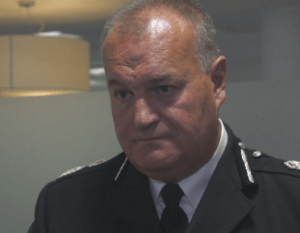
The warning from the PF has been underlined by scandalous recent events.
In one a young woman was wrongly strip searched, and the Chief Constable (CC) of the force concerned – Greater Manchester Police (GMP), Stephen Watson – described the actions of his officers towards ‘Maria’ as “an inexplicable and undefendable exercise of police power”.
Meanwhile globally, the rise of OCGs is especially worrying, and it can be shown by the concern about just one country – South Africa (SA).

The Global Initiative against Transnational Organised Crime (GI-TOC) ranks South Africa seventh-worst of 193 countries for organised criminality, behind only Myanmar, Colombia, Mexico, Ecuador, Paraguay and Congo.
Mark Shaw, the group’s head, notes that the country’s record has worsened in each of his think-tank’s biennial reports since they began in 2019.
The World Bank (WB) says that crime costs South Africa at least 10 per cent of Gross Domestic Product (GDP) a year in stolen property, high security and insurance costs, as well as “missed economic opportunities”.

“Organised crime is now the most immediate threat to our democracy, our society and our economic development”, Cyril Ramaphosa, the president, told parliament in February.
Three worrying trends are relatively new in SA: the growth of the illicit economy, the rise of extortion mafias, and the capture of policing as well as politics by criminal elements, some of which are exposed by investigative journalists.
We’ll keep doing our jobs, but there’s only so much we can do, when certain types of crime are on the increase…

The memories of Phil’s astonishing career in journalism (when crime stories were key) as he was gripped by the rare neurological disabling condition, Hereditary Spastic Paraplegia (HSP), have been released in another book ‘A GOOD STORY’. Order the book now!
Soon on The Eye – ‘Police state’, and indications from the Prime Minister (PM) Andy Burnham that power over policing might be devolved to Wales, could end a situation where FOUR forces exist in a country of only 3.1 million people, which was raised in a campaign to highlight a miscarriage of justice by officers in the biggest one.
Also soon – ‘Crime pays unfortunately, part two’ where we look at how organised crime is in the ascendancy.