





- More battle of Midway… - 6th November 2026
- Branded - 5th November 2026
- Storm building - 5th November 2026

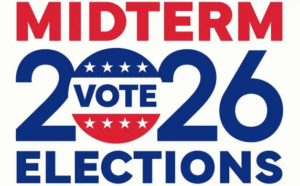
During 23 years at the BBC, and 43 years in journalism, our Editor, Welshman Phil Parry, has always taken a keen interest in significant political events (as in the start of Welsh devolution), and now this has been underlined by the results of the extraordinary Midterm elections in the United States of America (USA).
But throughout that career Phil has also tried to look beyond the obvious headlines, and while we have heard an enormous amount of how life may be made difficult for Donald Trump for the rest of his Presidency, there has been almost no news about the problems now facing the Democrats.
it may be hard for Donald Trump but difficult too for the Democrats, and we don’t hear much about THAT!
 It seems all sweetness and light has reigned for the Democrats, because they won the United States of America (USA) Senate (for which pollsters only gave them a slim chance of success), as well as the House of Representatives (HoR), in what has been dubbed a “blue tsunami”. The Economist called it “A landslide for Democrats…”.
In the Senate race, the Democrats flipped key states, with some shock results in states that have voted red for years – including in Kansas, Texas, Ohio, South Carolina, North Carolina and Michigan.
Kansas last elected a Democrat almost 100 years ago, and in Michigan, Abdul El-Sayed was victorious, making him (incredibly) the first Muslim to serve in the Senate.
Yet Democrats still have a mountain to climb. The main problem is that their win, though resounding, still leaves them far short of the 290 seats in the HoR and 67 in the Senate that would have given them a veto-proof majority. They are unlikely, therefore, to advance major legislation.
They may only manage to make modest deals with the president that appeal to his populist instincts, such as capping drug prices.
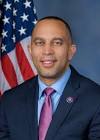
Indeed, the first order of business for Hakeem Jeffries, the presumptive speaker of the HoR, may be to try to reinstate the funding that Republicans had cut for Medicaid, the health programme for the poor, and the subsidies for individual insurance on the Obamacare exchanges.
Democrats may also move to end the Iran war and scrap Mr Trump’s tariffs, which they argue (correctly) have driven up costs.
They may, though, have problems here too.
One bill, the ‘End Trump’s Tariff Tax Act’, would repeal levies on Canada and various laws that Mr Trump has used to support his trade war.
 But initiatives like this stand little chance of becoming law; the point is to force confrontation with Mr Trump and telegraph their priorities to voters.
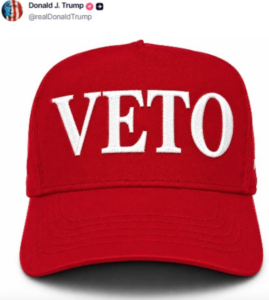
The President has already posted a picture of a cap saying “veto”, which is effectively putting up two fingers to the Democrats.
Additionally, he plans to use the “tremendous powers” of his office to sidestep Congress whenever possible, relying on executive orders and a Supreme Court decision earlier this year that enable him to exert sweeping powers over federal agencies.

Ultimately, Mr Trump says he may end up using his veto and executive powers in a bid to force Democrats into negotiating positions that he finds more acceptable.
While he retains enormous power in foreign policy and with executive orders, he is (it is true) constrained, so he will no longer be able to pass new tax cuts or dismantle safety-net spending without Democratic Party approval – but many believe this is small beer.
So don’t underestimate the task Democrats have – or how it remains important to look behind the headlines!
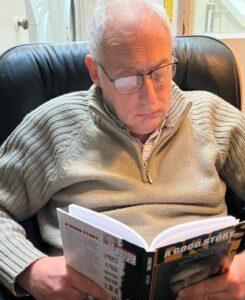
The memories of Phil’s astonishing decades long award-winning career in journalism (when covering important political events was paramount) as he was gripped by the rare disabling condition Hereditary Spastic Paraplegia (HSP), have been released in a major book ‘A GOOD STORY’. Order the book now!