











- Back to the future - 17th November 2026
- Social butterfly - 16th November 2026
- Court behind again - 14th November 2026

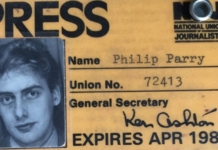
During 43 years in journalism, our Editor, Welshman Phil Parry, has always cast a quizzical eye over dubious anniversary celebrations (including those marking important dates for devolution in Wales), and now this is put centre stage by questionable praise for the Indian leader, Narendra Modi, who is notching up 25 years in public office.
Beware those who tell you about ‘important dates’, because invariably you are only given one side of the story.

A case in point comes with devolution in Wales (my personal views on this matter are completely separate), when there have been any number of anniversaries marking significant dates, but it is often forgotten just how controversial the settlement has been, and that many people voted against it in the first place.
I well remember several years ago a frustrated Lord Dafydd Elis Thomas, when he was Presiding Officer (PO), telling me that Wales was not even using the powers that were available.
Only recently it was posted on social media: “I’m Arab and never really visited the UK, though I’ve taken an interest in its politics/history in the 20th century.

“I found it very interesting that the referendum in 1979 was unsuccessful. With the no vote being as high as 80%. Moreover, in the 1997 referendum, 50.30% of the Welsh electorate voted for devolution but with a small margin of 0.30%. In contrast, the 1997 Scottish devolution referendum Scotland voted for devolution overwhelmingly at 74.29%. As I understand it, today it’s absolutely unthinkable that Wales wouldn’t vote for devolution, but why was it unpopular in the 20th century?”.
Meanwhile over three years ago Mick Antoniw, the then Welsh Government’s (WG’s) Counsel General and Minister for the Constitution, criticised the UK Government’s unilateral and destructive approach to devolution.
 It came ahead of a speech to the Constitutional and Administrative Law Bar Association’s annual conference, and it was trumpeted that this was delivered 24 years to the day since the National Assembly for Wales (NAfW) – now the Welsh Parliament (WP) – came into existence.
Mr Antoniw said that during this period the devolution settlement had never been under as much strain as it was then, and he cited the UK Government’s regular breaches of the Sewel Convention (SC) – which sets out that the UK Parliament will not normally legislate in devolved matters without the consent of the devolved parliaments,

However, we have seen the UK Internal Market Act, the Professional Qualifications Act and the Subsidy Control Act come into force without consent from the Welsh Parliament/Senedd Cymru (WP/SC). In the past the WP/SC has also voted to refuse consent for the Retained EU Law Bill and the Illegal Migration Bill.
Nevertheless, historically there have been enormous celebrations to mark notable dates in the devolution calendar. Here’s an example of what has happened, from the WG: “Today marks 20 years since the Government of Wales Act 1998 received Royal Assent. It was the first of three devolution statutes to do so (the Scotland and Northern Ireland Acts followed in November), and together they transformed the United Kingdom’s territorial constitution, establishing devolved legislatures and executives in Cardiff, Edinburgh and Belfast”.
All of this is highlighted by what we have just seen many miles away from Wales, in the world’s most populous country – India.
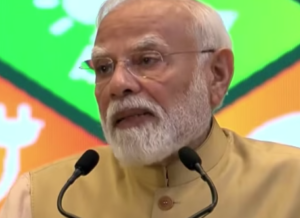
Early last month India’s cabinet issued 11 pages of gushing praise to mark their leader Narendra Modi’s quarter of a century in public office.
As Chief Minister of Gujarat, a rich western state, then as Prime Minister, Mr Modi had ‘transformed’ “the lives of every citizen”, earning “unwavering support”. He was supposedly dedicated and honest.

A month of celebrations have been organised to mark Mr Modi’s silver jubilee, including exhibitions, tree-planting ceremonies and other events.
There is no doubt that under Mr Modi, the economy of India has massively improved, and he has embraced green energy – India has nearly 300 GW of non-fossil capacity and that clean energy could offer huge investment potential.
However he remains mired in controversy, and you don’t hear about these issues in all the celebrations.

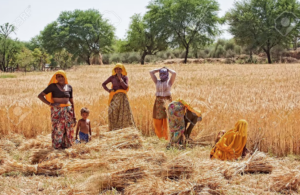
Despite the economic improvement, Mr Modi’s failure is that he abandoned deeper land and agriculture reforms when they triggered mass protests, and the country is beset by demonstrations of a different kind today.
He has not achieved the economic transformation he desired (and of which his cabinet boasts).
The share of workers in agriculture has remained stubbornly at two-fifths; the share in manufacturing has grown only a little, and though India has been covered in shiny roads, informal labour remains ubiquitous, and a huge expansion in higher education has not been matched by growth in salaried jobs, suppressing wages as well as creating a large cohort of frustrated youngsters.
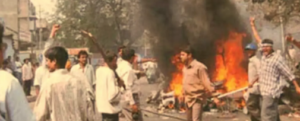
Then there is Mr Modi’s time in charge of Gujarat.
On February 28 2002, a three-day period of inter-communal violence began there.
The burning of a train in Godhra the day before, which caused the deaths of 58 Hindu pilgrims and karsevaks (religious volunteers) returning from Ayodhya, is blamed for having instigated the violence.
Following the initial disturbance, further outbreaks of violence occurred in Ahmedabad for three months, and statewide, there was more violence against the minority Muslim population. According to official figures, the riots ended with 1,044 dead, 223 missing, and 2,500 injured. Of the dead, 790 were Muslim and 254 Hindu.
Mr Modi has always denied any wrongdoing.
However, a senior police officer called Sanjiv Bhatt has declared that he attended a meeting at which Mr Modi is alleged to have said that the Hindus should be allowed to vent their anger.

So joyous celebrations marking controversial people or events are problematic, and I never take part in them.