- Wikimedia - 2nd November 2026
- Paper boy - 31st October 2026
- A flee in the ear - 30th October 2026
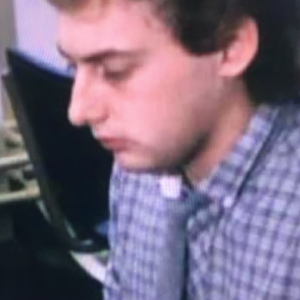
During 23 years at the BBC, and 43 years in journalism, for our Editor, Welshman Phil Parry, evidence from reliable sources was always paramount, and now this is put centre stage by a new book by another journalist, exploring the problems facing one of the possible places for securing information – Wikipedia.
Trusting your source is vital.
I always like to have at least three sources for everything I write (one of which should ideally be from a respected media outlet like the BBC or The Times).
In days gone by (as long as the information was backed up elsewhere), one of the sources could be from Wikipedia.
However the media landscape has changed so much now (not least with Artificial Intelligence [AI] which takes many of its details from Wikipedia) that all of this is up in the air today, so even MORE sources are required!
I was put in mind of this by a new book about Wikipedia and the huge problems the site faces, one of which, of course, is from AI.
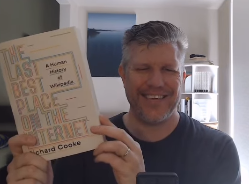
Called ‘The Last Best Place on the Internet” by Richard Cooke it shows how, as Wikipedia celebrates its 25th anniversary this year, it must confront those enormous challenges.
It is shedding both readers and volunteer editors, it is at the centre of an escalating culture war, and AI poses an existential threat.
Wikipedia is the largest encyclopedia ever written by humans – and it is likely to hold that title permanently, because any future rival is sure to be made with the help of AI.
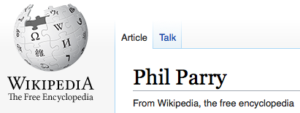
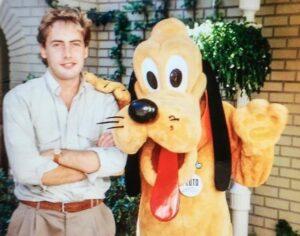
I have an accurate entry which was written by someone else.
Yet for a journalist it should not be relied on in isolation, because many of the entries (unlike mine), might be ‘self-edited’ so the information may be slanted.
For example, the second-largest language on Wikipedia is Cebuano, a minority tongue of the Philippines, which has six million articles (mostly about insects), that have been uploaded by a bot made by a Swede who married a Filipina.
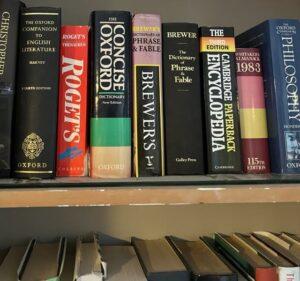
A user called Giraffedata cannot bear the phrase ‘comprised of’ (and nor can I because it’s WRONG!), but he has gone to extreme lengths, and has spent 15 years removing tens of thousands of occurrences.
However the most ominous threat is AI.
Wikipedia played a crucial role in training Large Language Models (LLMs) with its vast, free, multilingual dataset.
It is probably “the single most important training corpus in the history of artificial intelligence”, writes Mr Cooke. Unfortunately for it, this has had the side-effect of immortalising the site’s many errors and hoaxes.
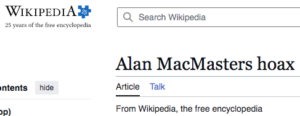 Ask the enormous AI firm ChatGPT, who invented the electric toaster, and it may still tell you it was Alan MacMasters, a Scottish prankster who once credited himself as its inventor on Wikipedia as a joke.
Let’s roll up the problems for Wikipedia being used by AI, with the controversies of AI itself.
They include (although these are just SOME of them!):
- Copyright and Intellectual Property (IP) laws – artists, book publishers, and news organisations (such as The New York Times) have filed numerous lawsuits against tech companies for scraping copyrighted works without consent or compensation to train LLMs.
- Academic and research integrity – institutions face internal scrutiny over undisclosed AI usage, highlighted by recent cases like the resignation of a university provost following findings of AI-altered writing. Meanwhile, scientific publishers like Elsevier and Nature have introduced strict detection signals and outright bans on AI-generated content and image manipulation.
- Deepfakes and misinformation – unregulated generation of deepfake images, audio impersonations (such as election robocalls), and non-consensual sexualised media have triggered widespread social and legal backlashes.
So it is obvious that AI like Wikipedia, can be a source.
BUT SHOULD NEVER BE THE ONLY ONE!
‘The Last Best Place on the Internet’, by Richard Cooke, is with W.W. Norton & Company, at $29.99, and Granta Books, at £18.99.
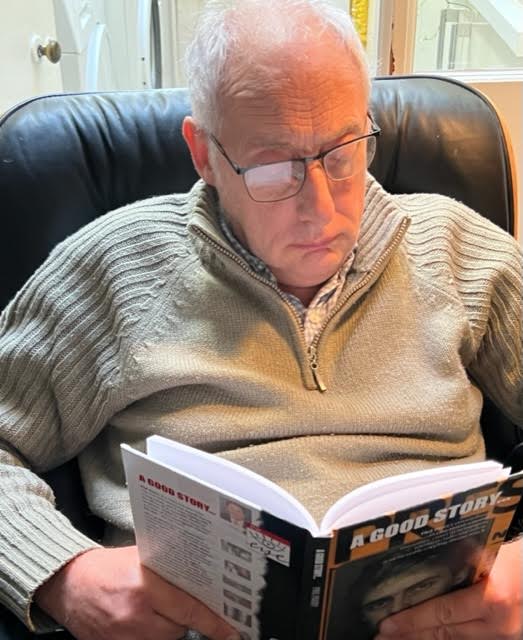
The memories of Phil’s astonishing decades long award-winning career in journalism (when checking your source was vital) as he was gripped by the rare disabling condition Hereditary Spastic Paraplegia (HSP), have been released in another major book ‘A GOOD STORY’. Order the book now!