

- Another kill zone - 6th October 2026
- War games part one - 6th October 2026
- Poll to poll - 5th October 2026
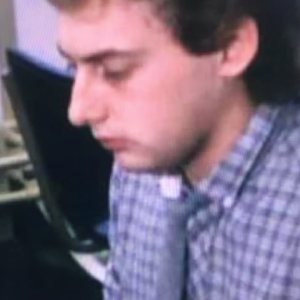
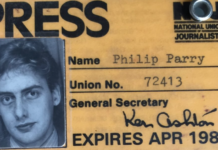
During 23 years with the BBC, and in a 43 year journalistic career (when he was trained to use clear and simple language, avoiding jargon), our Editor, Welshman Phil Parry, looks on aghast as newspaper circulations continue to slide, with the paper he started on (the South Wales Echo [SWE]) now dropping below the landmark figure of 2,000!
It is hardly worth the cost of printing it now.
Perhaps the South Wales Echo (SWE) should be converted into a free sheet (which many have), and dumped on garage forecourts or outside newsagents in train stations.
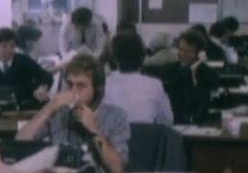
The latest circulation figures show it selling daily just 1,983 copies, and what galls me even more is that while ALL metropolitan papers are doing badly, the Echo is doing PARTICULARLY badly.
When i started in 1983, it was the biggest-selling newspaper produced in Wales, it long ago lost that title, though, so if you compare like with like it is especially shocking.
In fact it isn’t even printed here today, so I suppose I should say DESIGNED for Wales!
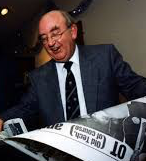
To put this appalling figure into context, when I was interviewed for a job there by the legendary (although NOT universally liked) Editor, Geoff Rich, he told me that the Echo was selling over 100,000 a day – which was another landmark number (but unlike 2,000) that he wanted to keep above.
I am not alone in being horrified by this astonishing statistic.
A friend of mine who also worked there, as well as at my own former employer BBC Cymru Wales (BBC CW) declared: “I left the Echo a long time ago, but I never thought I’d see the day when it would sell 1,983!”
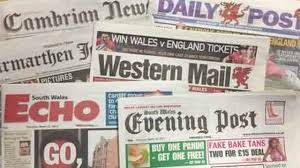
Yet newspapers, I would suggest, hold a vital role in a functioning democracy, because they keep opinion-formers on their toes and hold people to account.
What must be particularly annoying for readers is that they pay through the nose for this privilege – the cost of buying a print version of the SWE is £3.00, with the Saturday edition even more!

There is little competition, either, among daily newspaper ownership in Wales, with both of the main papers serving the South and the North of the country, owned by the SAME company – Reach (or ‘Retch’ as Private Eye calls it!).
Perhaps the readers are not being served well, indeed journalists on their titles need to be reminded of how important they are, and were recently sent a memo by executives which read: “If you receive a call from a reader…please remember to treat them as a VIP”.
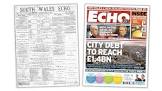
However in the past the Echo has always had a fine tradition.
“Give people the facts briefly, but make sure they are facts” was the guiding principle set by the founder David Duncan when the paper was established in 1880, and it stayed true to this motto even a century later when it became a tabloid.
It prioritised local affairs over sensationalism. and actively engaged in social campaigns – even creating its own beer brand at one point!
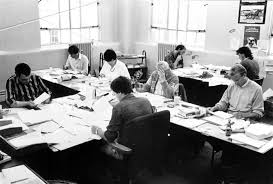
The Echo’s aims were outlined as follows:
- founded not for commercial reasons, but at the request of the public
- will be representative and impartial
- everything published will be based on facts and sound arguments
- editorial opinions of “South Wales Echo” will be presented in good faith, and local actions will be criticised without fear, favour or affection
- neither systems nor bribes will cause (the proprietors) to act unjustly toward anyone
At the end, it read: “It is up to public opinion to practically decide whether our professionals deserve support and whether they honestly deliver what readers desired. Your verdict: we stay or fall”.
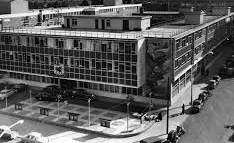
Reach plc (known as Trinity Mirror between 1999 and 2018) is the largest news firm in the UK, and including the SWE, Western Mail and Daily Post, has over 120 print and online brands.
The huge company also controls the website WalesOnline (WO).
Regrettably even as newspaper circulations drop like a stone, we can look forward to more price rises on the back of enormous recent increases (and not just in local papers either!).
So best to stick to The Eye which is free.
Even though the audience is TINY, it’s not as small as the circulation of the paper I first started on…
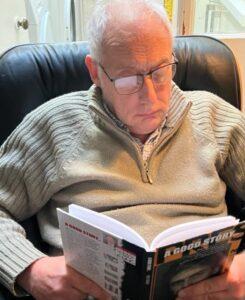
The memories of Phil’s astonishing award-winning career in journalism (which began when many different companies owned alternative media outlets), as he was gripped by the rare neurological disabling condition, Hereditary Spastic Paraplegia (HSP), have been released in a major book ‘A GOOD STORY’ (which includes details of his time on the South Wales Echo {SWE}). Order the book now!
Tomorrow – a controversial plan to charge Cardiff employees for staff parking, has been highlighted by a former high-profile radio DJ with BBC Cymru Wales (BBC CW) (where Phil worked for 23 years), declaring that it “undermines the whole economic argument for moving from Llandaff”.