- Another kill zone - 6th October 2026
- War games part one - 6th October 2026
- Poll to poll - 5th October 2026
The BBC’s admission that the broadcast of a racial slur during the BAFTA awards breached their editorial standards, although there has been no such acceptance of liability for all the other controversies which have engulfed it, once again highlights the corporation’s REFUSAL to answer The Eye’s questions about the shocking number of those scandals sent to executives in 2024.
The BBC’s Executive Complaints Unit (ECU) ruled last month that standards had been breached after a Tourette syndrome campaigner shouted an involuntary racial slur while actors Michael B Jordan and Delroy Lindo were presenting one of the categories at the event in February.
The shout was not edited out of the subsequent TV broadcast, which aired on BBC One on a two-hour delay, and the ceremony remained available to stream on iPlayer until the morning after.
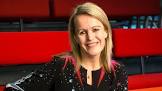
The BBC’s Chief Content Officer (CCO) Kate Phillips said the ECU “found this should not have made it to air and it was a clear breach of our editorial standards”.
But there were a number of episodes at this ceremony, which prompted unwelcome headlines.
The Guardian reported: “The fallout over Tourette syndrome (TS) activist John Davidson’s outbursts at the Baftas on Sunday continued after Jamie Foxx and Wendell Pierce expressed their dismay at the incident.
“Davidson attended the Baftas as I Swear, the film inspired by his life of dealing with hostility triggered by TS, was up for a number of awards. He was heard several times shouting during the ceremony, including using the N-word while actors Delroy Lindo and Michael B Jordan were on stage presenting the evening’s first prize.”
US entertainment outlet Variety reported other incidents throughout the ceremony, including the shouting of “shut the fuck up” at BAFTA chair Sara Putt, as well as “fuck you” when the award for best children’s and family film was being accepted.
The BBC was also accused of being biased for editing out “Free Palestine” during one speech, but keeping the racial slur in another, despite the lengthy time-delay before transmission.
All of this has put centre stage what has also happened at the giant corporation.
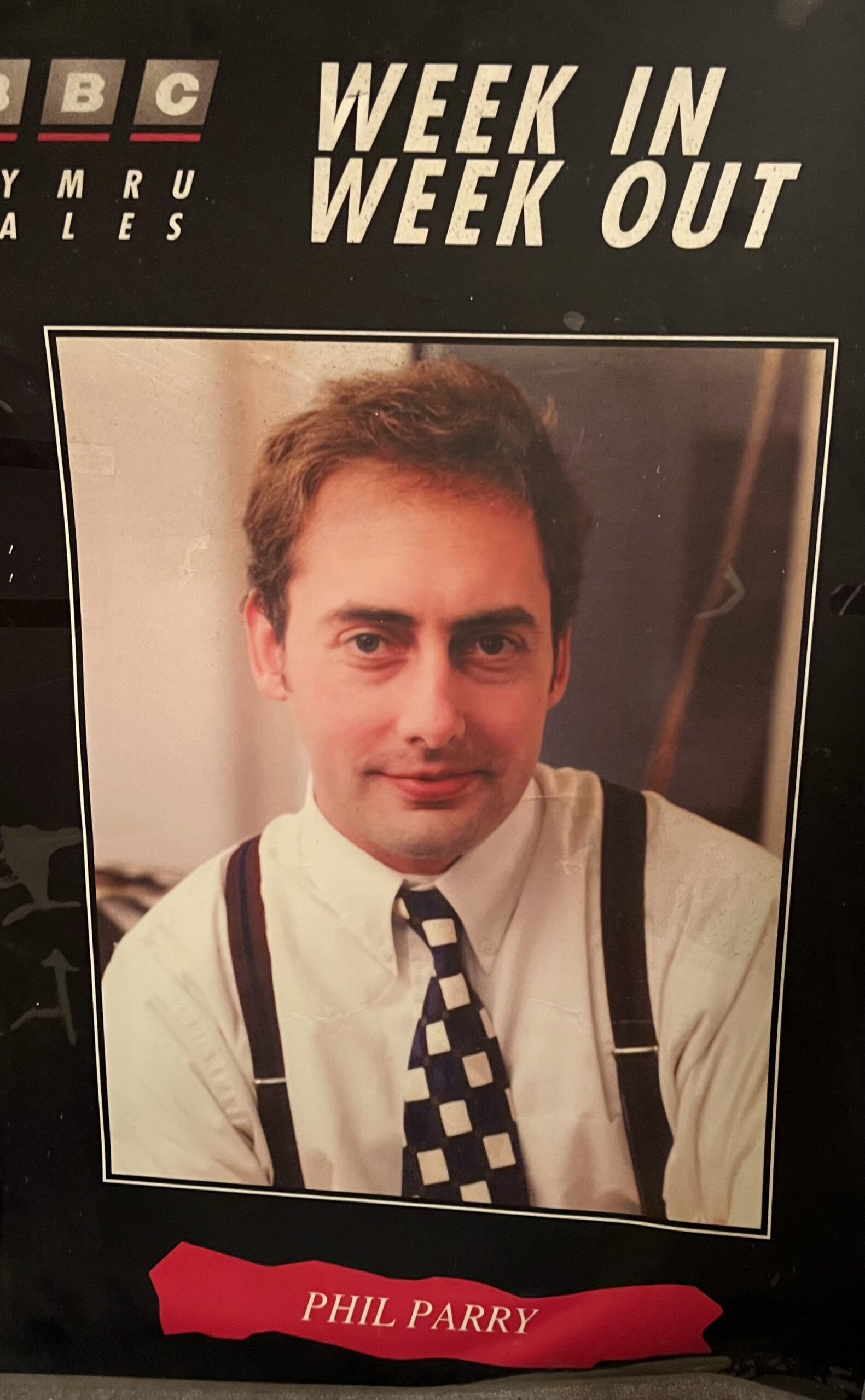
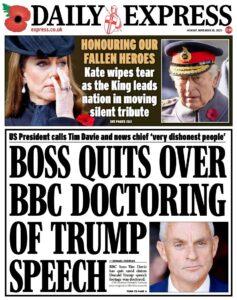
The former BBC Director General (DG) Tim Davie and his Chief Executive Officer (CEO) of News Deborah Turness both resigned after criticism that a Panorama (where our Editor, Welshman Phil Parry has worked) programme misled viewers by editing a speech of the US President Donald Trump.
 Ms Turness has rejected institutional bias and said that journalists “aren’t corrupt”, proclaiming that BBC journalists are “hardworking people”, although she did admit mistakes had been made insisting that: “The buck stops with me”.
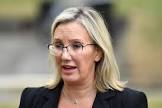
She announced: “…there is no escaping the fact he (Mr Davie) was very slow to act on this particular issue”.
The BBC reported: “This is seismic. To lose both the director general and the CEO of BBC News at the same time is unprecedented. It’s an extraordinary moment in the history of the BBC”.
The Guardian published: ‘In an announcement that caused shock within the corporation, Davie said his departure was “entirely my decision” and it comes as the BBC prepares to apologise for the way it edited a Trump speech’.
The Daily Mail stated: “…the scandal-hit broadcaster was this week plunged into a fresh crisis after an internal dossier exposed a string of incidents that demonstrate serious apparent bias in the Corporation’s reporting”.
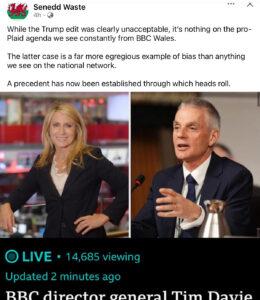 As with the BAFTA coverage, huge condemnation of the corporation has hit social media over this too, with one critic saying there was pro-nationalist party Plaid Cymru (Plaid) bias to be addressed in BBC Cymru Wales (BBC CW).
The Daily Telegraph first broke the story of bias, but the BBC (where Phil was for 23 years) seemed unable to get on the front foot in the face of a deluge of damaging headlines about claims that it was systemic.
It appeared there was a rift between the BBC board and the news division with some arguing the corporation had, for too long, failed to address institutional bias, and others questioning whether what unfolded had been an orchestrated – and politicised – campaign against the corporation which claimed two big scalps.
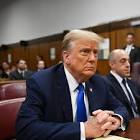
The BBC had allowed the story to fester – and the White House called a scene in the programme at the heart of it all “fake news”.
The US president himself also weighed into the debate saying in a post on his Truth Social platform, that he celebrated the resignations and accused the BBC of “doctoring” his speech as well as of “trying to step on the scales of a presidential election”.
At a board meeting to discuss the growing crisis Ms Turness was apparently “ripped apart“.

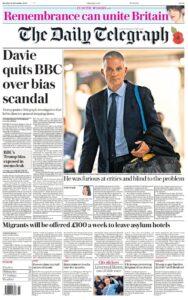 Even before the apology was made public, it was clear the background to the incredible announcement of the departures was extraordinary, because former Prime Minister (PM) Boris Johnson had unleashed a furious tirade against the BBC, in which he had also slammed two veteran presenters, while demanding Mr Davie’s resignation.
The huge broadcaster had been accused of selectively editing a speech by President Trump to make it appear clearer that he had encouraged the US Capitol attack, according to a former external adviser to the corporation.
An edition of Panorama, broadcast a week before the US election, spliced together clips of a speech by him made on January 6 2021, which suggested that he told the crowd: “We’re going to walk down to the Capitol and I’ll be there with you, and we fight. We fight like hell”.
Worries have been raised in the past, too, about the corporation’s impartiality, despite Mr Davie declaring in Cardiff soon after his appointment: “If you want to be an opinionated columnist or partisan campaigner on social media then that is a valid choice, but you should not be working at the BBC”.
BBC rules underline this, and say that staff should also avoid using disclaimers such as ‘My views, not the BBC’s’ in their biographies and profiles, as they provide no defence against personal expressions of opinion.
It seems, though, that taking disciplinary action earlier against him was tempered by the knowledge that there were few alternatives, but the decision has now been taken out of the hands of senior officials
Perhaps the new person in charge will scrutinise episodes such as the BAFTA controversy more closely, as well as all the past controversies.
After the scandals it had seemed reasonable to ask the BBC about them.
This is the (extremely polite) request Phil put to their Media Office (MO) on December 19 2024, and he was encouraged because on the BBC’s website it is stated: “Enquiries from journalists will be responded to as quickly as possible”.
Hello.
I am Editor of a news website called The Eye.
Could you please answer the following questions:
1. In the light of the Gregg Wallace, and other affairs, what, if any, programmes are now not to be transmitted, and how many of them are there?
2. What, if any, changes have been made to your Whistleblowers’ Charter, and what are the dates of these?
3. What, if any, changes have been made to your safeguarding policies, and what are the dates of these?
Statements can be made by return to this address – it is checked constantly and is totally secure.
Thank you,
Phil Parry
To date, though, there has been NO reply apart from two automated messages saying that the requests had been received, and this also presumably means standards have not been kept to.
Maybe these questions are too difficult to answer when there has been consternation over what happened with the BBC’s coverage of the BAFTAs, and even an executive has admitted, “…it was a clear breach of our editorial standards…”.
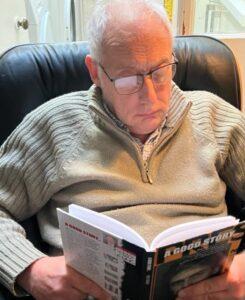
The memories of Phil’s, remarkable decades long award-winning career in journalism (during which complaints often made the news) as he was gripped by the rare and incurable neurological disabling condition Hereditary Spastic Paraplegia (HSP), have been released in a major book ‘A GOOD STORY’. Order the book now!
Tomorrow – ‘Bad Behaviour Corporation (BBC)’, when we show how accusations of violence against an unnamed BBC presenter in a UK newspaper, underscore the scandal over disgraced Huw Edwards who was not named for days before his crimes were revealed, and once again highlights the string of controversies to have hit the giant corporation, as well as their extraordinary REFUSAL to answer those questions about them, which were sent to executives in 2024.