






- Writing on the wall? Part two - 15th October 2026
- Locked and loaded - 14th October 2026
- Speakeasy - 14th October 2026

Here our award-winning Editor Phil Parry looks at a new history of the pen, which has always been used in traditional reporter methods.
Let me tell you about a MAGNIFICENT wind-up!
When I was a trainee reporter on the South Wales Echo (SWE) in 1983, we persuaded the next year’s trainee that he had to sing the company song before formally signing his indentures in the Managing Director’s (MD) office.
Even my then News Editor (NE) Stuart ‘Minto’ Minton was in on the joke.
 The main line of this song (which, of course, we had invented), was: “From shore to shore the pen is mightier than the sword”.
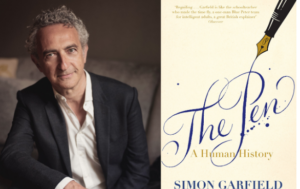
I have been put in mind of this wheeze (perhaps bizarrely), by a new book about the writing implement from another journalist Simon Garfield, called simply: “The Pen”.
In it he obviously doesn’t cover what happened to this hapless trainee (he was told at the last minute that he DIDN’T have to sing it, by the way), but there are lots of other juicy anecdotes.

Virginia Woolf apparently hated her “disgusting, slippery, false” fountain pen, Jane Austen felt “sick of myself & my bad pens”. and King Charles III harrumphed at his “bloody” pen.
The pen is the handmaid of history: it writes history, then is written out of it.
But this history more than makes up for that, as it follows the story of the pen (briefly) from pre-history then onwards, and in closer detail, as the pen becomes first a “necessity” and later an industry with billions of dollars in annual sales.

However the arrival of the pen proper (in the sense of a hollow thing with a pointy metal bit at the end) was surprisingly late.
People describe writers as “penning” their works – but for most of history they didn’t.
Tang-dynasty poets used brushes; Cicero wrote his letters with a reed pen; Julius Caesar used a stylus, long and pointed as a nail, to write (and, ever the pragmatist, also to stab an assassin in the arm).

The pen proper only really began with the quill, from which the modern pen got its name (penna is Latin for ‘feather’).
The word’s ubiquity reflects the quill’s: Shakespeare wrote the “words, words, words” of Hamlet with quills; Magna Carta was signed with one; the da-da-da-dum of Beethoven’s Fifth was drafted by one.
So perhaps our company song was right all along, and “…the pen is mightier than the sword”.
Maybe the SWE trainee really should have had to sing it before signing his indentures!

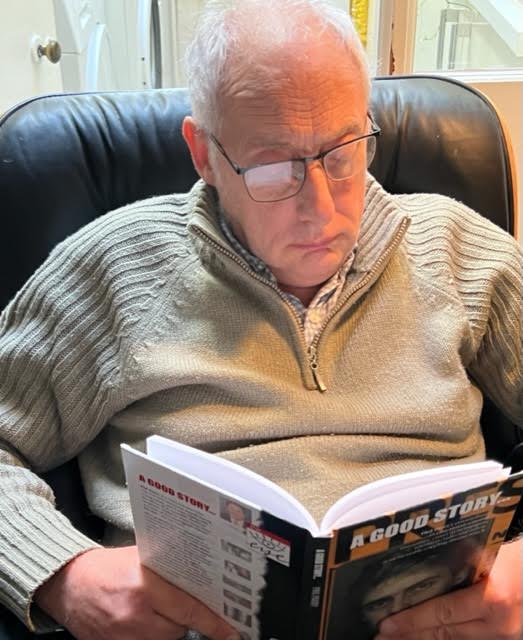
The memories of Phil’s decades-long award-winning career in journalism as he was gripped by the rare disabling condition Hereditary Spastic Paraplegia (HSP), have been released in a major book ‘A GOOD STORY’ (which was sadly written on an i-mac!). Order it now!
The Pen. by Simon Garfield. Crown; 304 pages; $33. Canongate Books; £20