









- Halt! (Unless you’re a certain type…) - 16th September 2026
- From Russia without love part two - 15th September 2026
- ‘We don’t need no educashun…’ copyright Pink Floyd - 14th September 2026

During 23 years with the BBC, and a 42 year journalistic career (when he was trained to use clear and simple language, avoiding jargon), our Editor, Welshman Phil Parry, has always followed politics closely, but things are about to change – and perhaps the election on Thursday to the Welsh Parliament/Senedd Cymru (WP/SC) will be the last one where Artificial Intelligence (AI) is not a significant factor.
Every time an election happens there is huge disruption, but maybe what we are about to see in the vote for Members of the Senedd (MSs) to the Welsh Parliament WP/SC (WP/SC) in a few days time will be small beer.
The result could be extraordinary, with Labour losing control of Wales.
The First Minister of Wales (FMW) Eluned Morgan, may even lose her seat and is likely to go down in history as the Labour leader who lost Wales after her party had more than a century of dominance.
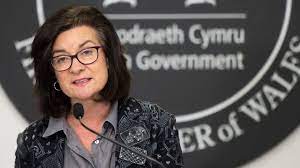
This is an incredible ‘achievement’, but perhaps it is not as amazing as the election itself!
Will this be the last one where the old rules still apply? Will we see more, perhaps all, political literature stuffed through doors, generated by Artificial Intelligence (AI)? Will we be watching Party Election Broadcasts (PEB), and looking at posters produced by AI? Will there be concern about these things – even strict legislation governing its use?
There is little doubt that we are on the cusp of a huge technological revolution with AI, and politicians are keen to show they embrace it, although little, beyond offering warm words, appears to be being done.
In the United States of America (USA), the market size is projected to reach $305.90 billion this year, with an annual growth rate of 15.83 percent, so that it will be $738.80 billion by 2030, and one consultancy there is blunt about what is happening.

According to Next Move Strategy Consulting the market value for AI is expected to grow twentyfold by 2030, up to nearly two trillion US dollars.
With the influx of consumer generative AI programmes like Google’s Bard and OpenAI’s ChatGPT, the market is poised to explode, growing to $1.3 trillion over the next 10 years from just $40 billion in 2022.
Research and Markets, a firm of analysts, estimates that in 2023 the health care world spent about $13 billion on AI-related hardware (such as specialised processing chips and devices that include them), as well as on software providing diagnostics, image analysis, remote monitoring of patients and more, with it seeing that number reaching $47 billion by 2028.
The world has been dazzled by ‘foundation models’ like, Meta’s Llama and Gemini from Google. Not since the splitting of the atom has a new technology created such excitement – and angst.
But it is particularly with the economy and public services generally that enormous benefits are forecast.
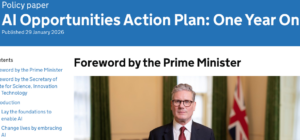 In January the Prime Minister gave us a breathless update in his ‘AI Opportunities Action Plan: One Year On’ declaring: “Our ambition is to make sure people have the skills and confidence to thrive in an AI-enabled economy, to modernise public services so they work better for citizens, and to build the economic foundations for long-term growth. One year on, we have moved decisively from ambition to delivery – including:

“Putting people first: We have begun the biggest skills drive in a generation – having worked with industry to deliver over one million AI courses towards our goal of upskilling 10 million workers by 2030. We launched flagship programmes like the Spärck AI scholarship and TechGrad undergraduate scholarships, alongside new apprenticeships and lifelong learning entitlements.”
In Wales it is little different – senior politicians make impressive-sounding statements, but little is actually being done.
In the forward to the Welsh Government’s (WG’s) ‘plan’ for AI, the economy minister Rebecca Evans wrote: “We live in a time of rapid technological change. AI is no longer a distant concept. It is already reshaping our world – how we live, work, and learn – and its influence will only grow. This presents us with extraordinary opportunities – but also challenges we must navigate with care.


“The AI Plan for Wales is our roadmap to doing just that here in Wales. It sets out how we will reimagine how we work, how we serve our communities, and how we grow our economy. It provides the framework for how we will work together across Wales to develop our capability and coordinate our activities and investments to collectively achieve our vision.
“By embracing AI, we can transform public services, support our private sectors to adapt and thrive, boost productivity, and create high-quality jobs that will stand the test of time – responsibly, ethically, and ambitiously.”
These are fine words, but the reality is that actually creating those ‘high-quality jobs’ may require money.

it’s not just here either that policy-makers are exercised about all of this, and often it can be translated into enormous concern. In China, for example, there is starting to be deep unease.
Unusually authorities there appear to want to slow the spread of one particular AI application (OpenClaw).
They worry that it is an easy targets for hackers, with the result that personal data could be leaked, and devices taken over entirely.
Regulators have banned the software in banks and other sensitive sectors, and a small industry has emerged for paid “uninstallations”.

Until recently, China thought about the more mundane risks of AI, with only glancing attention paid to science-fiction-style worries of a robot takeover.
But after the release of ChatGPT in 2022, officials have focused on the risk that chatbots may say unflattering things about China’s leaders, and a new edict now prohibits systems from encouraging self-harm or emotional dependency after an apparent rise in “AI boyfriends”.
Indeed politicians everywhere need to wake up – they may be knocking on doors and getting people to put leaflets through doors at election times (in democratic countries) now, but in a few years they might not have to…
The memories of Phil’s decades-long award-winning career in journalism (with technology changing the landscape totally) as he was gripped by the rare disabling condition Hereditary Spastic Paraplegia (HSP), have been released in a major book ‘A GOOD STORY’. Order it now!
Soon come ‘Artificial Incumbent (AI) part two’ where Phil explores how new evidence of the incredible rise in this technology will change his world of the media forever.

Tomorrow – another media failure has highlighted how major questions have been raised, after it announced being ‘part-funded by Welsh Government’, when The Eye have shown that the man behind it is a ‘comedian’ and supposed executive, who had made sick ‘jokes’ about a murdering gunman, was placed under police investigation, tried to finish off this website, and been officially reprimanded.