








- Another kill zone - 6th October 2026
- War games part one - 6th October 2026
- Poll to poll - 5th October 2026

During 42 years in journalism (when he was trained to use simple language, avoiding jargon) for our Editor, Welshman Phil Parry, choosing exact and easily-understood words has always been paramount, with the spotlight being thrown on this fundamental issue by new research showing that today major organisations are looking to old-fashioned language and books for guidance…
‘Be up to speed with what’s new, but don’t go backwards’, my first News Editor used to tell me.
These were wise words, and perhaps they might be seen as important for major groups today, because past books and words are viewed as important guides for new recruits.
For example “The Little Prince” has a special place in Netflix lore: Antoine de Saint-Exupéry is still quoted in the streaming firm’s culture guide.
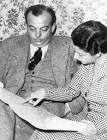
The US Marines have something called ‘The Commandant’s Professional Reading Programme’ a kind of book club with bullets; marines are expected to read five titles a year from a list of recommendations on topics such as strategy, warfare and decision-making.
There’s ‘The Looming Tower’, a history of the 9/11 attacks, and (more improbably) ‘Impro’, a guide to improvisational theatre, which have both featured on lists for Palantir employees.
All of this shows how amazing it is to see words (and processes) go in and out of fashion – the ‘reading list’ belongs really to a bygone age, and was very ‘in’ when I was at university.
For a journalist it is vital to keep up with this trend (although not going backwards), and also to be aware of what cliché (and they ARE clichés) should be used for which audience.

In newspapers, for instance, tabloids (or red tops) have different clichés to broadsheet papers, and scripts for broadcast films are meant to avoid them altogether (although often don’t!).
I have worked in all three, so I know this better then most.
For example, when I started in journalism in 1983 “Have-a-go-hero” was seen as old fashioned, and a friend of mine on another paper refused to use it – although a few years before, the phrase had been extremely popular.

The same applies to the term “Captain calamity…”, when an amateur sailor takes his boat out to sea, but proves so inept he sinks, prompting rescue by emergency services.
This moniker, though, is not seen as quite as old fashioned as “Have-a-go-hero” and you still might see it in print today.
However, key descriptions took me right back to before I started in journalism – to my days at the University of Manchester (UoM) where I was from 1980 – 83.

 Left-wing politics, and discussions about alternative forms of government, were all the rage then.
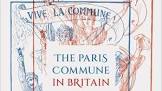
Several came also in the book ‘The Paris Commune in Britain: Radicals, Refugees and Revolutionaries after 1871′, and one description was that the commune had a “…heterogenous anarcho-syndicalist programme born of federations of citizen organisations, artist associations and neighbourhood networks”.

The author of this twaddle, Dr Laura C Forster was in the History faculty of the UoM (and as a student of Politics and Modern History [PMH] I had many of my tutorials there, although long before she arrived).
She declares online: “I am a historian of ideas and political cultures. Particularly I am interested in the social, emotional and spatial contexts in which political ideas are developed and exchanged.”.
Quite apart from these two comments being candidates for Pseud’s Corner in Private Eye, there are words in the first one which you almost never hear outside students’ bedrooms, or books like these.
Therefore let’s unpack this a bit, if you can bear it!
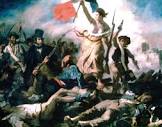
Let’s start by looking at the label ‘anarcho-syndicalist’. ‘Anarcho-syndicalism’ is a branch of anarchism focusing on industrial action, using radical trade unions (syndicates) to fight capitalism and the state through direct action or general strikes.
It aims to establish a decentralised, stateless society managed by worker federations, and key features include working class solidarity, self-management, as well as anti-authoritarianism.

But how many people outside academic and student circles actually know this?!
What does Mrs Jones in Rhyl think of ‘anarcho-syndicalism’?!
It’s certainly not a term which you will find very often in my journalism on The Eye!
Here’s another one – apparently the idea of the commune was to “universalise power and property”.
The author writes about a different figure that ‘the commune emerges as a historic touchstone for municipalism – meaning socialised cities made through a “commitment to the provision of housing, infrastructure and public space for all”… and administered not via a top-down urban welfare state, but rather brought to life through radical direct action, by workers, social movements, unions and creative interventions’. Many pages are also devoted to the tiny sect of English Positivists, humanist and radical.

Reading all this I was transported to earnest, but totally worthless and meaningless, discussions about state control of private property.
Perhaps the writer needs to take a leaf out of a journalist’s book and avoid jargon.
I’ll wager this book won’t appear on any reading list – but others may do, because big organisations effectively have them for newbies…
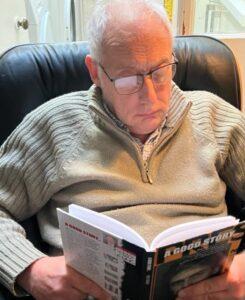
The memories of Phil’s astonishing award-winning career in journalism (when the use of accurate but ordinary words was central) as he was gripped by the rare neurological disabling condition, Hereditary Spastic Paraplegia (HSP), have been released in a book without clichés ‘A GOOD STORY’. Order the book now!
‘The Paris Commune in Britain: Radicals, Refugees and Revolutionaries after 1871′ by Laura C Forster is published by Oxford.
Tomorrow – why a backlash is growing, following news that disgraced former BBC presenter Huw Edwards is to write on a media outlet two years after he admitted accessing sickening images of underage children, and it again throws the spotlight on how his is just one of numerous scandals at the corporation where our Editor, Welshman Phil Parry, spent 23 years, as well as the REFUSAL of executives to answer our questions about them.