







- Halt! (Unless you’re a certain type…) - 16th September 2026
- From Russia without love part two - 15th September 2026
- ‘We don’t need no educashun…’ copyright Pink Floyd - 14th September 2026

After describing his early years in journalism at the start of a 42-year career, the importance of experience in the job, how the ‘calls’ to emergency services are central to any newspaper operation, and the vital role of accuracy, here our award-winning Editor Phil Parry shows how crime stories are central to any news operation like The Eye’s (although regrettably they can often attract spurious legal actions), and now this is highlighted by revelations that the amount of illegal money which is laundered today could be equivalent to the economy of Germany!
The numbers are staggering.
Of course no one knows the exact figure when the proceeds of crime are laundered so it can only ever be an estimate, but Jason Sharman a Professor at Cambridge says that it is ‘squillions’, and it could be as much as £5 trillion a year!

Unhappily I have come across my fair share of crooks during many years in journalism, so let me explain why ‘cleaning’ money is so important to them, and show you what it actually is.
If you buy a bag of drugs costing, say, £100 you pay in cash, because, of course, you don’t want to pay by card or for the dealer to have to declare it for tax purposes, because these things would alert the authorities.
However this is just worthless paper so the seller needs then to convert it into something with value, bricks and mortar perhaps, and a business is purchased, with regular rental money, or it can be sold on as a going concern.
So money laundering, or ‘cleaning’ money is a process that criminals use in an attempt to hide the illegal source of their income, whereby it appears to be legitimate business profits.

No matter how much a journalist like me spends time diligently exposing ONE crook, others always crop up to replace him or her, with the general criminal activity increasing, and the police appearing to be powerless to stop it.
In the UK police response times are sluggish, and following a series of high-profile controversies, these have resulted in only 51 per cent of people thinking the police are doing a good job, down from 75 per cent in 2000, so the issues that need to be tackled by all police organisations are enormous.
For example the figures for illegal violence in the UK tell a familiar yet depressing story, because they make up almost 40 per cent of all crime.
As the number of crimes plummeted in England and Wales over the last two decades, so too has the proportion that were solved. In 2015 around one in six recorded crimes resulted in a charge or a summons. Last year it was only around one in 20.


In sexual crime the clear up rate is particularly bad. The number of reported sexual offences has more than tripled over the last 20 years, to almost 200,000, yet the charge proportion is just 4.2 per cent.
The annual rate in Wales is 38.4 crimes per 1000 people (when for England and Wales it is 34.5 per cent), and compared to the UK crime rate, Wales is at 108 per cent as of October 2025. The total number of violent crime is 117,000, and this figure has increased by 1.6 per cent year-on-year in the period of October 2024 – September 2025.
 After a Crime and Policing Bill was introduced to the House of Commons (HoC) earlier last year, the UK Government proclaimed: “Trust in the police has been undermined by failures in vetting and the appalling misconduct of some officers”.
Meanwhile ordinary coppers are at their wits’ end, and the Police Foundation (PF) has said: “There is a pressing imperative for ambitious police reform, which can only be delivered by the co-ordinated efforts of government, policing and its enabling partners”.
The warning from the PF has been underlined by scandalous recent events. In one a young woman was wrongly strip searched, and the Chief Constable (CC) of the force concerned – Greater Manchester Police (GMP), Stephen Watson – described the actions of his officers towards ‘Maria’ as “an inexplicable and undefendable exercise of police power”.

This damning comment when the young woman in question received a criminal conviction, was highlighted by an inquiry into the terrible issue, and comes as shocking details emerged about the use of the strip search by another police force which has also been highly controversial.
At a school in Hackney, East London, a strip search was “disproportionate, inappropriate and unnecessary” and made the girl, known as Child Q, feel degraded and humiliated, a panel concluded at the end of a four-week misconduct hearing, with two police officers being dismissed from the Metropolitan Police (Met).

Child Q’s mother said in a statement at the time: “Professionals wrongly treated my daughter as an adult and as a criminal and she is a changed person as a result.
“Was it because of her skin? (she was black) Her hair? Why her? After waiting more than four years I have come every day to the gross misconduct hearing for answers and, although I am relieved that two of the officers were fired, I believe that the Metropolitan Police still has a huge amount of work to do if they are to win back the confidence of Black Londoners”.

 The context is disturbing because the faults of the police generally have featured in The Times, with its main leader saying: “…Women across the country are being failed by forces when they report domestic violence, including sexual crimes, by serving officers…”.
Across England and Wales the public’s confidence in the police is at an all time low. A YouGov poll found that only 49 per cent of Britons thought the police were “doing a good job”, down from 77 per cent four years before. In his assessment of policing, Andy Cooke, His Majesty’s Chief Inspector of Constabulary (HMCIC), described this as one of policing’s “biggest crises in living memory”. He could not remember, he said, “when the relationship between the police and the public was more strained than it is now”.
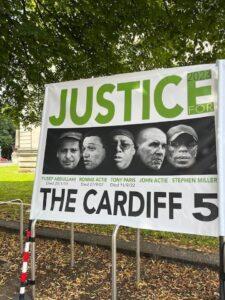
All of this highlights what has taken place at South Wales Police (SWP) amid mounting concern that the small country has FOUR forces. SWP was responsible for a string of miscarriage of justice cases in the 1980s, ’90s, as well as 2000s, and now there is a growing campaign to highlight what happened. They include: The Cardiff Three (Five), The Cardiff Newsagent Three, The Darvell Brothers, Jonathan Jones (The Tooze Murders), as well as Annette Hewins. Protest action is planned by The Cardiff Five support group over the coming weeks to draw attention to these cases.
However this shameful list does NOT have on it all those innocent people, who were convicted of less important crimes than murder, yet who now have a record which will affect them for the rest of their lives, and there is a powerful argument for getting rid of SWP completely.

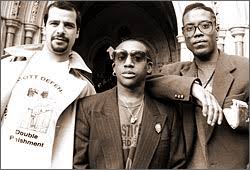
Tony Paris, Yusef Abdullahi, and Stephen Miller were wrongly found guilty in 1990 of the murder of Lynette White, and spent more than two years serving prison sentences having endured the same time on remand, while cousins John and Ronnie Actie were acquitted after being in custody since their arrests.
False eyewitness statements, coerced confessions, and more were used in the police ‘investigation’. However on appeal in 1992 the taped interviews with Mr Miller, who had a mental age of 11, were deemed an example of inappropriate interrogation for reference in future cases, such was their intimidating and coercive nature. It exposes the failings by SWP investigating officers, and bolsters demands for a judicial inquiry.
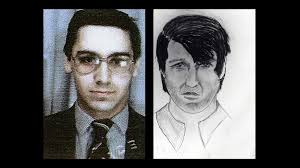
Three BLACK men had been convicted of the murder (although FIVE, including the Acties, were put on trial), when one WHITE man (Jeffrey Gafoor) was finally caught years later through DNA analysis.
He confessed to carrying out the terrible murder, and even apologised, through his barrister, to the others who had been incorrectly jailed.
This appalling case is at one end of the spectrum of how crime is being dealt with – the enormous sums we are now seeing in the laundering of illegal money is another…

The memories of Phil’s astonishing career in journalism (when crime stories often dominated) as he was gripped by the rare neurological disabling condition, Hereditary Spastic Paraplegia (HSP), have been released in another book ‘A GOOD STORY’. Order the book now!