









- Another kill zone - 6th October 2026
- War games part one - 6th October 2026
- Poll to poll - 5th October 2026

At the start of 23 years with the BBC, and a 43 year journalistic career (when he was trained to use clear and simple language, avoiding jargon), for our Editor, Welshman Phil Parry, stories were either written on typewriters or early forms of computer, but now comes more evidence of the apparently inexorable rise of new technology, with countries pinning their hopes on it to pull them out of economic slowdowns, and address enormous problems caused by population crises.
I remember it like it was yesterday.
When I did my basic journalism training (at Newcastle in 1983) all the typewriters were kept, with our names on them, locked away in a special room.
I took mine on the first day and thought: “This is a VERY important moment, because I will always have a typewriter…”.
Of course I was TOTALLY wrong!

Within a few years I was working on basic computers, and then more sophisticated personal ones came in.
I have written stories on laptops, tablets, even my phone, and this story is being done on my i-Mac, but we have to be ready for more huge changes, with Artificial Intelligence (AI).
I like to think that the kind of investigative journalism I undertake would be impossible to replicate by AI, but who knows?!
It’s certainly the case that sources must be checked even more thoroughly, because you cannot just rely on (for example) a picture of someone with a dubious character, as it might have been generated by AI.


I was reminded of this incredible change when I read about yet another country looking to new technology to address enormous structural problems – Japan.

The working-age population has fallen to about 60 per cent, leaving critical sectors like transportation, medical care, and education struggling to find staff.
There is a lot of abandoned property as the elderly population passes away, and younger generations migrate to urban centres like Tokyo, hollowing out rural towns and villages.
Let’s examine how in one area, officials are trying to address this issue (as well as years of deflation), because it is happening all over Japan – Hokkaido.
There they are attempting to create a semiconductor ‘cluster’, which could add as much as ¥11.2 trillion ($69 billion) to Hokkaido’s Gross Domestic Product (GDP) between 2023 and 2036, according to a study by a regional development agency.
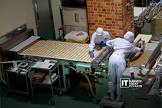
While Hokkaido will not reproduce the dynamism of Silicon Valley’s startup ecosystem, or the scale of Taiwan’s chip manufacturing base any time soon, it has a decent shot at becoming an important node in global semiconductor development, and a key part of Japan’s nascent AI ecosystem.
A more realistic guide may be Albany, New York, where a company’s main technology partner, IBM, sits at the centre of a thriving tech research and development hub.

Hokkaido’s Governor visited Albany in 2024 to study its model.
Pilot production of 2-nanometre chips, the cutting-edge for chipmaking technology, is under way, and the ambitious effort is seen as a model for the sort of new-age industrial policy favoured by Japan’s prime minister, Takaichi Sanae.
It is, of course, a long way from Wales but watch out because the same could happen here, it’s also a long way from starting my journalistic life on a typewriter – and look what happened there!

The memories of Phil’s decades-long award-winning career in journalism as he was gripped by the rare disabling condition Hereditary Spastic Paraplegia (HSP), have been released in a major book ‘A GOOD STORY’ (which was NOT written by AI!). Order it now!
Tomorrow – why major warnings today from senior politicians, and intelligence officials about Russia’s hybrid ‘war’, put centre stage once more The Eye too being targeted, as well as how the resignation of Tennessee’s Department of Correction commissioner, Frank Strada, after the failed execution of death row prisoner Christa Pike, offers us another opportunity to re-publish our story about this extraordinary case.