







- Another kill zone - 6th October 2026
- War games part one - 6th October 2026
- Poll to poll - 5th October 2026

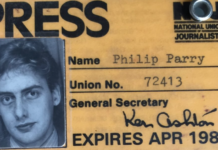
During 23 years with the BBC, and in a 42 year journalistic career (when he was trained to use clear and simple language, avoiding jargon), for our Editor, Welshman Phil Parry, it has always been paramount to report the facts of a case, and not to embellish them, and this is now highlighted by criticism today of the new film about the epic by Homer, The Odyssey, where the plume on Odysseus’s helmet is supposedly too red, and the vocabulary is said to be too American, although others believe this is legitimate artistic licence.
Unlike myths and fables, what I write is always based on fact, including my material on The Eye.
In some ways this is easier (establishing those facts is what is difficult), because I know instinctively that NOTHING should be made up, or you might end up in court, thus the stories are always backed by the evidence.
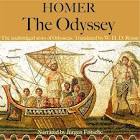
With Homer’s Odyssey, however, it may be different.
This is a cracking read by a brilliant poet (although its provenance is uncertain), involving a one-eyed monster, a beautiful sorceress turning men into pigs, and a wooden horse being used to house an invading army.
Obviously much of this is made up, but possibly BASED in truth (although nobody really knows), and therein lies the problem.
If you have a legend which may be based on confirming proof (albeit highly questionable), is it then right to further muddy the waters by filming it with dubious historical accuracy, or should this simply be accepted as the film-maker’s licence because it is made up anyway, and there are plenty of historical epics where the facts are wrong?

Even before its opening there has been enormous controversy.
Sir Christopher Nolan’s adaptation of ‘The Odyssey’ was causing conniptions long before anyone had even seen the thing.
Ahead of its official release today, there was harrumphing over everything from the actress playing Helen (too black, but is that inevitable with ‘colour-blind casting’?); the shade of the plume on Odysseus’s helmet (too red apparently), the soldiers’ armour (also too black, and too Batman-like it would seem), as well as the vocabulary of Odysseus’s son (too American and modern according to critics, with at one point him saying “Dad”).
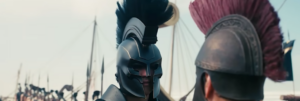
On YouTube the film’s trailer was hugely contentious, with one person declaring: “If I saw this on a plane, I’d still walk out”.
The film itself is unlikely to allay any anxieties about anachronisms.
In everything from its scenery to its psychology it says far more about the modern West than about ancient Greece.
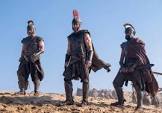
Startling liberties are taken with the plot to turn Odysseus, the archetypally flawed ancient hero, into a simple modern goody by flattening his flaws.
Any bad behaviour is explained away either by drug use, or hinted to be due mainly to proto-PTSD (the over-diagnosis epidemic having apparently reached the ancient shores of Ithaca).
The ending, which has him pierced by arrows and turned into a St Sebastian-style pincushion, is sillier still.
On the other hand, this is folk-lore, and a screen-writer has every right to take those liberties if it makes it more attractive to the audience (or so the argument runs!).
Just don’t expect any journalist like me to follow that tradition!

The memories of Phil’s decades-long award-winning career in journalism as he was gripped by the rare disabling condition Hereditary Spastic Paraplegia (HSP), have been released in a major book (although not in ‘The Odyssey’s’ league), ‘A GOOD STORY’. Order it now!
Next week – disturbing news that Russian hackers have infiltrated the email accounts of UK government officials, and that polls show civilians there are becoming uneasy about the Ukrainian war’s progress, emphasise once more how The Eye too have been targeted by the country.