









- Halt! (Unless you’re a certain type…) - 16th September 2026
- From Russia without love part two - 15th September 2026
- ‘We don’t need no educashun…’ copyright Pink Floyd - 14th September 2026

After writing about the importance of monitoring basic foodstuffs’ popularity in identifying audiences changing tastes on issues, here our Editor, Welshman Phil Parry, looks at how ordinary people push certain cheap independent FILMS to become box office hits which make millions, whereas other huge state-backed intended blockbusters, are often expensive flops!
It’s always a mistake for the great and the good to push things down people’s throats.
Mrs Jones in Rhyl knows what she likes and what she doesn’t like, so the authorities shouldn’t tell her what they think she should do!

A case in point comes in China where the movie: “Once Upon a Time in the Middle East”, is a big-budget state-backed film that officials have been organising people to watch because of its heart-warming tale of a Chinese cook’s heroism amid a destructive American invasion of an Iraq-like country.
The trouble is that audiences don’t seem to really like it. On Weibo, one of the most popular platforms, posts with the hashtag “Niu Lai” (a very bad independent production made by a mother-and-son team on a shoestring budget), have been viewed more than 170 million times, whereas posts with the hashtag of the ‘official’ Chinese film have been viewed 100 million times.

Even with deliberate seat-packing it doesn’t appear to be as popuiar as films with no strong message at all from the Chinese Communist Party (CCP).
“Niu Lai” (the name of a bullock which is coming), was apparently filmed secretly in a Chinese cinema, by someone using a mobile phone, and a copy of it on YouTube drew more than a million views, before it was deleted by the authorities.
Online commenters use “Niu Lai” in order to poke fun at the industry pouring money into films that aim to spread the CCP’s messages, but use star actors who are often second-rate.


Viewers carp at online censors’ habit of suppressing negative views of these party-backed extravaganzas.
“Anyone can point at ‘Niu Lai’ and call it trash”, wrote one Weibo user to his more than 1.5 million followers, echoing a commonly expressed view. “But those beautifully packaged, mega-budget super-flops in the film industry – are we even allowed to criticise them? …Absolutely not. That’s why they aren’t even as good as ‘Niu Lai’”.
A parallel can be drawn (bizarrely) with a fondness (or otherwise), for tea and chocolate, where their popularity or UNpopularity can tell you a lot about what people really think.
Famously Wales is a nation of tea drinkers, and sups more of the stuff (per head of population) than anywhere else in the UK.
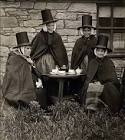
This is supported by research, and one study two years ago showed that each Welsh person slurped an average of almost three cups a day.
Tea drinkers have more selection available than ever before, with an extremely high quality coming from (or drunk by people in) Wales.
Although known mostly to those with a cultural connection to Wales, these teas are becoming more popular.
A good cup of tea always has been a traditional sign of hospitality in Wales, with Welsh teas closely resembling Irish teas, which are extremely popular with tea drinkers.


Both brews are blended, using teas from Africa and India, and use the soft waters of Ireland and Wales.
The leading Welsh teas are Welsh Brew and Glengettie, with both brands packaged in English and Welsh.
Welsh Brew was an answer to Yorkshire Tea and created specifically for Wales – it has even made an appearance in the film ‘The Replacements”.
Let’s turn now to chocolate, which has enormous social ramifications for the United Kingdom (UK) as a whole, and can also tell us a lot about the Chinese, however there is concern now about the smaller size of bars where the same price is paid.
A study analysing ‘shrinkflation’ in chocolate bar weights between the 1990s and now has revealed that chocolate bars today have significantly reduced in weight.

The study by experts at the Liquidation Centre found that of the 10 chocolate bars they analysed, bars have reduced by an average of 15.4 per cent.
Mars bars lost the most chocolate, shrinking by 36 per cent. Snickers have seen a reduction of 23.2 per cent, while Terry’s Chocolate Orange shrunk by 17.1 per cent.

Richard Hunt, Director at Liquidation Centre, declared: “Keeping the price the same can make the product feel more affordable to shoppers, but if the pack gets smaller, customers are still paying more for less.
“And when it’s a product people have been buying for years, they’re bound to notice when their favourite chocolate bar suddenly feels a little smaller”.

 The study comes after a picture of a 35 year old Mars bar went viral for weighing 22.5g more than today’s version.
Searches for ‘35 year old Mars bar’ have soared by 3,000 per cent since the discovery, according to Google Trends.
In China, the issue is a rather different one – that people there don’t eat much chocolate AT ALL.
The country has more coffee-shop brands and more KFC branches than anywhere else in the world, but chocolate has never really hit the spot for Chinese people, with the average person in China eating just 100g a year – a mere hundredth of what a French person guzzles.

A few mass-market foreign brands (Mars, Ferrero, Nestlé and Hershey), account for four-fifths of Chinese consumption.
Of all the chocolate eaten worldwide, only two per cent caresses Chinese tastebuds, although it may now be changing, thanks to a handful of Chinese chocolatiers springing up around the vast country.
Most are artisanal shops, but some are investing in supply chains and building big businesses, like Choc Revive in Shanghai, the firm was founded in 2023 by Xie Liang, a fresh-produce trader.
He now cannot open shops quickly enough. From 80 outlets today he expects to have 300 by the end of the year.

Mr Xie says that his company had 160 million yuan ($23.7 nillion) in sales last year and hopes to quadruple that, or more, this.
Perhaps they should make a film about it.
As long as it’s not state-backed of course…
The memories of Phil’s decades-long award-winning career in journalism as he was gripped by the rare disabling condition Hereditary Spastic Paraplegia (HSP), have been released in a major book ‘A GOOD STORY’ (when LOTS of cups of tea were drunk writing it!). Order it now!
Soon – how during that career, he has always known that the correct treatment of sectors in society was fundamental, and this is underlined today by news that jobs are advertised in China with the warning “men preferred”. or that women should only apply if they are of “good appearance”!
Next week – campaigners want cleaner waterways in Wales after a landmark legal case to protect the rivers Wye, Lugg and Usk – the biggest ever claim of its kind, but which opponents say is “based on a misunderstanding”.