










- School’s out - 7th October 2026
- Another kill zone - 6th October 2026
- War games part one - 6th October 2026

During 23 years with the BBC, and in a 43 year journalistic career (when he was trained to use clear and simple language, avoiding jargon), for our Editor, Welshman Phil Parry, big education stories would often dominate, and now comes news of worrying details which should be seized on by all journalists – that more and more children are keeping away from school.
Staying at school to get a good education is crucial.
Research shows that it leads to a higher life-time’s income, greater happiness, and even increased longevity.
So it is extremely worrying that over the long term there is an increased rate of absenteeism.
In the wake of the Programme for International Student Assessment (Pisa) results which a Welsh Government (WG) minister dubbed “catastrophic”, this is very alarming.
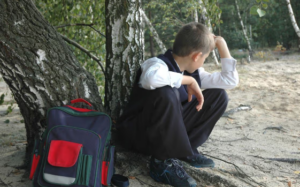
In the Spring, the WG declared that:
- “The average attendance for the 2024/25 academic year was 91.1%, down from 94.3% in 2018/19. This is a fall in attendance of 3.2 percentage points.
- “The average attendance in 2024/25 for pupils eligible for FSM (Free School Meals – a measure of children coming from deprived backgrounds) was 85.4%, a fall from 91.2% (5.8 percentage points) since 2018/19.
- “Average attendance for males was slightly higher than for females in 2022/23, 2023/24 and 2024/25, reversing the typical trend in 2018/19 and earlier years where attendance for females was higher. Attendance for both males and females fell by at least 3.0 percentage points between 2018/19 and 2024/25.
- “Average attendance in 2024/25 was lowest amongst pupils in year 11 at 86.8% and highest amongst pupils in year 3 at 93.0%. Attendance amongst year 11 pupils is 6.4 percentage points lower than it was in 2018/19. Primary school age groups fell by 1.9 to 2.3 percentage points over the same period.
- “Illness accounted for 3.8% of all school sessions in 2024/25, up from 3.0% in 2018/19.
- “The 10% persistent absence threshold was reached by 27.0% of pupils in 2024/25, up from 14.7% in 2018/19.
- “50.7% of pupils eligible for FSM were persistently absent in 2024/25, up from 30.4% in 2018/19”.

The context is disturbing, because the latest Pisa results showed that Welsh teenagers’ scores had fallen further behind 15-year-olds in other UK nations, and the Welsh Education Minister Anna Brychan stated that Wales’ scores were “not where we want them to be”.
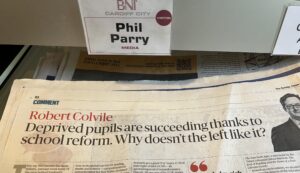
Ms Brychan also proclaimed darkly: “…I believe that these results are really catastrophic for Wales”.
The Sunday Times said: “England is…comprehensively outperforming not just Wales, Scotland and Northern Ireland but almost all of its international rivals”.
The problem of school absenteeism is not a Wales-only phenomenon either, because rates are creeping up in other countries too.
Before the pandemic one in 10 children were ‘persistently absent’ from English schools, meaning they missed 10 per cent or more of their lessons, now, however, that figure is nearly one in five.
Yet the Department for Education (DfE) calculates that persistently absent students earn £10,000 less per year by 28 than their peers with near-perfect attendance records.

Although international comparisons are tricky, the data suggest that in much of the OECD, a club of mostly rich countries, the rate of absenteeism remained flat after the pandemic, but it rose in English-speaking countries.
It appears that the UK has a particular problem with severe absence, and the proportion of pupils missing more than 50 per cent of classes reached a record high in the 2025-26 school year.
The causes of persistent absenteeism often lie outside the school gates, says Paul Whiteman of the National Association of Head Teachers (NAHT).
It seems there are many factors. The pandemic closed schools, undermining the long-repeated message that attendance is compulsory, and more parents work from home, so no longer need teachers to baby-sit.
Poverty plays a part: poor children are much more likely to be severely absent. Over one million youngsters are estimated to have no bed to themselves, and may go to class tired, so falling behind and dropping out. The effects, though, can be devastating.

Children who keep on being absent are more likely to end up in prison, take drugs and harm themselves.
The UK has more than one million NEETs (young adults Not in Education, Employment or Training), who cost the state over £120 billion in benefits and lost output, wth their ranks full of those who were school absentees.
But the cost to THEIR lives is even greater, when a future may be made more difficult by not going to school.
That’s a good lesson to learn!
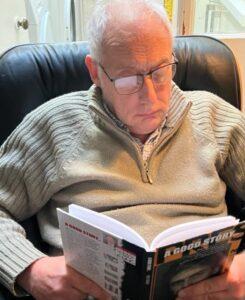
The memories of Phil’s astonishing career in journalism (when education stories were key) as he was gripped by the rare neurological disabling condition, Hereditary Spastic Paraplegia (HSP), have been released in another book ‘A GOOD STORY’. Order the book now!