




- Flavour of the month… - 8th October 2026
- Writing on the wall? Part one - 8th October 2026
- Lights to green… - 7th October 2026
During 23 years with the BBC, and in a 43 year journalistic career (when he was trained to use clear and simple language, avoiding jargon), for our Editor, Welshman Phil Parry, monitoring shifts in political opinions has always been paramount, and one above all is obvious today – the number of people who do not vote AT ALL.
This is now highlighted by the first round of elections in the giant country of Brazil, where the number of abstentions was at its highest level since 1998!
There is little doubt about it – people aren’t voting.
This is a global phenomenon (and Wales is not immune), which has been underlined by last week’s first round elections in Brazil.
Perhaps it’s something to do with voter disenchantment with politicians.
In Brazil for instance both front runners (Flávio Bolsonaro and Luiz Inácio Lula da Silva), are highly controversial, but far from exciting voters, they seemed to turn off the electorate, and abstention rates were at their highest level in 28 years.
All signs point to a victory for Flávio (who’s father Jair was imprisoned after a failed coup attempt), as since Brazil returned to democracy in 1985, no candidate who lost the first round of the election has won the run-off.
In Minas Gerais, Brazil’s most important swing-state and a bellwether for the country, Flávio won by five percentage points.
The Bolsonaro Liberal Party more than doubled its seats in the Senate, to 28 out of 81.
It also cemented its position as the biggest party in Brazil’s notoriously fragmented lower house, while almost none of Lula’s allies won new Senate seats or governorships.
They did not attend a single television debate, and interest in the election generally, was low.
Over 33 million of 158 million eligible voters did not bother to turn up, and in polls the week of the ballot almost a third of voters said they did not know whom they would choose.
Outside one polling station in an upmarket neighbourhood of Rio de Janeiro, one gloomy-faced 24-year-old described the election as having “a funeral atmosphere”, and his friend said: “It’s about choosing the lesser evil”.
It’s no better here.
In UK General Elections (GE) turnouts have been on a downward trajectory, with slight blips.
2001 saw the lowest voter turnout since records began – hitting below the 60 per cent mark for the first time.
Turnout, defined as the proportion of registered voters who cast valid votes, was the second-lowest at the last GE in a century, at just under 60 per cent.
In Wales turnout was even worse at just 56 per cent, 11 percentage points lower than in 2019 and the lowest for at least a century.
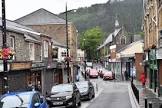
In the constituency of Blaenau Gwent and Rhymney it was a measly 43 per cent.
Yet in the past it has been VERY different.
At the 1951 GE the UK turnout figure was 82.6 per cent, and even higher in Wales at 84.4 per cent.
There was a huge fanfare over the fact that at the last election to the Welsh Parliament/Senedd Cymru (WP/SC), turnout was over half the electorate.
This, for example, was the Electoral Commission (EC): “Voters in Wales turned out in record numbers for the 2026 Senedd election and remain highly satisfied with the voting process, according to new research published by the Electoral Commission.
Turnout, at 51.7%, was the highest recorded at any Senedd election and the first time it exceeded 50%…”.
However this still left about 1,178,000 people or 48.4 per cent of the electorate, who did not vote at all!
Even in the past the turnout for the WP/S has been nothing to write home about, despite what commentators have said.
In the 2021 WP/SC election, for instance, the voter turnout rate was just 47 percent (in other words MOST couldn’t be bothered to vote at all).
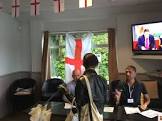
Yet this was described by Statista as an “increase of 1.3 percent compared with 2016”.
The memories of Phil’s astonishing, decades long award-winning career in journalism (when freedom of expression was fundamental, but abuse invariably followed because he imposed limits) as he was gripped by the rare neurological disabling condition Hereditary Spastic Paraplegia (HSP), have been released in a major book ‘A Good Story’. Order it now.