








- Flavour of the month… - 16th October 2026
- Tea break - 16th October 2026
- Writing on the wall? Part two - 15th October 2026

During 23 years with the BBC, and in a 43 year journalistic career (when he was trained to use clear and simple language, avoiding jargon), for our Editor, Welshman Phil Parry, it has always been central to keep up with changing tastes, and this is underlined (bizarrely) by news today that tea may be on the up, which could be very beneficial for Wales as people in the country sup more of the stuff (per head of population) than anywhere else in the UK.
Read the, er, tea leaves.
It looks as though in this health conscious age, tea (and water) is becoming fashionable again – although perhaps reinvented as a trendy drink that does you good.
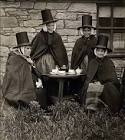
Largely gone are the days when tea was seen as purely an old person’s drink, and while we have seen a plethora of coffee shops springing up on our high streets, could we now be about to see more ‘tea houses’?!
if so, this could be very beneficial for Wales because, famously, it is a nation of tea drinkers.
This is supported by research, and one study two years ago showed that each Welsh person slurped an average of almost three cups a day.
Tea drinkers have more selection available than ever before, with an extremely high quality coming from (or drunk by people in) Wales.
Although known mostly to those with a cultural connection to Wales, these teas are becoming more popular.
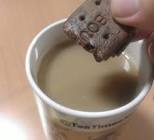
A nice cup of tea (perhaps with a biscuit to dunk in it) has always been a traditional sign of hospitality in Wales, with Welsh teas closely resembling Irish teas, which are extremely popular with tea drinkers.
The leading Welsh teas are Welsh Brew and Glengettie, with both brands packaged in English and Welsh.
Welsh Brew was an answer to Yorkshire Tea and created specifically for Wales – it has even made an appearance in the film ‘The Replacements”.
It’s not just Wales either, as it seems tea (in various forms) is the drink of the moment all over the world.
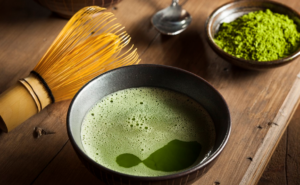
in Japan for example, a boom has been seen in ‘Matcha’ – a finely-ground powder made from specially grown green tea leaves, which is closely associated with the tea ceremony.
The jury is out, but it is possible that tea is better for your health than coffee.
Scientific studies have shown that GREEN tea can help reduce stress in some people.
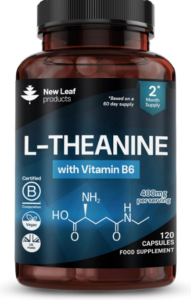 This is probably thanks to its amino acids, which have been found to reduce acute stress and anxiety.
The beneficial compound L-theanine is also present, at lower concentrations, in BLACK tea.
Studies have indicated that consuming high amounts of caffeine (in for example coffee, and at levels above 400mg) may increase the risk of anxiety.
Too much coffee could also disrupt your sleep.
After 10–12 hours, a quarter of the caffeine could still be there, according to sleep scientist Matt Walker.
“Caffeine can decrease the amount of restorative deep sleep you have and as a consequence you can wake up the next morning and not feel refreshed“, explains Mr Walker, and one recent study recommended stopping drinking coffee at least EIGHT hours before bed to limit the caffeine’s impact, but it suggested no cut-off was needed for black tea.
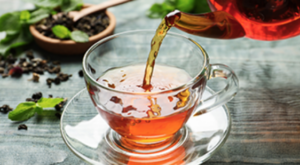
The NHS advises that caffeine can disrupt your sleep and make it more difficult to control your anxiety, and it says on its website: “drink caffeine in moderation – some people are more sensitive to caffeine than others, depending on how much they drink and how often. Check the label for drinks that are high in caffeine”.
As well as a good flavour, and possible health benefits, the versatility of tea, and ease of preparation, make it a good bet – it can be steeped in hot or cold water, mixed with milk or honey, and enjoyed with sweet or savoury food.
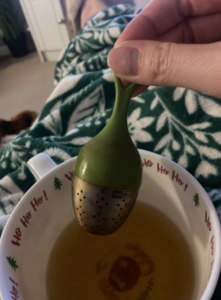
Perhaps we are seeing signs even now, of tea companies cottoning on to the growing health awareness market.
Recently one of Britain’s oldest tea firms, Typhoo Tea, collapsed after a drop in sales, but the company which bought it (Supreme) includes in its roster two herbal tea brands; ‘Heath & Heather’ and the ‘London Fruit & Herb Company’, as well as speciality tea brand ‘Ridgways’.
Twinings offers a canned sparkling tea, while bottled kombuchas (a fermented tea drink) appeal to students and young professionals buying a meal deal,
Polina Jones from NielsenIQ says while people “are not falling out of love with tea per se”, the landscape is changing with huge offerings from bubble tea, herbal teas, and kombuchas.
I certainly won’t be reaching for a nice cup of ‘kombucha’ while I write pieces for The Eye (frankly I’m not entirely sure what it is!), but perhaps I should be grateful that others are coming round to the possible health benefits of all the cups of tea I drink!

The memories of Phil’s decades-long award-winning career in journalism as he was gripped by the rare disabling condition Hereditary Spastic Paraplegia (HSP), have been released in a major book ‘A GOOD STORY’ (when LOTS of cups of tea were drunk writing it!). Order it now!