





- Another kill zone - 6th October 2026
- War games part one - 6th October 2026
- Poll to poll - 5th October 2026

During 23 years with the BBC, and a 42 year journalistic career (when he was trained to use clear and simple language, avoiding jargon), for our Editor, Welshman Phil Parry, the analysis of different democratic systems (and age of suffrage), has always loomed large, and now this is put centre stage, because another one has just been used for the recent election to the Welsh Parliament/Senedd Cymru (WP/SC).
It seems easy, but in fact it isn’t.
You just give everybody aged over 18 (or 16 as it is now in Wales), and you get democratic elections.
Actually, though, there are any number of systems of democracy (and I know this only too well as I graduated with a degree in Politics and Modern History).
When I was at university (in Manchester) it was all about the different systems adopted by other countries, like the Soviet Union (SU) (which still existed then), and the United States of America (USA).

Now it is more about whether, and to what extent, Proportional Representation (PR) should be enacted (if so WHICH system), as well as at what age people should be allowed to vote.
Let’s look at the first one.
Since its creation, the Welsh Parliament/Senedd Cymru (WP/SC) (at birth it was known as the Assembly for Wales [AfW]) has used the Additional Member System (AMS), with 40 Members being elected using Westminster-style First Past the Post (FPP), while the remaining 20 elected through PR to balance things out.


But in the vote earlier this month it all changed.
Wales was divided into 16 new constituencies, each one electing six Members of the Senedd (MSs).
Instead of having two votes, people now had just one, and seats were then shared out based on how many votes each party received, with the allocation in proportion to the vote in each constituency. So if a party won half of the vote, it might win three out of six seats.
This is called a ‘closed proportional list’, using a method known as ‘D’Hondt’, and it is MUCH fairer, as well as perfectly simple to understand, right?
Except that it isn’t.
It might be fairer, but it certainly isn’t simple to understand for Mrs Jones in Rhyl, whereas electing the MP in your constituency, when the winner is the person who gets the most votes (FPP) IS easy to understand.

Indeed democracy itself is not easy either.
As Churchill told the House of Commons (HoC) in 1947 (quoting someone else): “democracy is the worst form of Government except for all those other forms that have been tried from time to time.…”.
In times gone by there was huge debate about whether democracy itself was actually a good thing, and there was an acute fear of the ‘mob’. Indeed in history ‘the people’ have been called “the beast with many heads”, “swinish multitude” and “mobile vulgus” or ‘changeable crowd’, which is where the word ‘mob’ actually comes from.
For a long time it was thought by Liberal thinkers that ordinary people couldn’t be trusted with the vote, because bad policy would result, so the ‘elite’ or those ‘educated’ should be given more ballots.
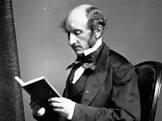
John Stuart Mill for instance (whose On Liberty is a virtual guidebook for Liberals), declared that democracy was driving Europe towards “the Chinese ideal of making all people alike”.
When the founding fathers were drafting the constitution for what would become the USA, they decided that it should be a representative republic NOT a democracy.
In the UK too at this time, the fear of ‘mob rule’ if democracy were let rip, was very real, so the answer for policy makers lay in allowing more lee way to those who were educated.
In fact graduates were allowed to vote simultaneously in their university, AS WELL AS in their home town until very recently.
This absurd legislation was only finally abolished in 1949!
So don’t let anybody tell you that democracy is easy, because you ‘just let the people decide’.
It isn’t…
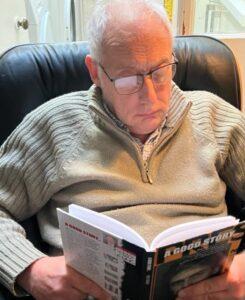
The memories of Phil’s decades-long award-winning career in journalism (including his time covering politics), as he was gripped by the rare disabling condition Hereditary Spastic Paraplegia (HSP), have been released in a major book ‘A GOOD STORY’. Order it now!
Tomorrow – during that career Phil became aware of the extreme dangers facing an investigative journalist (he has himself been confronted by death threats), and once more this is put centre stage by allegations in a court case that three men were used as ‘proxies’ by Iran to stab a news presenter the regime didn’t like.