





- Another kill zone - 6th October 2026
- War games part one - 6th October 2026
- Poll to poll - 5th October 2026

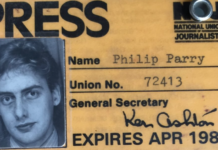
As our Editor, Welshman Phil Parry has written many times a free and independent media is essential for a functioning democracy, although this does not exist in many states around the world, and it is now put centre stage by disturbing news that the Kremlin has barred entry to journalists, and that it does not like the way the Ukrainian war is being reported.
I’ve said it before, but unfortunately it needs re-stating: ‘DON’T SHOOT THE MESSENGER!’.
This maxim is as old as the hills, but regrettably regimes (particularly autocratic ones) resort to this (metaphorically), rather than fixing the problem which is being reported on.
I’m afraid we have just seen this in Russia when journalists were barred from entering (or re-entering) the country – and it may be because the authorities did not like the way they were reporting on the war in Ukraine.
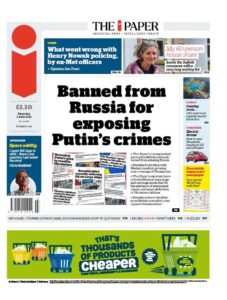 Officials have banned five UK nationals, including The Washington Post (WP) journalist Catherine Belton and The i paper correspondent Richard Holmes.
Ms Belton is an investigative journalist (like me) focusing on Russia, and has previously reported on the country for the Financial Times (FT), as well as Reuters among others.
Mr Holmes, is another award-winning investigative journalist (again like me) and a Pulitzer Prize finalist, who reports on security matters for The i.
It could be that these and others have been reporting on the Ukraine war in a way which is truthful, but not to the liking of Vladimir Putin.
Remember that Russia launched its full-scale invasion of Ukraine on February 24 2022, and the original aim appeared to be to take over the ENTIRE country.
 It is conceivable that Mr Putin has bitten off more than he can chew, because the whole of Ukraine has NOT been taken over (or collapsed), there have been reverses on the battlefield in the bits he does control, and Ukrainian drones are striking targets deep inside Russia.
Only on Tuesday night did Ukraine hit an oil facility, and a naval air base near St Petersburg, hours before international guests gathered for the city’s flagship economic forum. Ukrainian forces have also targeted Russian-annexed Crimea, in an attack which left “three killed” (probably far more). Meanwhile, as in Crimea, even the state controlled media has been forced to admit that a Ukrainian attack on Moscow was the “largest in over a year”.
These sort of strikes are very serious, but played down by the Russian authorities, and the journalists we rely on to interpret them are barred. That’s not all either because social media, which offers alternative news sources, is also being clamped down upon.
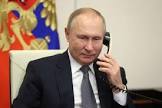
There has been no state WhatsApp until recently, but Vladimir Putin filled this idealogical void with a site called ‘MAX’. This is a ‘national messenger’ app created by a Russian firm closely controlled by the Kremlin. WhatsApp (whose owner, Meta, is designated an ‘extremist organisation’ in Russia) is especially popular with older people because of how easy it is to register and use.
MAX is pre-installed on new devices, although the concept clearly stemmed from Asia’s super-apps, and particularly China’s WeChat, which is a pillar of daily life there.
There are fears that the app will allow the authorities to hack into the phone’s microphone or even its camera.
Sadly this falls into a familiar pattern in Russia where state news is deemed acceptable (because a difficult situation can be downplayed as in the Moscow attack), yet information from independent sources is not, with news coming to light about undercover journalistic groups that play an important role in assisting the Ukrainian authorities, as they try to repel Russia. Some of them (like The Eye) have NO state funding whatsoever, and operate on a purely freelance basis.
There is, for instance, InformNapalm.

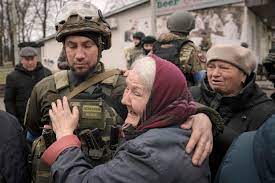
This organisation was set up by journalists, an IT specialist as well as a dentist, and is proving to be a particular thorn in the side of the Russian military.
The Informnapalm.org website was created in March 2014 after the Russian unlawful annexation of Crimea.
They’re all volunteers and they have conducted two major investigations into the shooting down of Malaysia Airlines Flight 17, as well as gathered evidence about the presence of Russian troops on Ukrainian territory (which was denied by Russia).
They collect and analyse OSINT-information, found in open sources, including on social networks.
InformNapalm’s investigation of the then Russian 53rd Artillery Brigade commander Colonel Sergei Muchkayev, suspected of killing the MH17 passengers and other atrocities, was crucial.
Their involvement in subverting a publicity photograph was central in identifying members of the 960th Assault Aviation Regiment.
Independent journalistic websites in democratic countries around the world (whose investigations are heartily disliked by the Russian authorities), include ones like Bellingcat.
It is a Netherlands-based investigative journalism group that specialises in fact-checking.
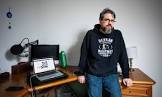
It was founded by British citizen journalist and former blogger Eliot Higgins in July 2014, and has published the findings of both professional and citizen journalist investigations into war zones, human rights abuses, and the criminal underworld.
In his first book Mr Higgins told how open source investigation has redefined reporting in the 21st century, and argued that the internet can be a force for good, despite bad actors, complacent technology firms and an explosion in alternative so-called ‘facts’.
The site’s contributors also publish guides to their techniques, as well as case studies.
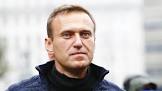
he was killed
Bellingcat began as an investigation into the use of certain weapons in the Syrian civil war.
Its reports on the Russo-Ukrainian War (including the downing of the Malaysian flight), the Yemeni Civil War, the poisoning of Alexei Navalny and the poisoning of Sergei and Yulia Skripal, as well as the killing of civilians by the Cameroon Armed Forces have attracted international attention.
More power to their elbow I say.
Sometimes all the abuse and empty legal threats I suffer (and I’m sure Bellingcat as well as InformNapalm get the same) are worth enduring!
So stop barring journalists from Russia – ‘DON’T SHOOT THE MESSENGER…’.
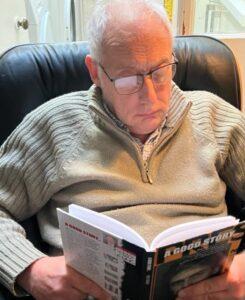
Details of Phil’s, astonishing decades-long journalistic career (when he was able work in a largely free environment), as he was gripped by the rare neurological condition Hereditary Spastic Paraplegia (HSP), have been released in an important book ‘A GOOD STORY’. Order it now.
Next week – how for Phil, sports stories often took centre stage, and this is now highlighted by more concerns being raised about the World Cup, which kicks off in a few days.