






- Another kill zone - 6th October 2026
- War games part one - 6th October 2026
- Poll to poll - 5th October 2026
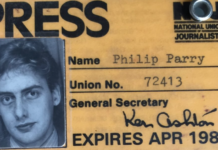
During 23 years with the BBC, and a 42 year journalistic career (when he was trained to use clear and simple language, avoiding jargon), our Editor, Welshman Phil Parry, has conducted numerous interviews with senior politicians, and presented any number of election programmes (with several, hosted by others, to be broadcast later this week), but one thing became clear to him – THEY NEVER ANSWER THE QUESTION!
I did my best.
I always felt when I had a senior politician before me, that in my questions I was representing Mrs Jones in Rhyl and asking what she wanted asked.
It was invariably incredibly frustrating, though, because there would almost NEVER be a straight answer to a direct question.

These politicians had been on training courses which taught them how to avoid difficult questions.
So I would ask: “How do you explain the fact that the Accident and Emergency service in Wales is so poor?”. But you would get: “What we are doing is employing X number of extra nurses, and putting X more millions into health care in Wales…” etc.
In other words the question wasn’t answered AT ALL, and there would be no pause in the tedious blandishment for a follow up by me (which is another part of the training).
There is, however, plenty to go at in this area, and I would have liked to have seen rather more grilling of politicians on it during the election campaign, because the health service in Wales has been described publicly as “like a warzone”.
In February of last year a report from an independent body set up by the Welsh Government (WG) into the experience of patients and their loved ones at A&E departments across Wales, uncovered damning findings.


The group (Llais) found that there were: “…challenges like understaffing, long, uncomfortable, undignified waits, and poor communication (which) too often overshadowed positive experiences”.
Professor Medwin Hughes, the chair, declared: “Emergency care in Wales is at breaking point. What we heard from patients and staff across the country exposes a system under extreme and unsustainable pressure where the wellbeing of both patients and healthcare professionals is at significant risk. People across Wales are asking for timely, dignified care, and they deserve nothing less.

“People need urgent answers: what will make things better, and who will make sure real change happens? The Welsh Government and NHS Wales have set out strong principles but principles alone will not fix a system in crisis.
“Now is the time for action. Strong leadership and collaboration are essential to deliver real change for people and communities. A national conversation, involving both patients and professionals, must take place to rebuild trust and confidence in the NHS. The situation demands nothing less”.
Meanwhile in the recent past ambulances have been waiting nearly two hours on average to hand over patients outside Welsh hospitals, and in one month there were more than 6,500 ambulances which spent at least an hour outside A&E departments – the second highest figure on record.

The following is typical of what I heard all the time, when in responding to this appalling situation, a WG spokesman said emergency departments in Wales, like the rest of the UK, were under “significant pressure” and that £200 million had been invested that year to “help safely manage more people in the community”. In other words not really addressing the issue at all.
The plain fact is that NHS Wales has not met targets for A&E.
Figures for December show the worst A&E performance since March 2016 but attendance was 5.4 per cent higher than in 2017 – 78.9 per cent of patients were admitted, transferred, or discharged after spending less than four hours in emergency care facilities, yet the target is 95 per cent, and it was 1.5 per cent LOWER than in December 2016.
But getting to hospital in the first place can be a problem.

If people can’t afford a taxi, and don’t have access to a car, what are they meant to do?! You can hardly take the bus with a broken leg!
Ambulance services are under-resourced, staff miss breaks having to work beyond their shift, and due to pressure, sickness-absences for ambulance staff reached an incredible level recently.
There have been a few (although I would suggest NOT ENOUGH) questions about all of this during the election campaign.
But then the politicians have been on all those courses training them in how NOT to answer questions!
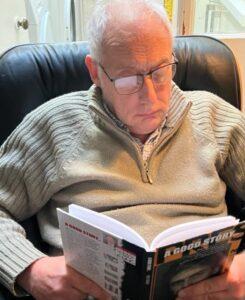
The memories of Phil’s decades-long award-winning career in journalism (when proper grilling of politicians was paramount), as he was gripped by the rare disabling condition Hereditary Spastic Paraplegia (HSP), have been released in a major book ‘A GOOD STORY’. Order it now!
On the day of the vote tomorrow he looks at why this election may be the last one before AI really takes hold.