



- Another kill zone - 6th October 2026
- War games part one - 6th October 2026
- Poll to poll - 5th October 2026
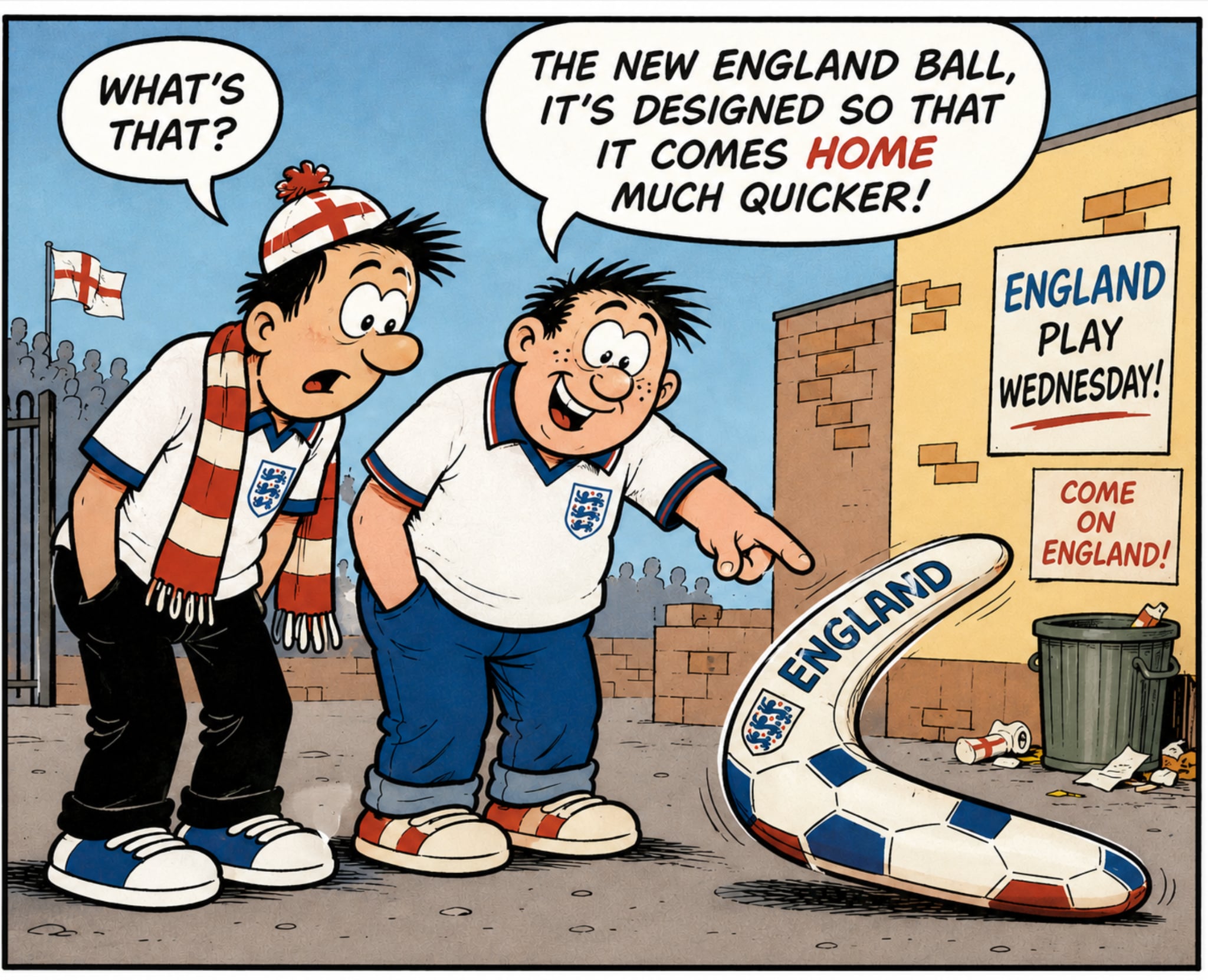
 Today is England’s first match, and critics are speculating whether this may even be the LAST ever FIFA World Cup because the governing body, as well as the tournament itself, has been hit with so many scandals.
Two leading sports experts have pointed out in The Economist that this will be the third successive FIFA World Cup engulfed by calls for a boycott owing to a host nation’s human-rights or foreign-policy record.
A man on the cusp of being the first Somali to referee at a FIFA World Cup finals, was dropped from the list of officials on Monday last week after he was barred from entering the United States of America (USA) at Miami International Airport (MIA), because he “didn’t have the right papers”.
He wasn’t the only one, either, to be caught up in America’s visa restrictions, and UK newspapers have described the organisation as “chaos”.
More than 15 Iranian officials and team staff (called “integral” to the country’s campaign), were denied visas, and Iran’s football federation claims the co-hosts have also revoked the ticket allocation for their group games in an effort to “obstruct the presence of Iranian supporters”.
There have been huge problems for other countries as well.
Dozens of Moroccan fans were denied US vsas, losing thousands in tickets and hotel bookings in the process, with one media website (like earlier ones) also calling the system “chaotic”. Politico headlined their story about it: “Visa chaos frustrates soccer fans”.

The Iraqi striker Aymen Hussein was held and questioned for nearly seven hours at Chicago’s O’Hare Airport (OA) before finally being allowed entry, and the team’s photographer, Talal Salah was detained for more than 10 hours and was ultimately denied entry altogether.
Visa bans seem to be a constant theme, and they are a major headache for the governing body. The former Arsenal midfielder, now of Villarreal, Ghanaian Thomas Partey was stopped playing in his country’s first FIFA World Cup game in Toronto as he was denied entry too.
He had been charged with five counts of rape and one count of sexual assault in July 2025 by the Metropolitan Police (Met). In September of that year, he pleaded not guilty. Mr Partey was charged with two new counts of rape in February this year, to which he pleaded not guilty in April.
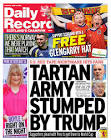 There have been other major issues as well. The Electronic System for Travel Authorization (Esta) scheme used by the US has caused a crisis for British fans, with two families intending to travel to support Scotland on their first FIFA World Cup adventure since 1998, finding their approved status suddenly revoked just days before departure.
It is also the first time that a host nation is engaged in, what many say, is an illegal war with a participating nation; the first time that citizens of four participating countries are subject to a travel ban issued by a host nation; and the first time a host nation’s leader has openly threatened to annex one co-host and torn up trade agreements with the other.
From its birth, the FIFA World Cup has been beset by troubles and scandals, although today’s are of an order of magnitude which is off the scale.
For example, the stadium for the first one, in Uruguay in 1930, was not ready on time, while the only African team slated to participate in that tournament (Egypt), literally missed the boat, and Uruguay, the eventual victor, was so incensed by the poor turnout from Europe that it boycotted Mussolini’s FIFA World Cup four years later—the only time a defending champion has failed to show up. Meanwhile, Russia’s unlawful annexation of Crimea in 2014 did not prevent it from hosting the tournament in 2018.
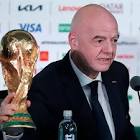
The reforms of the governing body’s head (Gianni Infantino), have done little to dispel FIFA’s awful reputation.
Like his long-serving predecessors, Sepp Blatter and João Havelange (a Brazilian businessman) he has proved adept at hobnobbing with the powerful, and has received a medal, the Order of Friendship, from Vladimir Putin, as well as inventing one himself, the FIFA Peace Prize, to award to Donald Trump last year.
With this as the background we here re-publish our piece from last week
–
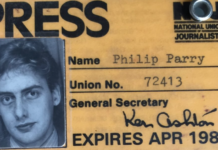
During 23 years with the BBC, and in a 42 year journalistic career (when he was trained to use clear and simple language, avoiding jargon), for our Editor, Welshman Phil Parry, sports stories often took centre stage, and this is now highlighted by more concerns being raised about the FIFA World Cup, which kicks off in three days.
It is fascinating to watch reputations decline.
A few years ago the FIFA World Cup was the supreme international football tournament, where nations competed against each other on a world stage.
Now, though, there have been so many scandals, that it is more about the UEFA Champions League and international club football.
FIFA is under pressure as never before (and not just with the scandals), because critics say the rules must be changed to make the games more exciting. As The Economist has put it: ‘…football is competing in a global market for eyeballs, in which the governing bodies of other sports are trying to make their “product” more appealing’.
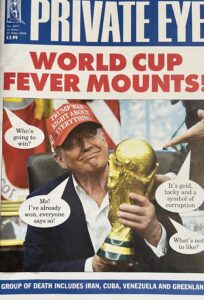
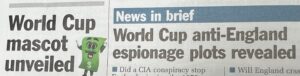 Even before this one has kicked off the price of tickets was highlighted, with it featuring in Private Eye – and this is just the latest controversy, because there have been many more in the past.
The way tickets were being sold for the event was first condemned many months ago, with one UK paper describing it in this way: “Dynamic pricing, crypto detritus and corporate doublespeak have made the task of buying 2026 World Cup tickets a grim case study in the monetization of emotion”.
Worries about high temperatures, too, were emphasised, although the alarm was as nothing compared with those on holding the tournament last time in the desert state of Qatar where footballers faced playing in matches where it could be 38 degrees celsius in July.
The temperatures at 14 of the 16 stadiums being used for the 2026 FIFA World Cup could exceed potentially dangerous levels during the tournament, and FIFA was urged to avoid afternoon games at six of the locations with the highest heat risk and no indoor air conditioning.
The warning came from researchers who have studied the likely events at the contest which is being held in America, Canada and Mexico.
This all appears to have echoes of the one in Qatar which was mired in controversy, and which the kind of investigative journalism specialised in by me played a major role in exposing.

It is illegal to be gay in Qatar, it was feared that thousands of migrant workers may have died in building the infrastructure for the FIFA World Cup there, and accusations emerged of bribery to secure the competition in the first place.
The body which awarded the matches to Qatar (FIFA) has been at the centre of an enormous storm over alleged corruption.
Its former vice-president Jack Warner faced an arrest warrant issued at the request of US authorities, who filed charges against him and 13 others.
In September Mr Warner was subject to a ruling made by a high court in his home country of Trinidad and Tobago which stopped him being extradited to the US – he had received a life-ban from FIFA in 2015 and was charged with wire fraud, racketeering and money-laundering by the US that year as well.
He had allegedly taken a $5 million (£3.7 million) bribe to vote for Russia to host the 2018 World Cup, though he has always insisted that he is not guilty of doing so. However, according to Reuters, two of Mr Warner’s sons, Daryll and Daryan, pleaded guilty to their roles in the scheme in the US in 2013.
The US Department of Justice (DoJ) indictment stated: “Several of the accounts used to wire money to Warner received or sent wire transfers to or from companies based in the United States that performed work on behalf of the 2018 Russia World Cup bid”.
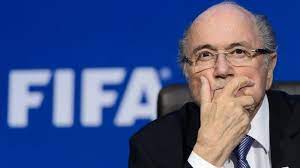
The man in charge of FIFA at the time (Sepp Blatter) has also been accused of corruption, although he was cleared of any wrongdoing by authorities in Switzerland in relation to a massive ‘disloyalty payment’ to a friend and former colleague.
Mr Blatter’s lawyers then described it as “a valuable employment relationship” and said “the payments were valid compensation and nothing more”.
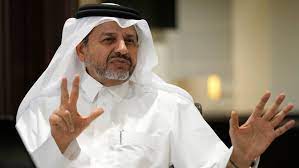
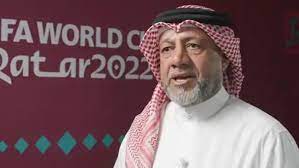
Meanwhile the Qatar World Cup chief Hassan Al Thawadi declared that the tournament changed perceptions of the region and transformed his country, while insisting there should be recognition for improved workers’ rights.
“This was a celebration of the Arab people, of our culture, of our tradition, of our history”, Mr Al Thawadi proclaimed during an interview in Qatar’s capital, Doha. “It was a platform for bringing people together in an unprecedented way. It changed the perception of this part of the world, and allowed us to showcase the best in us”, he added.
Unfortunately these fine words hid a darker world.
The Sunday Times, disclosed that the country had secretly offered £400 million to FIFA, just 21 days before being awarded the event, and once the announcement was made, more alarm bells started to ring.
The country is slightly smaller than Connecticut and had scant soccer pedigree, but in December 2010 the tournament was given to it even so, during a bidding process that, according to American authorities, was riddled with corruption.
Terrible remarks from Khalid Salman, a retired football star from Qatar, and ambassador for the football World Cup, have underscored the awful facts that gay people there may endure a punishment of up to three years in prison, as well as knowing they could even face the death penalty under sharia law if they are Muslim.
He used an Arabic term for being homosexual meaning that it was a “damage in the mind”, speaking on the German public broadcaster ZDF. Mr Salman also appallingly said that gay people brought in to Qatar something that was “not good”, and he was worried children in his country might see gay men and women. He was then swiftly cut off by a media adviser.
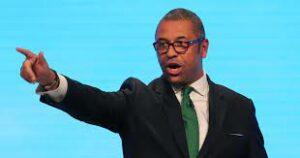
This medieval approach to being gay in Qatar caused a huge storm, with remarks from politicians adding to it. The then Foreign Secretary, James Cleverly said even before them, that fans should be: “Respectful of the host nation” (which has a TINY population of just 2.9 million people, but with an estimated 1.7 million migrant workers). However Lucy Powell the Shadow Culture Secretary at the time declared: “This is shockingly tone deaf from James Cleverly”.
Under the headline: Why Qatar makes this football fan so uneasy”, The then Times columnist David Aaronovitch wrote: “…it is effectively a monarchical dictatorship”, as well as: “…I wouldn’t dream of going (to Qatar). Even watching from afar feels horribly like collusion. It’s all a bit sad”.
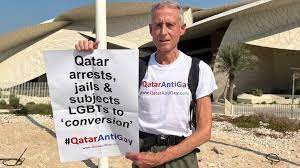
Others though, HAVE gone to Qatar, but for reasons other than those held by some Welsh football fans – to protest about its severe laws. The Lesbian, Gay, Bisexual and Transgender (LGBT) campaigner Peter Tatchell demonstrated against them in Doha, where he held up a placard which read: “Qatar arrests, jails and subjects LGBTs to ‘conversion’”.
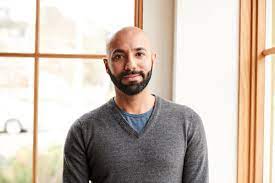
Earlier this year, under the headline ‘DOCTOR BECOMES ‘FIRST’ QATARI TO PUBLICLY COME OUT AS GAY’ The Independent reported that Nas Mohammed said: “I walked into a gay club and I knew I was 100 per cent gay. I went home and cried – I thought my life is in crisis. I thought I was going to go to hell, my life is damned”.
One leading Welsh football presenter said: “A producer I work with is gay and he can’t go!”.
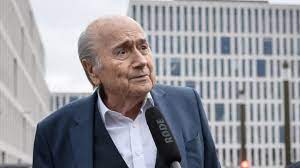
Even Mr Blatter, stated that the decision to award the World Cup to Qatar was a “mistake”. We are told this was to do with the size of the country, and not connected to human rights abuses, but his comments will only add to the worrying headlines about Qatar.
Mr Blatter’s news came as 10 European football associations (including those of England and Wales) announced: “human rights are universal and apply everywhere”. Peaceful protests were planned by some players, while England’s defeated Harry Kane and nine other captains of European teams (among them the Wales captain Gareth Bale) were to wear ‘One Love’ armbands in order to promote diversity and inclusion.
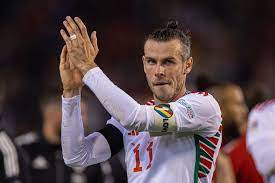
But it was decided NOT to wear them following a threat from FIFA that players could face an instant yellow card for doing so. Afterwards, a joint statement from the Football Associations of England, Wales, Belgium, Denmark, Germany, The Netherlands and Switzerland declared. “We are very frustrated by the FIFA decision which we believe is unprecedented – we wrote to FIFA in September informing them of our wish to wear the One Love armband to actively support inclusion in football, and had no response”. They added: “FIFA has been very clear that it will impose sporting sanctions if our captains wear the armbands on the field of play“
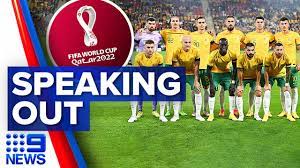
Denmark were donning ‘toned-down’ shirts in protest, with kit provider Hummel saying it did “not wish to be visible”, while Australia’s squad released a video urging Qatar to abolish its laws banning same-sex relationships.
Two excellent books laid bare in horrifying detail the darker side of life inside Qatar. It has used the World Cup as a form of ‘soft power’, to boost the profile of the state, however there are serious doubts about the way this has been done.
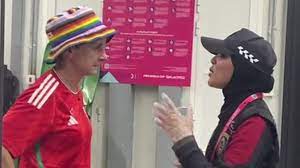
They are: ‘Hidden Stories From One of the Richest Nations on Earth’ by John McManus, as well as ‘Qatar and the 2022 FIFA World Cup : ‘Politics, Controversy, Change’ by Paul Michael Brannagan and Danyel Reiche. The London Review of Books (LRB), which featured them, has underlined the nature of laws in the state: “Homosexuality is illegal in Qatar, and though the organisers of the World Cup have insisted that everyone is welcome it remains to be seen how public demonstrations of same-sex affection will be handled; earlier this year one of the men in charge of security at the tournament Major General Abdulaziz Abdullah al-Ansari, warned that rainbow flags may be taken from fans for their own protection”.
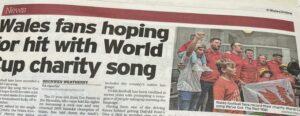 Despite everything, football supporters were urged to celebrate Wales’ qualification to Qatar, and a group of Welsh fans even recorded a charity song to mark the occasion.
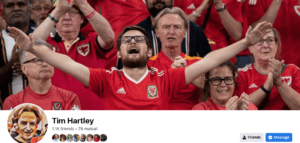
The Cardiff-based newspaper South Wales Echo (SWE), as well as the website version WalesOnline (WO) were particular cheerleaders, and they ‘reported’: “Those behind the song We’ve Got The Red Wall hope it will become a hit on the terraces and make it to number one before the tournament kicks off in Qatar in November”. One of those who made it was the senior Welsh journalist and author, Tim Hartley, who was Head of News at the Welsh Government (WG) and Director of Corporate Affairs at S4C. He flew out there to follow the Welsh team.
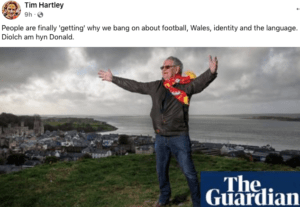 In one Facebook (FB) post a day before the tournament kicked off, and including a link to a UK newspaper piece with Daffydd Iwan’s ‘Yma o Hid’, he said: “People are finally ‘getting’ why we bang on about football, Wales, identity and the language. Diolch am hyn Donald. He posted, too, pictures on his FB page from inside the stadium before or during the Wales game against USA.
Mr Hartley changed his FB profile several times, as well, as he celebrated watching matches in Qatar. In another FB post, though, he appeared to have become disillusioned with the organisation of the World Cup, and said: “Great atmos in the ground but getting back was a real drag. Hotels, prices, beer and bucket hats. I’m talking all things Wales Away on Radio 4s Today programme this morning at 0720”.
 But the conditions for migrant workers in building the stadiums were no less alarming, and they placed another question mark over Mr Hartley’s decision (and that of others) to fly out to Qatar. The dreadful heat and horrendous environment have led, it’s claimed, to THOUSANDS of deaths. The Qatari authorities vigorously disputed the high number, and said ‘only’ fifty died. But the respected Non-Governmental Organisation (NGO) (Human Rights Watch [HRW]), said it was true.
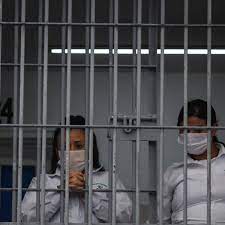
What is certainly the case, though, is that Qatar detained and then deported dozens of migrant workers who were protesting about the circumstances of their work. HRW declared: “These are the people who have literally built the World Cup from the ground up, from the desert up. They are the ones who must receive financial compensation before the first ball is kicked”.
Like those migrant workers, women are also treated like second class citizens in Qatar. Most must be veiled, and they need the permission of a male ‘guardian’, usually a father or brother, to marry, get a government job, or to apply for a university scholarship.
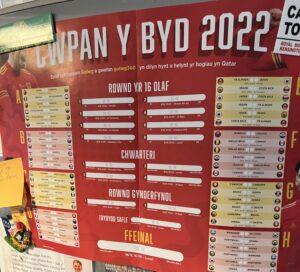
The jubilations over Wales qualifying were not confined to English-language media, either. The Welsh-language magazine Golwg produced a wall chart, showing the teams in each group, and the progress that must be made to reach the World Cup final.
Even Welsh football fans were outraged at the fanfare in the mainstream media. One, Dafydd Jones, of Neath told The Eye: “I have always backed the Wales team, but all this hoopla about us qualifying for Qatar left me completely cold. Especially as we went out in the first round. After all – people can’t be gay there, and I have read about the money that changed hands to get the World Cup. It’s in the wrong place anyway, and Qatar should never have got it. The heat means they have had to move all the schedules back home!”.
But at least the man in charge of it all thinks it has changed the perception of his country, even if the facts tell another story, and there have already been bad headlines about the next one…
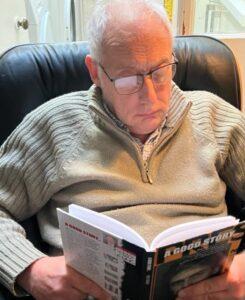
Truths like these by Phil, who was gripped by the rare neurological condition Hereditary Spastic Paraplegia (HSP), have been released in a major book ‘A GOOD STORY’. Order it now!