



- Halt! (Unless you’re a certain type…) - 16th September 2026
- From Russia without love part two - 15th September 2026
- ‘We don’t need no educashun…’ copyright Pink Floyd - 14th September 2026
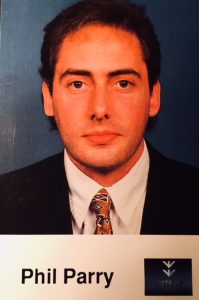
During 23 years with the BBC, and a 42 year journalistic career (when he was trained to use clear and simple language, avoiding jargon), reporting the huge mistakes of important individuals has always played a major role for our Editor, Welshman Phil Parry, and this is underlined by news now in two new books about major wars of today. Here he looks at both of them.
In life making enormous mistakes is almost as important as creating major achievements, and perhaps the wars in Ukraine as well as Iran show this more than most things.
In Ukraine, it is possible that Vladimir Putin may have bitten off more than he can chew when the original aim appeared to be to take control of the whole vast country, and now it is only for a bit of it, with errors today compounding earlier ones.
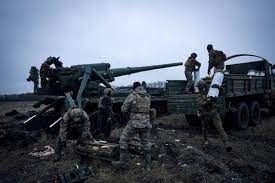
Russia underestimated the strength of resistance and the capabilities of Ukraine’s much smaller armed forces, when the motherland has an annual defence budget of more than $60 billion, compared with Ukraine’s spending of just over $4 billion.
President Putin had embarked on an ambitious modernisation programme of his military, and he may have been swayed by this. Moscow could also have assumed its special forces would play an important role, helping deliver a quick, decisive blow, but (as in Iran) this hasn’t happened.
Russia has, too, struggled with the basics, with armoured columns running out of fuel, food and ammunition. Vehicles have broken down and been left abandoned, then been towed away by Ukrainian tractors.
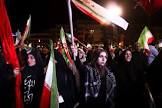
In Iran, meanwhile, Donald Trump believed (as far as we can tell; it’s always hard with him!) that he would score a quick decisive victory (rather as in Venezuela), and that the regime would swiftly collapse. But it hasn’t happened like that at all, and Iranians (unbelievably) are even claiming victory.
The Economist has called the war “foolish” and that even Mr Trump thinks he should never have started it.
These ridiculous mistakes on the world stage, put me in mind of errors that have been made much closer to home.
For example, a defining event in my early reporting career was the miners’ strike of 1984 – 1985. I would often be sent to cover picket line violence in the South Wales valleys, or the dreadful poverty in communities there.
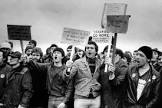
The strike in South Wales was almost rock solid (until the last few weeks), however it was undermined by the decision not to hold a UK-wide ballot of NUM members, which I thought even at the time was an appalling mistake by Arthur Scargill. The controversial decision was strictly within union rules, however it undermined public support, and was judged unlawful in September 1984 by the courts.
The fight to save the coal industry was, of course, lost, and trade union power in general was massively diminished.

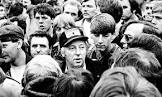
The battle to preserve the pits and their communities was noble, even glamorous, but the decision not to hold a ballot was an awful mistake.
Yet I have seen these terrible errors being committed time and time again.
For instance in 1989 Rhodri Morgan made public his deep hostility to the enormous Cardiff Barrage. The then Labour MP for Cardiff West said that he did not think it right “to subject my constituents to disturbance for something of extremely doubtful value”.
This was seized on by opponents of the barrage, and Richard Evans, the Chairman of the Riverside and Pontcanna Residents’ Group Against the Barrage declared: “It is very important news that Rhodri Morgan has finally made up his mind to oppose the scheme. It is the best thing that has happened in the whole year our campaign has been running”.
However the economic (although not the environmental) benefits of the barrage are everywhere to be seen now – with new flats and retail outlets springing up all the time, and even before his death Mr Morgan will have been able to see the economic development spurred by Cardiff Bay created by the barrage from his office window!
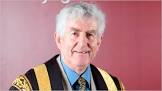
Despite this inconsistency he has become something close to a hero for left-leaning people in Wales. There is, for instance, even an institute named after him in Swansea University (SU). Their website proclaims proudly: “The First Minister of Wales launched the Morgan Advanced Studies Institute – MASI – on February 26th 2021”.
Let’s look at another case – of a talented Welsh politician who Mr Morgan knew well, Ron Davies.
Ron was a UK cabinet minister (as Secretary of State for Wales), and successfully spearheaded the Welsh pro-devolution campaign in 1997, which was won with the narrowest of margins – 50.3 per cent to 49.7 per cent, and a senior Welsh politician told me the night after the vote: “NO ONE else could have done it”. He was in an opposition party too, so this was high praise indeed!
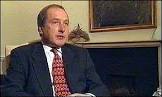
As a journalist I watched what happened next avidly, and our paths crossed many times in the years that followed, including being rung at home by Ron.
One of our meetings included being briefed by him in his London office when Ron was Welsh Secretary, after I had interviewed him on another matter, during my years presenting the now-defunct BBC Cymru Wales TV current affairs programme, Week In, Week Out (WIWO).

On other occasions he was a regular panelist on a weekly debate programme I hosted on BBC Cymru Radio Wales (RW) called The People’s Assembly. He was a fine contributor and always answered the questions well.
However first Ron was the ‘architect of devolution’ in Wales, but then in the media, he was the ‘architect of his own destruction’.
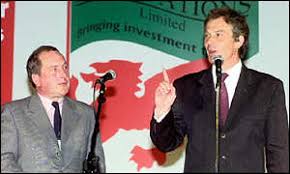
In October 1998 journalists were summoned to Downing Street and told that Ron had resigned as Welsh Secretary after admitting to the Prime Minister “a serious lapse of judgment” on Clapham Common the previous evening, but denied any sexual element.
Ron claimed he had been robbed by a Rastafarian man, whom he had just met but was about to dine with, in the presence of others. His car, telephone, wallet and House of Commons (HoC) pass were stolen, and six people were arrested. Ron went on television to apologise for his “moment of madness”, while on his hand was scrawled the word “sorry”.
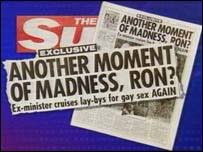
But it continued. The Sun reported that Ron had engaged in a sex act in daylight with a stranger at Tog Hill in 2003. This is a picnic area eight miles North of Bath in Somerset, and it was only 17 days after his third wife had given birth to their first child. The newspaper had received a tip-off and sent a photographer.
The published pictures showed Ron leaving the bushes, but they claimed unpublished pictures captured the act.
He told the Sun: “These allegations are completely false and without substance.” Ron famously said to other journalists: “I have actually been there when I have been watching badgers”.
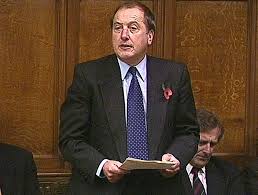
Yet he told the HoC, cryptically: “We are what we are. We are all different, the product of both our genes and our experiences.”
In June 1999, Ron had disclosed he was bisexual and said he was having psychiatric treatment to curb a “compulsive” quest for risk. In the 2008 local elections he was elected to Caerphilly council, as an independent councillor.
He has, though, never been far from the news for the wrong reasons.
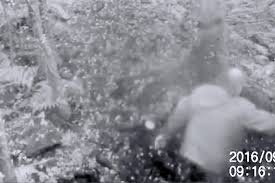
In September 2016, footage emerged apparently showing him placing (or as he said, clearing) rocks and logs on Caerphilly mountain, after a row over how bikers were using the area.
So mistakes are made – and can have huge consequences.
Just ask the advisers who were ignored over the Iran and Ukrainian wars…
The memories of Phil’s astonishing 42 year award-winning career in journalism (when big mistakes were often exposed) as he was gripped by the rare neurological disabling condition, Hereditary Spastic Paraplegia (HSP), have been released in a major book ‘A GOOD STORY’. Order the book now!
 ‘The Coming Storm’, by Odd Arne Westad is published by Henry Holt and Allen Lane.
‘The Next World War’, by Peter Apps is published by Headline and Wildfire.
Tomorrow – shocking news that UK police failed to solve a colossal 92 per cent of burglaries last year, shines the spotlight once again on the shortcomings of the biggest force in Wales, which was responsible for a string of miscarriages of justice, and may bolster the argument of critics who are angry that the small country of just 3.1 million people, has FOUR forces.