- Another kill zone - 6th October 2026
- War games part one - 6th October 2026
- Poll to poll - 5th October 2026
As our Editor, Welshman Phil Parry has written many times a free and independent media is essential in a functioning society, although this does not exist in many states around the world, and it is put centre stage now by a new book endorsing its importance.
Free expression should be non-negotiable, but sadly in many places it isn’t.
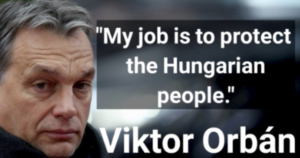
We have seen the rise of populist, illiberal leaders everywhere who gleefully crackdown on a free media, in states where an independent website like The Eye would be hounded out of existence (albeit the right-wing Viktor Orbán in Hungary has been defeated).
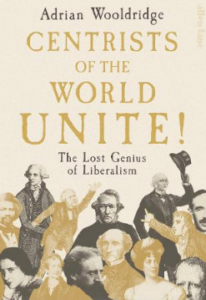
Now comes a call in a book called ‘Centrists of the World Unite!’, for those who believe in free expression, and for a rules-based order with an independent judiciary, to stand up proudly, because these values follow a long tradition.
 Let’s remind you of how bad things have become, and why this book is so sorely needed.
When Mr Obán won power in 2010 he adapted Vladmir Putin’s blueprint, transforming the state media agency MTVA into a propaganda organ. The group was restructured into a shell company in a fashion that exempted it from the law governing public media, and during the European Parliament (EP) elections in 2019, editors at MTVA were recorded instructing reporters to favour Mr Orbán’s Fidesz party.
In the EU there is official recognition of media freedom with it saying: “The European Commission adopted today a European Media Freedom Act, a novel set of rules to protect media pluralism and independence in the EU. The proposed Regulation includes, among others, safeguards against political interference in editorial decisions and against surveillance…”.
But these fine words belie the reality.
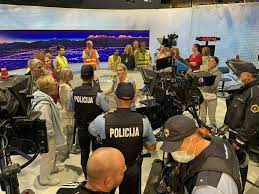
For example, after Slovenia seceded from Yugoslavia in 1991, it gave Radio Television of Slovenia (RTV-SLO) a mandate to report independently, unlike the state propaganda that passed for news under communism. Yet the Government there is now refusing to pay RTV-SLO’s budget, and wanted to pass a new media law that will make it easier to control.
In the Netherlands the situation appears just as bad. Reporters on the national public news broadcaster, the NOS, have been physically attacked at protests, and while reporting on Covid-19 measures. The NOS removed its logo from its satellite vans after they were repeatedly harassed in traffic.
In Latvia, the chief risk is the legal and financing structure. The country’s new public-media law failed to include a set-aside tax, like the television licence fee that funds the BBC (which could now be cut after the Martin Bashir affair), and that leaves it vulnerable to political pressure, while it is not clear that the supervisory board will be protected from political appointments.
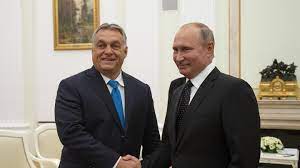
Poland’s Law and Justice (PLS) party followed Mr Orbán’s example when it won power in 2015, and quickly turned TVP, the public television network, into a bullhorn for the party.
The network championed campaigns against gay rights and demonised the opposition mayor of Gdansk. After he was assassinated by an extremist in 2019, a court told TVP to pay damages, but it did not comply.
 However outside the EU, the problems facing an independent media are even worse.
The prime example, of course, is Russia where RT (Russia Today) is accused of being a mouthpiece for Mr Putin. By the mid-2000s Russian news shows’ agendas were being set at government-led meetings.
Mr Putin signed a law that allows Russia to declare journalists and bloggers “foreign agents” in a move that critics say allows the Kremlin to target government critics.
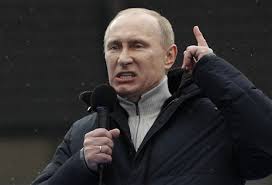
Under the vaguely worded law, Russians and foreigners who work with the media or distribute their content and receive money from abroad would become ‘enemies of the state’, potentially exposing journalists, their sources, or even those who share material on social networks to foreign agent status.
In Belarus the situation is also appalling. At least 16 journalists there are behind bars, and riot police are singling out reporters for arrests and beatings at protests as the media is intimidated.
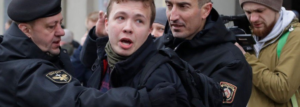
The embattled dictator Alexander Lukashenko, forced a Ryanair passenger plane to make an unscheduled stop in his capital in order to arrest the editor of an internet channel, NEXTA, that has been reporting on his crackdown.
Roman Protasevich was taken off the plane, which was flying from Athens to Vilnius, the Lithuanian capital. Citing what it said was ‘evidence’ that there were explosives on board, the authorities forced the aircraft to land in Minsk as it passed through Belarusian airspace on its way to neighbouring Lithuania, sending a MiG fighter plane to escort the Ryanair jet down. The state news agency later reported that no explosives had been found, and it seems certain that the incident was invented purely as a way of arresting the journalist.

The alarming details came after Marina Zolotova, the editor of Tut.by, an independent news website in the counrry, said: “Blue press jackets and press badges have become targets. When journalists go to cover a protest they cannot be sure that they will come home. This is a real war by the authorities against independent journalism and their own people.”
It is clear that Mr Lukashenko is waging a war against journalists who have dared to report on his regime’s brutal crackdown against peaceful protesters.
At least eight protesters have been killed and hundreds more have alleged torture and rape, in police custody.
Among the most high-profile of those in prison is Yekaterina Bakhvalova, who was arrested as she filmed riot police firing stun grenades into a crowd demonstrating against the death in police custody of a fellow protesters.
Around the world it seems to be becoming worse for media freedom and investigative journalism.
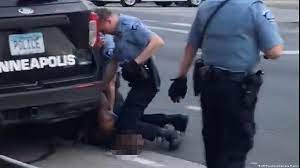
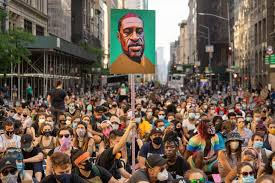
Dozens of reporters covering the anti-racism protests after the killing of the unarmed black man George Floyd that rocked the US, were apparently targeted by security forces using tear gas, rubber bullets and pepper spray. In many cases, the reporters said they were attacked despite showing clear press credentials.
Such assaults “are an unacceptable attempt to intimidate (reporters)“, said the Committee to Protect Journalists (CPJ), a New York-based lobbying group. Attacks on journalists carried out by protesters have also been reported. The arrest of a CNN news crew live on air in Minneapolis, first drew global attention to how law enforcement authorities in the city were treating reporters covering the protests.
In total the US, the Press Freedom Tracker (PFT), a non-profit project, says it is examining more than 100 “press freedom violations” at protests. About 90 cases involve attacks.
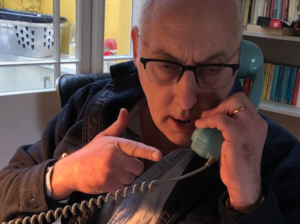
In the past I have been called online (wrongly), a “bastard”, a “liar”, a “misogynist”, a “little git”, and (accurately), a “troublemaker”, a “nuisance”, “irritating”, as well as “annoying” but this pales into insignificance with what is happening elsewhere around the globe.
This kind of abuse is as nothing compared with what other journalists must endure – and it is the context for a new book which explains that regrettably censorship is on the rise…
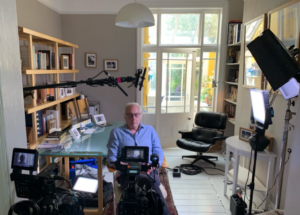
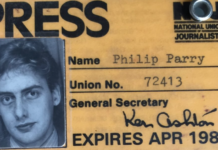
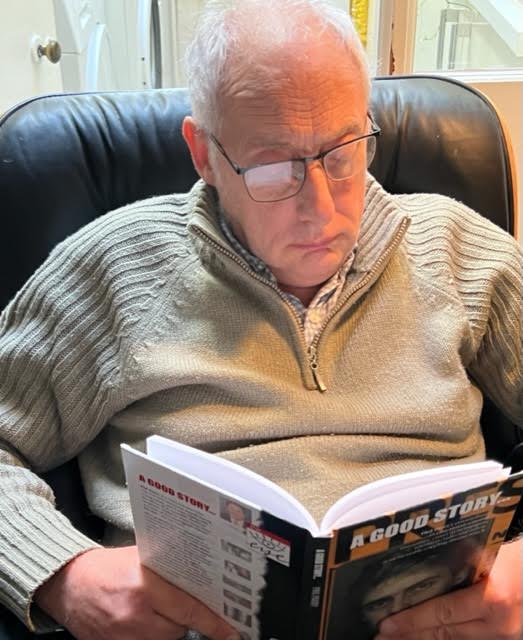
The memories of Phil’s astonishing 42 year award-winning career in journalism (when he was able to operate in a largely free environment) as he was gripped by the rare neurological disabling condition, Hereditary Spastic Paraplegia (HSP), have been released in another book ‘A GOOD STORY’. Order the book now!
‘Centrists of the World Unite!’ by Adrian Wooldridge is published by Allen Lane.
Tomorrow – new academic research has completely debunked so-called ‘information’ about a religious revival this year, and it could have enormous implications for Wales.