- Another kill zone - 6th October 2026
- War games part one - 6th October 2026
- Poll to poll - 5th October 2026
During 23 years with the BBC, and in a 42 year journalistic career (when he was trained to use clear and simple language, avoiding jargon), for our Editor, Welshman Phil Parry, negotiations over the ending of hostilities have often had to be analysed, and now we are seeing this in spades with the ‘truce’ between the United States of America (USA) and Iran, as well as (on an altogether different level) those probably between Plaid Cymru (Plaid) and Labour after the Welsh Parliament/Senedd Cymru (WP/SC) election next month.
These events are extraordinary and bear analysis.
This so-called ‘truce’ between the United States of America (USA) and Iran appears to mean different thing to different people, and the hours afterwards were unbelievably violent.
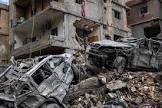
Lebanon became the biggest flashpoint in the confusion, as conflicting claims triggered renewed violence.
Israel launched heavy strikes on Hezbollah targets, so Hezbollah hit back with rocket fire, and the escalation left hundreds dead, as well as widespread destruction across key areas.
Israel, Kuwait, Qatar, Saudi Arabia and the United Arab Emirates (UAE) all reported Iranian drone and missile attacks, the truce notwithstanding, and Iran decried an air strike on an oil refinery.
The Israeli air force attacked around 100 targets in Lebanon on the afternoon after the ceasefire. More than 1,000 people were killed and injured; hospitals were overwhelmed and ran short of blood.
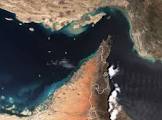
Meanwhile Donald Trump accused Iran of breaching the deal, and declared that it was “doing a very poor job” of allowing oil to go through the Strait of Hormuz.
Normally what happens with a ceasefire agreement is that there is ONE text sent to all parties – saying things like ‘you pull your armies back to there, you pull your armies back to there, and everyone will meet in two weeks to make this permanent’ etc.
In this case, though, there may have been at least TWO different texts saying DIFFERENT things, and the US/Israeli side could have received one version, while the Iran side got another!

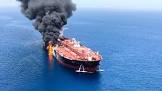
Therefore Iran have suggested the truce included Lebanon, yet the US and Israel say it doesn’t – but ALL could be right..!
This is an INCREDIBLE situation which I have NEVER seen before, and bizarrely perhaps, the whole thing has put me in mind of the negotiations we may be about to observe in any possible coalition deal between the Welsh nationalist party Plaid Cymru (Plaid) and Labour after the Welsh Parliament/Senedd Cymru (WP/SC) election.
There are unlikely to be different versions of a deal sent to both parties, as could have happened here, but there ARE similarities.

Plaid and Labour have been metaphorically at each other’s throats for decades (without violence), and any deal between these warring parties will also involve significant horse trading.
In place of agreements over the enrichment of uranium, and allowing ships to pass through the Strait of Hormuz, we’re likely to see the carving up of jobs, as well as the announcement of more funding for Welsh media outlets (unlike The Eye, which receives money from no one), and transport links in Wales.
We obviously won’t hear officially about what negotiators will say, but it will be along the lines of: “You have this job, and we’ll have this one, and we’ll give a big grant to someone in the media in Wales, as well as supply money for Welsh transport”.
It’s all a bit grubby to be honest, and we have witnessed this following the 2010 General Election (GE), when the Conservatives and the Liberal Democrats came together.
We have also seen this slightly icky bargaining in ‘One Wales’, the coalition agreement between Labour and Plaid agreed to by Rhodri Morgan, then First Minister of Wales (FMW), and Ieuan Wyn Jones the former Plaid leader on June 27 2007.
Now we could be about to see this all over again, with Plaid talking to Labour after the election (they won’t be in coalition with Reform UK in a million years, even though this right wing party may come second).

One poll conducted by YouGov for Cardiff University (CU) shows Plaid leading for the election on May 7, with 33 per cent and Reform UK second on 27.
Another survey has been seized on by the Welsh nationalist website Nation.Cymru (NC) (a cheerleader for Plaid, and a possible recipient of greater funding from the Welsh Government [WG]), which proclaims approvingly: “The latest results show a slight increase in support for Plaid Cymru (up to 30% of the vote, from 29% in Beaufort’s last poll completed in February 2026), while Reform UK is unchanged on 27%, followed by Labour on 17% (down from 20%)…A projection of seats based by Cavendish Cymru on the poll findings suggests that Plaid Cymru would win 37 seats, Reform UK 30, Labour 15, the Conservatives 6, the Green Party 6 and the Liberal Democrats 2″.
I hold my head in my hands about the lack of critical scrutiny from mainstream journalists in Wales over this fact, and the situation with Plaid, as well as with its leader Rhun ap Iorwerth.
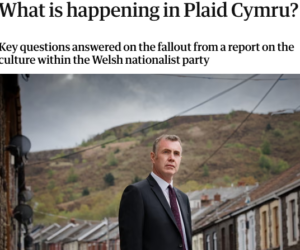
Bizarrely there has been a little more analysis from journalists in London, than there has been from the mainstream Welsh media, with a headlne in The Guardian stating: “What is happening in Plaid Cymru?”
There is, though, plenty to look at.
For example, one Plaid candidate called Israel a “terrorist state” on social media, but party officials said he would remain available for selection for the WP/SC elections.
Vivek Thuppil, who is on Plaid’s candidate list in Bangor Conwy Mon (BCM), said in posts on the Bluesky social media platform, that Israel should be proscribed, like a terrorist organisation.


Meanwhile Plaid also said it supports the candidacy of Elin Hywel, who is on the party’s list in Gwynedd Maldwyn (GM), yet archived messages show that she had shared a message on X/Twitter suggesting Israel did not have a right to exist.
In fact there have been any number of controversies concerning leading members of the Welsh nationalist party, and even Plaid executives have been forced to take disciplinary action against some of them.
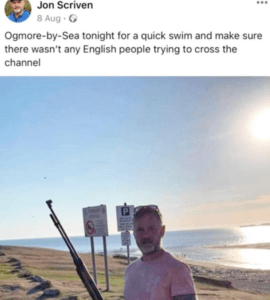
Jon Scriven a councillor with Caerphilly County Borough Council (CCBC) was suspended in 2022 over a social media post showing him holding a gun, in a so-called ‘joke’ about English people crossing the channel.
 Terry Davies was found to have breached the Code of Conduct at his authority in Carmarthenshire, and was suspended over his behaviour towards other councillors. Iwan Hughes in Gwynedd was banned from office for two years over fraud-related allegations.
Again in 2022 the Plaid Member of the Senedd (MS) Rhys ab Owen first lost the whip over his conduct and was eventually expelled from the party TWO years later!
There are also unanswered questions concerning the previous controversial leader of Plaid, Adam Price.
For months Plaid was dogged by claims of a ‘toxic culture’ in the party, and it emerged that an allegation of sexual assault had been made against a senior member of staff, so the former party MS Nerys Evans was asked to look at the scale and scope of the issues.
Her report, Prosiect Pawb (Everyone’s Project), found a culture of sexual harassment, bullying and misogyny, with victims saying they felt there was little point in reporting unacceptable behaviour by elected members because it had been tolerated for so long
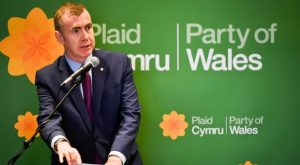
There was apparently a lack of leadership, which meant the problems had become worse, and it made 82 recommendations, which were needed to “detoxify” the party.
It might seem reasonable, therefore to ask why Mr Price had not resigned even before this report was made public, when (finally) he said he felt “morally bound” to step down.
We don’t really know the reason, but his claim of it being an “abdication of responsibility” to do so earlier sounds a bit lame to me.
There has also been the apparent misdirection of money by Plaid.
This was the BBC report which NC inevitably did not promote: “Plaid Cymru has been fined £29,000 for failing to report cash it received from taxpayers’ funds worth nearly £500,000. The Electoral Commission said over a two-year period Plaid had omitted 36 separate sums from quarterly reports. Plaid had failed to declare cash from the House of Commons authorities, and some cash from the Electoral Commission”.
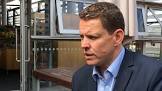
It’s not just the party either, because Mr ap Iorwerth himself must also bridge an enormous gap in beliefs among his supporters. There are social conservatives, as well as tolerant liberals in Plaid. Some believe passionately in, for instance, gay marriage, while for others this is complete anathema.
I have myself had a conversation with a Plaid activist who is firmly supportive of old-style left wing economic policies like nationalisation, but thinks male homosexuality is an abomination, and lesbianism doesn’t really exist!
Some Plaid policies (particularly on nuclear power) are confusing to say the least.
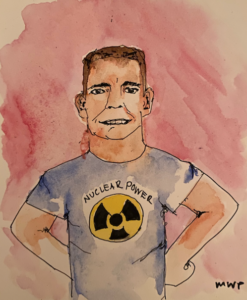
Mr ap Iorwerth said the party would support new nuclear power plants at Wylfa and Trawsfynydd, but not anywhere else in Wales, and he declared that Plaid was as “honest as you could possibly wish us to be”.
But he is the MS for Ynys Mon, and Wylfa is in his constituency with Trawsfynydd also in North Wales so he might be expected to say this.
As far as I can work out, Plaid are in favour of nuclear power in the North but not in the South, however I can’t be sure because even though I have studied politics for years (and secured a degree in it), this policy seems as clear as mud.
When Mr ap Iorwerth jumped ship to go from the Political Unit (PU) of BBC Cymru Wales (BBC CW) there were mutterings that he had long harboured nationalist sympathies, which infected his journalism. You were, of course, expected to be entirely neutral in your reporting.
There was even concern that he may have been organising his transfer to Plaid, while he was still at BBC CW.
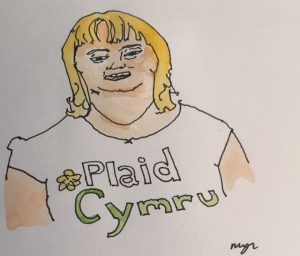
These events, naturally, confirmed a belief in the minds of many people that there was and is a close connection between the nationalist party and the corporation in Wales.
I knew of one individual who moved from Plaid to BBC CW, then BACK AGAIN, and the person in charge of programmes there now (Rhuanedd Richards) is a former Chief Executive Officer (CEO) with the nationalist group!
I was in the PU at the time, and heard these mutterings myself.
There could be more mutterings about jobs and money for Welsh media outlets in any coalition deals after the WP/SC election next month.
But these deals never go smoothly – you only have to look at what’s happened in the Middle East for evidence of that!
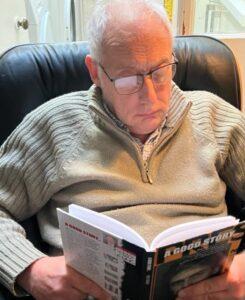
The memories of Phil’s astonishing, decades long award-winning career in journalism (when he interviewed many politicians of both left and right, often in coalition), as he was gripped by the rare neurological disabling condition Hereditary Spastic Paraplegia (HSP), have been released in a major book ‘A Good Story’. Order it now.
Next week – more major questions for the police, when research has shown that the vast majority of the nearly 200,000 illegal entry investigations which were completed by them were closed still unsolved, and of the 184,783 burglaries where an investigation was finished in 2025, 143,000 were shut down without a suspect being identified — 393 a day.