


- Turning Japanese - 27th October 2026
- Africa queen - 27th October 2026
- Comeback kid - 26th October 2026
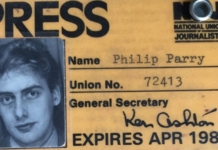
During a 43 year career as a journalist our Editor Phil Parry, has always been lucky enough to work in a largely free environment, and this is now underlined by news today that a Japanese reporter has been seized by Russian authorities on spurious ‘spying’ charges, and may be being held in jail as an ‘asset’ for a prisoner exchange.
Perhaps he thought he’d done enough to be protected.
Imai Yuki spent years learning to read Russian literature in the original, and on a student exchange programme in St Petersburg in 2014-15, he greatly impressed Russian friends with his knowledge of their city and its literary legends, such as Fyodor Dostoyevsky.
Mr Imai used his language skills to secure a job covering Russia for the Hokkaido Shimbun, a regional newspaper from Japan’s northernmost big island.
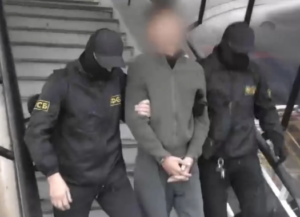
But it wasn’t enough, and on October 13 officers with the Federal Security Service (FSB) burst into his hotel room on Sakhalin, off Russia’s far-eastern coast, and handcuffed him.
“You are suspected of espionage”, a masked man says in a video released by the FSB. “V smysle?” a befuddled Mr Imai answers in Russian. “What do you mean?”.
The footage of his detention showed a book by Ivan Bunin in his suitcase.
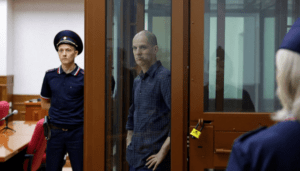
He is now being held at Lefortovo, a high-profile detention centre in Moscow, and could face up to 20 years in prison, although may end up embroiled in global hostage diplomacy, much like Evan Gershkovich, an American journalist who was also arrested on baseless espionage charges, and freed 16 months later in the largest prisoner swap between Russia and the West since the Cold War.
Mr Gershkovich, was diligently securing figures for his newspaper, the Wall Street Journal (WSJ), related to tank production when (as with Mr Imai), a group of masked men burst in, and threw him to the ground. He was accused of working beyond his role as a journalist, and was actually a spy.
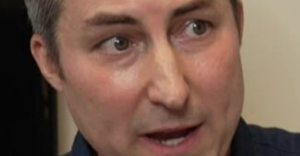
He was detained in March 2023 after Russia claimed he had been “gathering secret information” on orders from the CIA, but was swapped with 24 people in the biggest prisoner exchange between Russia and the West since the Cold War.
Mr Gershkovich was denounced for supposedly seeking details unlawfully about Uralvagonzavod, a facility that produces and repairs military equipment, yet his employer, and the US Government, strongly deny the claims, with Washington designating him wrongfully detained. “Evan has done nothing wrong. He should never have been arrested in the first place. Journalism is not a crime”, the then US State Department’s Matthew Miller declared.


Those shots of people on airport tarmac at dawn, while another group get onto a waiting bus, are NOT a thing of the past. We could see more of them – and Mr Imai might be featured.
Arresting a journalist for being a spy “probably means Russia is trying to get somebody home”, reckons Mr Gershkovich.
In Russian, such detainees are referred to as ‘aktivy’ (assets) in the country’s ‘obmenny fond’ (exchange fund).
Officials speak openly about its status: “It may be time to fill up our exchange fund with European and American idiots in order to get our guys out”, Dmitry Medvedev, a former president turned attack dog, wrote days before Mr Imai’s arrest.
All of this puts centre stage how difficult it is for journalists worldwide.
Marina Zolotova, the editor of Tut.by, an independent news website in Belarus, has declared tellingly: “Blue press jackets and press badges have become targets. When journalists go to cover a protest they cannot be sure that they will come home. This is a real war by the authorities against independent journalism and their own people.”

Another journalist there who is now in prison is Yekaterina Bakhvalova, who was arrested as she filmed riot police firing stun grenades into a crowd demonstrating against the death in police custody of a fellow protester.
She was due to be released several years ago, but was sentenced to an additional eight years in jail for “state treason”, according to the channel she worked for.
Around the world it appears to be becoming worse for media freedom and investigative journalism – while dumbed-down ‘news’ presented by airhead ‘celebrities’, is seemingly wanted by authorities everywhere.
Endorsing what is happening, dozens of reporters covering the anti-racism protests after the killing of the unarmed black man George Floyd that rocked the US, were targeted by security forces using tear gas, rubber bullets and pepper spray.
In many cases, the reporters said they were attacked despite showing clear press credentials

Such assaults “are an unacceptable attempt to intimidate (reporters)“, said the Committee to Protect Journalists, a New York-based lobbying group.
Attacks on journalists carried out by protesters have also been reported. The arrest of a CNN news crew live on air in Minneapolis, first drew global attention to how people in the city were treating reporters covering the protests.
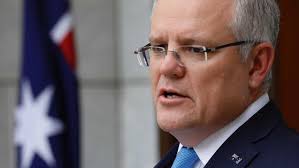
The Australian Prime Minister at the time Scott Morrison, asked his embassy in Washington to look into the use of force by police against an Australian news crew, as officers dispersed protesters there the previous day. It came after dozens of attacks on journalists and media crews across America over a single weekend were reported on social media.

In total the US Press Freedom Tracker, a non-profit project, says it is examining more than 100 “press freedom violations” at protests. About 90 cases involve attacks.
In Russia a special website is devoted to the numbers of journalists that have been killed for simply doing their jobs. Sometimes the persecution has official backing. Vladimir Putin recently signed a law that will allow Russia to declare journalists and bloggers as “foreign agents” in a move that critics say will allow the Kremlin to target government critics.
Under the vaguely worded law, Russians and foreigners who work with the media or distribute their content and receive money from abroad would be declared foreign agents, potentially exposing journalists, their sources, or even those who share material on social networks to foreign agent status.
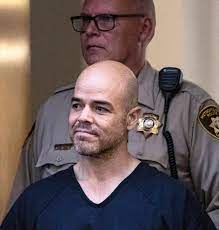
The investigative reporter, Jeff German, was found stabbed to death at his home, and his killer, Robert Telles, was detained by armed police officers, before being prosecuted for the crime.
Mr Telles appeared in front of a judge smirking, according to media reports, as he was told when his next court appearance would be. The man he is accused of attacking was working on a story about Mr Telles the week he was killed, his one time newspaper, the Las Vegas Review-Journal, reported.
The paper’s editorial cartoonist published an illustrated tribute to Mr German, calling him, “one of the finest investigative reporters in the country. His job was to shine the light on the darkness”.
This is an uncanny echo of the slogan in Welsh and English on The Eye, which I edit: “Finding Light in Darkness”.
Mr Telles has said of Mr German in the past “He’s a bully” and “he’s obsessed with me”, which are identical to phrases which have been hurled at me as I have attempted to do my job. This is disconcerting to say the least.
The abuse I suffer is as nothing compared with this – previously I have been called (wrongly), a “bastard”, a “liar”, a “misogynist”, a “little git”, and (accurately), a “troublemaker”, a “nuisance”, “irritating”, as well as “annoying”.
I celebrate the fact that I am ‘annoying’ and a ‘troublemaker’, even if these words are hurled at me as insults…
At least, though, I haven’t been thrown in jail before a possible prisoner swap, like Mr Imai, or, worse, killed like Mr German.
Things could be worse…
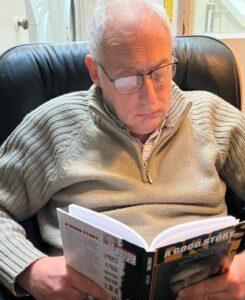
The memories of Phil’s astonishing decades long award-winning career in journalism (where he has always worked in an environment of relative media freedom) as he was gripped by the rare disabling condition Hereditary Spastic Paraplegia (HSP), have been released in a major book ‘A GOOD STORY’. Order the book now!