









- Another kill zone - 6th October 2026
- War games part one - 6th October 2026
- Poll to poll - 5th October 2026

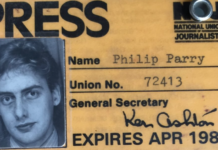
During 23 years with the BBC, and a 43 year journalistic career (when he was trained to use clear and simple language, avoiding jargon), for our Editor, Welshman Phil Parry, the DEADLINE has always been central, but its importance might have seemed to be over with the rise of new technology and instant publication on social media, yet research today shows that it has remained vital – particularly in business!
They are burned into my brain.
I can remember to this day the deadlines for the front page, and inside pages, when I started in journalism in 1983 on the South Wales Echo (SWE).

In papers there were later ones (for a few lines) in things like the ‘STOP PRESS’ box, or CITY FINAL edition, which were, frankly, less than satisfactory.
There were still deadlines in broadcasting.
Obviously as a reporter on HTV’s Wales at Six, it was SIX O’clock, and it was even earlier on BBC Cymru Wales Today (WT).
On radio the timings were absolutely cast-iron, because you had to be out TO THE SECOND, which were non-negotiable deadlines.

It might have been thought that these deadlines would be, er, made dead, because of new technology.
For example any mistake on The Eye can be changed instantaneously.
But not a bit of it – deadlines are back in vogue (in the business world especially), and research into the issue tells us why.
Business people like deadlines because they focus the mind, and stop procrastination.


The tendency to put things off for no good reason is a fundamental part of the human condition.
Hesiod, an ancient Greek poet, warned that idlers were liable never to fill their barns
A paper written about 2,700 years later, by Brenda Nguyen of the University of Lethbridge (UoL) and her co-authors, found that things have not changed much since (besides the barns).
In a survey of some 22,000 individuals, they conclude that a disposition to procrastination is associated with lower incomes and reduced employment.
In another paper, Piers Steel of the University of Calgary (UoC) and his co-authors examined the behaviour of arbitrators in workplace-grievance procedures in Canada.

Arbitrators who scored one standard deviation above the mean for self-reported procrastination took 83 days to write decisions, compared with 26 days for those one standard deviation BELOW the mean.
People have various techniques for rousing themselves to action, and having a deadline is often key.
A major role that deadlines play today, is drawing work to an end (‘Close of Business’ – COB). when there is nothing more to be gained from extending it.

When Eric Schmidt, a one-time Chief Executive Officer (CEO) of Google, was asked about his recipe for making good decisions, his response was “discord plus deadline”.
Discord ensures that people discuss the issues properly; the deadline stops them gabbling on for ever.
Mr Schmidt, it seems, is part of a growing group of people who know about the importance of deadlines.

I’m with them…
The memories of Phil’s decades-long award-winning career in journalism as he was gripped by the rare disabling condition Hereditary Spastic Paraplegia (HSP), have been released in a major book ‘A GOOD STORY’ (which includes stories governed by meeting deadlines!). Order it now.